
1. Introduction
Drug addiction is an escalating public health concern affecting diverse socioeconomic and educational groups. Although substance use affects people of all ages, adolescents are especially vulnerable because they are more likely to experience peer pressure and struggle with emotion regulation ( 1 - 3 ). Adolescents grappling with substance use disorders have a higher prevalence of physical and psychological comorbidities that profoundly impair their long-term well-being ( 4 ). Etiological factors associated with adolescent drug abuse are multifaceted, encompassing early behavioral problems, peer influence, low educational attainment, socioeconomic instability, inadequate parental monitoring, limited opportunities, social marginalization, and dysfunctional family structures ( 5 ). In Iran, where adolescent drug abuse has shown a concerning upward trend, recent estimates suggest a significant prevalence of drug dependence ( 6 ); consequently, this growing phenomenon is associated with a substantial socioeconomic burden, contributing to criminal activity and imposing profound costs on both individuals and their families ( 7 ).
Research showed that adolescents from dysfunctional families are twice as likely to develop substance use disorders as those from functional families ( 8 ). Because family interactions are expressed through observable communication patterns, assessing these dynamics is critical to understanding adolescent adjustment ( 9 ). These patterns, categorized as consensual, protective, pluralistic, or laissez-faire, are largely shaped by parental interaction styles ( 9 ). Families with a history of substance abuse often exhibit poor monitoring, conflict, instability, and a lack of intimacy or consistent discipline ( 10 ). Ultimately, parental attitudes, beliefs, and explicit messages about substance use are significant factors in shaping adolescent outcomes ( 11 ).
Emotional schemas, defined as cognitive frameworks governing emotional perception and regulation, significantly contribute to adolescent addiction susceptibility. Maladaptive engagement with these schemas can impair emotional navigation, ultimately exacerbating psychological distress and increasing vulnerability to substance abuse ( 12 - 14 ). Collectively, early maladaptive schemas (i.e., emotional deprivation, social isolation, defectiveness, failure, enmeshment, subjugation, self-sacrifice, emotional inhibition, and insufficient self-discipline), sensation-seeking (i.e., experience seeking, adventure seeking, boredom susceptibility, and disinhibition), and alexithymia (i.e., difficulty identifying/describing feelings, and externally oriented thinking) accounted for 48% of the variance in addiction readiness ( 15 ). While alexithymia significantly predicts increased addiction susceptibility among students, a positive family emotional climate serves as a protective factor against addictive behaviors ( 16 ).
Evidence suggests that alexithymia, characterized by difficulties in identifying and describing emotions, limited imagination, and externally-oriented thinking, significantly disrupts adolescents’ social and emotional functioning ( 17 ). Also, developmental evidence indicates that deficits in early emotional processing impair the integration of cognitive and emotional systems. Consequently, this cognitive-emotional disruption leads to emotional dysregulation, misinterpretation of physiological sensations, and heightened somatic distress ( 17 ). Moreover, prior research indicated that supportive family relationships, particularly with parents, serve as a protective factor against adolescent substance use ( 18 ). Adolescent substance use and addiction susceptibility are linked to family functioning, communication, and emotional climate ( 2 , 8 , 11 , 16 ); emotional schemas also influence how individuals interpret and react to emotions ( 13 , 14 ). However, the combined impact of these factors on adolescent addiction susceptibility, especially with alexithymia as a potential mediator, needs further exploration. The present study aimed to examine the mediating role of alexithymia in the associations of family communication patterns and emotional schemas with addiction susceptibility among adolescents in Shiraz, Iran.
2. Method
2.1. Design
This cross-sectional study utilized path analysis to explore the relationships between family communication patterns, emotional schemas, alexithymia, and addiction susceptibility in adolescents of Shiraz, Iran.
2.2. Selection and Description of Participants
The target population comprised high school students enrolled in public and private secondary schools in Shiraz, Iran, during the second semester of the 2023-2024 academic year. The final sample consisted of 300 adolescents, including 160 boys (53.3%) and 140 girls (46.7%), recruited from schools across the four educational districts of Shiraz, Iran, using a convenience sampling approach. Participants represented various fields of study, including humanities, experimental sciences, and mathematics/physics. Inclusion criteria were enrollment in high school at the time of data collection, residence with both parents, and provision of written informed consent. Students with incomplete questionnaires or those who withdrew during data collection were excluded from the final analysis.
2.3. Sample Size Determination
A sample of 300 participants was considered adequate based on methodological recommendations for covariance-based structural equation modeling (SEM) and path analysis ( 19 ). A minimum sample of 200 participants is generally considered adequate to achieve sufficient statistical power and stable parameter estimates in path analysis; however, a target sample of 300 was selected to enhance the generalizability of the findings and account for potential missing data.
2.4. Data Collection and Measurements
Severity Measurement Instrument (SMI): This 16-item instrument evaluates drug use tendencies and addiction susceptibility across three dimensions ( 20 ). Responses are on a 5-point Likert scale (1=very little, 5=very much), yielding a total score from 16 to 80, with higher scores indicating greater addiction propensity. Subscale scores are derived by summing relevant items within each dimension. While Conway and co-workers ( 20 ) reported a Cronbach’s alpha of 0.87, CVR of 0.76, and CVI of 0.83, the current study found a Cronbach’s alpha of 0.71.
2.4.1. Revised Family Communication Patterns Questionnaire (RFCPQ): This questionnaire developed by Ritchie and Fitzpatrick ( 21 ), consists of 26 items, self-report instrument comprising two subscales: conversation orientation (15 items) and conformity orientation (11 items) ( 21 ). Items are rated on a 5-point scale ranging from 0 (completely disagree) to 4 (completely agree). The score ranges for conversation and conformity orientations are 0.60 and 0.44, respectively. Separate scores are calculated for each dimension, with higher scores indicating greater levels of conversation orientation and conformity within the family. The instrument has demonstrated good reliability, with a reported Cronbach’s alpha of 0.87 and 0.81 ( 22 ). In addition, its content validity was confirmed with a content validity index (CVI) of 0.80 and a content validity ratio (CVR) of 0.81 ( 22 ). In the present study, the scale demonstrated acceptable internal consistency, with a Cronbach’s alpha of 0.70.
2.4.2. Leahy Emotional Schema Scale (LESS): This scale was developed by Leahy to assess individuals’ emotional schemas ( 23 ). This scale enables the quantification of emotional schemas across different individuals, employing a six-point Likert scale ranging from completely disagree to completely agree. Leahy reported a Cronbach’s alpha of 0.81 for the questionnaire ( 23 ). The construct validity of the Persian version was supported by CVI and CVR evaluations, with the extracted factors accounting for 57.91% of the total variance ( 23 ). Previous research indicated an overall internal consistency (Cronbach’s alpha) of 0.82, with subscale coefficients ranging from 0.59 to 0.72 ( 24 ). For the current investigation, the scale demonstrated a Cronbach’s alpha of 0.73.
2.4.3. Toronto Alexithymia Scale (TAS-20): The 20-item Toronto Alexithymia Scale (TAS-20), developed by Bagby and colleagues, measures alexithymia across three subscales including difficulty identifying feelings, difficulty describing feelings, and externally oriented thinking ( 25 ). Responses are rated on a five-point Likert scale, yielding scores from 20 to 100. Bagby and colleagues reported a reliability of 0.81 and a Cronbach's alpha of 0.77 ( 25 ). The Persian version, validated by Besharat, showed concurrent validity through correlations with emotional intelligence, psychological well-being, and distress, with a CVI of 0.91 and CVR of 0.86. This validation study also reported an overall Cronbach's alpha of 0.85, with subscale alpha of 0.82, 0.75, and 0.72 ( 26 ). In the current study, the instrument demonstrated an overall Cronbach’s alpha of 0.84.
2.5. Procedure
Before administering the questionnaires, the participants were provided with a clear explanation of the study objectives, the procedures for completing the questionnaires, and the voluntary participation. Throughout the study, ethical and legal principles were carefully observed. Written informed consent was obtained from all the participants. They were also assured that their responses would remain confidential and would be used solely for research purposes. The questionnaires were administered in person, and the researchers provided the necessary instructions to ensure accurate completion. After the questionnaires were collected, the data were analyzed using appropriate statistical methods.
2.6. Data Analysis
Data analysis was performed using SPSS version 24. Statistical analyses such as descriptive statistics, the Kolmogorov-Smirnov test, Pearson’s correlation coefficient, and path analysis were applied to analyze the data. The normality of the data distribution was verified using the Kolmogorov-Smirnov test. Bivariate relationships among the study variables were evaluated using Pearson’s correlation coefficient. Furthermore, path analysis was conducted to examine the hypothesized structural model.
3. Results
As Table 1 depicts the demographic characteristics of the participants, a total of 300 adolescents were included in the study, of whom 53% were boys and 47% were girls. Participants were distributed across four age groups, including 15 years (25%), 16 years (22%), 17 years (26%), and 18 years (27%).
| Demographic Variables | Group | N | % |
|---|---|---|---|
| Gender | Boy | 160 | 53 |
| Girl | 140 | 47 | |
| Age | 15 | 76 | 25 |
| 16 | 67 | 22 | |
| 17 | 77 | 26 | |
| 18 | 80 | 27 |
Descriptive statistics for the study variables, including means and standard deviations, are presented in Table 2. Participants reported an average addiction tendency score of 47.17 with a standard deviation of 10.88. Although Shapiro-Wilk tests were statistically significant, the skewness and kurtosis values for all variables remained within the acceptable range of -1.61 to 0.24, confirming that the data distribution was suitable for structural equation modeling.
| Variables | Mean | SD | Min | Max | Skewness | Kurtosis | Shapiro-Wilk | P value |
|---|---|---|---|---|---|---|---|---|
| Tendency to Addiction | 47.167 | 10.877 | 28.000 | 66.000 | 0.236 | -0.943 | 0.927 | <0.001 |
| Conformity | 29.490 | 6.964 | 17.000 | 46.000 | 0.126 | -1.114 | 0.955 | <0.001 |
| Dialogue | 32.893 | 9.957 | 18.000 | 46.000 | -0.264 | -1.546 | 0.867 | <0.001 |
| Positive Emotional Schemas | 34.950 | 8.317 | 21.000 | 49.000 | 0.090 | -1.610 | 0.883 | <0.001 |
| Negative Emotional Schemas | 41.827 | 9.590 | 26.000 | 57.000 | -0.291 | -1.406 | 0.900 | <0.001 |
| Difficulty in Recognizing Emotions | 17.157 | 5.509 | 7.000 | 28.000 | -0.103 | -0.747 | 0.955 | <0.001 |
| Difficulty in Describing Emotions | 16.643 | 4.419 | 9.000 | 27.000 | 0.236 | -0.929 | 0.959 | <0.001 |
| External Orientation | 15.787 | 4.038 | 8.000 | 24.000 | 0.022 | -1.294 | 0.933 | <0.001 |
| SD: Standard Deviation | ||||||||
Table 3 displays the bivariate correlations between the study variables. The correlation analysis revealed that addiction tendency was strongly and positively associated with negative emotional schemas, yielding a coefficient of 0.67. Addiction tendency is inversely related to dialogue patterns, with open family communication correlating to lower addiction scores (r=-0.61).
| Variables | Tendency to Addiction | Conformity | Dialogue | Positive Emotional Schemas | Negative Emotional Schemas | Difficulty in Recognizing Emotions | Difficulty in Describing Emotions | External Orientation |
|---|---|---|---|---|---|---|---|---|
| Tendency to Addiction | — | |||||||
| Conformity | -0.508 | — | ||||||
| Dialogue | -0.614 | 0.633 | — | |||||
| Positive Emotional Schemas | -0.670 | 0.689 | 0.799 | — | ||||
| Negative Emotional Schemas | 0.674 | -0.740 | -0.775 | -0.708 | — | |||
| Difficulty in Recognizing Emotions | 0.622 | -0.667 | -0.671 | -0.771 | 0.717 | — | ||
| Difficulty in Describing Emotions | 0.663 | -0.603 | -0.719 | -0.712 | 0.787 | 0.740 | — | |
| External Orientation | 0.574 | -0.646 | -0.708 | -0.763 | 0.737 | 0.696 | 0.662 | — |
Regarding indirect effects, path analysis confirmed that alexithymia directly predicted addiction tendency with a coefficient of 0.38 (Table 4 and Figure 1). Alexithymia was a significant mediator, indirectly linking negative emotional schemas to addiction tendency (Path Coefficient=0.13, P=0.005).
| Variables | Path Coefficient | SD | T Value | P value | Result |
|---|---|---|---|---|---|
| Alexithymia → Tendency to Addiction | 0.377 | 0.112 | 3.383 | 0.001 | Confirmed |
| Conformity → Alexithymia | -0.113 | 0.047 | 2.421 | 0.015 | Confirmed |
| Conformity → Tendency to Addiction | 0.054 | 0.051 | 1.057 | 0.291 | Rejected |
| Dialogue → Alexithymia | -0.157 | 0.046 | 3.428 | 0.001 | Confirmed |
| Dialogue → Tendency to Addiction | -0.116 | 0.086 | 1.353 | 0.176 | Rejected |
| Negative Emotional Schemas → Alexithymia | 0.333 | 0.062 | 5.356 | <0.001 | Confirmed |
| Negative Emotional Schemas → Tendency to Addiction | 0.205 | 0.102 | 2.021 | 0.043 | Confirmed |
| Positive Emotional Schemas → Alexithymia | -0.370 | 0.068 | 5.436 | <0.001 | Confirmed |
| Positive Emotional Schemas → Tendency to Addiction | -0.097 | 0.089 | 1.090 | 0.276 | Rejected |
| Conformity → Alexithymia → Tendency to Addiction | -0.043 | 0.022 | 1.941 | 0.052 | Rejected |
| Negative Emotional Schemas → Alexithymia → Tendency to Addiction | 0.126 | 0.044 | 2.834 | 0.005 | Confirmed |
| Dialogue → Alexithymia → Tendency to Addiction | 0.059 | 0.025 | 2.348 | 0.019 | Confirmed |
| Positive Emotional Schemas → Alexithymia → Tendency to Addiction | 0.140 | 0.052 | 2.696 | 0.007 | Confirmed |
| SD: Standard Deviation | |||||
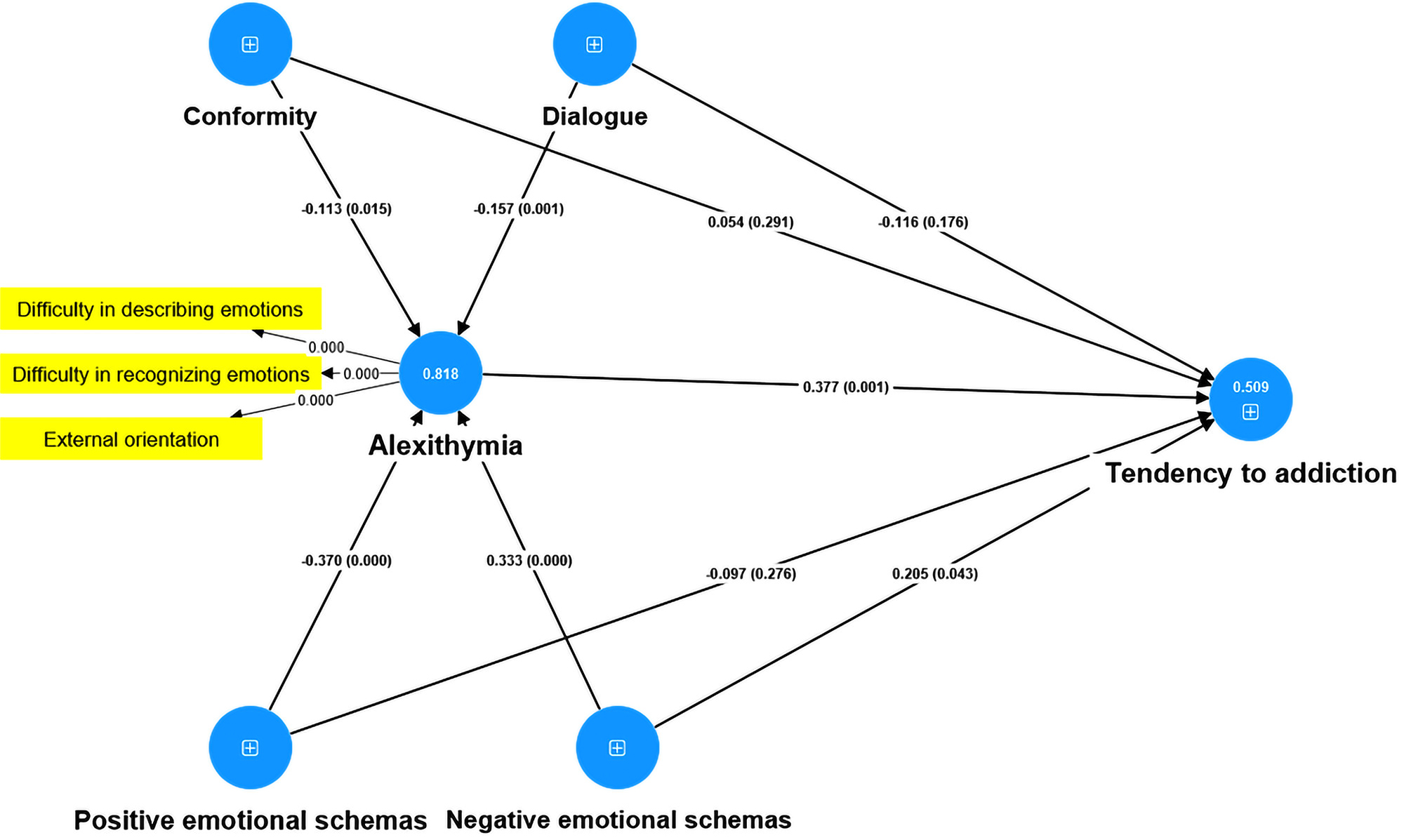
Figure 1. The figure shows the path coefficients between variables and the significance level.
4. Discussion
The primary objective of this study was to examine the mediating role of alexithymia in the relationships between family communication patterns (conformity and conversation orientations), emotional schemas, and addiction susceptibility in adolescents. Path analysis demonstrated that conversation orientation exerted a significant indirect effect on addiction tendency through the mediating pathway of alexithymia. These findings partially align with prior empirical literature indicating that dysfunctional family environments and impaired emotional processing are critical risk factors for adolescent substance use ( 27 - 31 ).
In families with open communication, parents encourage discussion and shared decisions, which helps prevent alexithymia. Conversely, dysfunctional family systems characterized by communication deficits and rigid structures often serve as barriers to healthy adolescent development, steering individuals toward maladaptive coping mechanisms, such as substance use or academic difficulties ( 27 , 28 ). This cognitive style impedes the conscious processing of personal distress, prompting adolescents to adopt externalizing behaviors, such as substance abuse, to regulate negative emotional states ( 29 - 31 ).
The developmental trajectory of alexithymia can also be conceptualized as a transient and defensive response to acute environmental stressors and systemic anxiety. This phenomenon is conceptualized as secondary alexithymia, a psychological defense mechanism protecting individuals from overwhelming emotional pain, distressing memories, and autonomic hyperarousal. While primary alexithymia is a stable personality trait chronically impairing emotional differentiation, both forms lead to somatic manifestations (e.g., elevated heart rate, gastrointestinal distress) ( 32 ).
Lacking the cognitive framework to link these physical sensations to underlying psychological distress, alexithymic individuals frequently attribute their symptoms solely to physical illness, seeking medical interventions rather than psychological support ( 31 ). Over time, this chronic decoupling of somatic sensations from emotional awareness increases the risk for somatic symptom disorders, psychiatric comorbidities, and substance dependence ( 8 , 15 , 33 - 35 ). The structural model of this study supports the idea that both positive and negative emotional schemas indirectly contribute to addiction susceptibility through alexithymia; emotional schemas are internal cognitive frameworks that dictate how individuals interpret, evaluate, and react to their emotions. Dysfunctional beliefs about emotions, such as perceiving them as dangerous or unacceptable, often lead to maladaptive coping mechanisms. Changing these dysfunctional schemas can promote emotional acceptance and normalization, thus decreasing reliance on avoidance, cognitive suppression, self-harm, disordered eating, and substance abuse ( 13 ).
Adolescents who present with deficient emotional processing often possess early cognitive schemas that distort how sensory and emotional information is integrated, laying the groundwork for clinical emotional disorders. This deficit prevented the formation of symbolic mental representations of feelings, impairing the integration of affect, cognition, and behavior. From a psychodynamic perspective, this aligns with the mechanism of repression ( 36 ). While primary repression prevents threatening material from entering consciousness, secondary repression actively expels conscious reminders of distressing experiences. Highly alexithymic individuals struggle with symbolization, leading them to focus on concrete, external realities. Due to their limited emotional vocabulary and symbolic processing, their communication remains superficial and ties to immediate stimuli. Consequently, they attribute internal emotional turmoil to external causes, manifesting it through impulsive acting-out behaviors, such as substance abuse, to escape unnamable distress ( 35 , 36 ).
4.1. Limitations
This study had several limitations. Primarily, the cross-sectional design precluded causal inferences regarding the development of addiction tendencies; therefore, longitudinal studies are required to establish temporal precedence. Furthermore, the small sample size, restricted to a single city (Shiraz, Iran), limited the generalizability of the findings to broader populations.
5. Conclusions
The present study underscored the critical role of alexithymia in mediating the relationship between family dynamics, emotional schemas, and adolescent addiction tendencies. Our findings demonstrated that open conversation orientation within the family fosters emotional awareness and may reduce the risk of addiction. In contrast, rigid, non-communicative, or highly conforming family structures, especially when accompanied by dysfunctional emotional schemas, may increase alexithymia and heighten susceptibility to substance use. These results substantiate the proposed model, confirming that alexithymia acts as a significant mediator in the pathway from family and cognitive factors to addictive behaviors. Consequently, clinical interventions and prevention programs should move beyond symptom management and focus on improving parent-child communication and restructuring maladaptive emotional schemas. By addressing these underlying psychological mechanisms, it is possible to enhance emotional processing and significantly decrease the likelihood of addiction in at-risk adolescents. Future research should employ longitudinal designs to establish causality and explore both maternal and paternal influences, as well as clinical populations. In practice, school-based mental health programs that prioritize emotional regulation are crucial.
Acknowledgement
The article was extracted from the MSc thesis of Ms. Maryam Siami Alighialou at Islamic Azad University, Shiraz Branch, Iran. Also, the authors express their gratitude to all participants who took part in the study.
Authors’ Contribution
Maryam Siami Alighialou: Contributions to the conception and design of the work; the acquisition, analysis, and interpretation of data for the work; drafting the work. Mahin Eksir: Contributions to the acquisition, analysis, and interpretation of data for the work; drafting the work and reviewing it critically for important intellectual content. Bahareh Boustani: Contributions to the design of the work; drafting the work and reviewing it critically for important intellectual content. Zohreh Ramezani: Contributions to the conception and design of the work; the acquisition, analysis, and interpretation of data for the work; drafting the work. Shahnaz Alim: Contributions to the conception of the work; drafting the work and reviewing it critically for important intellectual content. All authors have read and approved the final manuscript and agree to be accountable for all aspects of the work, such that the questions related to the accuracy or integrity of any part of the work.
Declaration of AI
The authors acknowledge the use of AI-assisted tools (ChatGPT/OpenAI) for editing the language and improving the flow of the manuscript. All content was manually reviewed and edited by the authors to ensure its accuracy and academic integrity; the authors take full responsibility for the final content of the manuscript.
Conflict of Interest
None declared.
Funding
None.
Ethical Approval
The Ethics Review Board of Islamic Azad University, Kerman Branch, Iran, approved the present study with the code of IR.IAU.SHIRAZ.REC.1403.160. Also, written informed consent was obtained from the participants.
References
- Avcı M. Adolescents’ experiences with substance use: risks, protective factors and interventions. BMC Psychol. 2025; 13(1):802. Publisher Full Text | DOI | PubMed [ PMC Free Article ]
- Nawi AM, Ismail R, Ibrahim F, Hassan MR, Manaf MRA, Amit N, et al. Risk and protective factors of drug abuse among adolescents: a systematic review. BMC Public Health. 2021; 21(1):2088. Publisher Full Text | DOI | PubMed [ PMC Free Article ]
- Ramírez S, Gana S, Godoy MI, Valenzuela D, Araya R, Gaete J. Validation of the European Drug Addiction Prevention Trial Questionnaire (EU-Dap) for substance use screening and to assess risk and protective factors among early adolescents in Chile. PLoS One. 2021; 16(10):e0258288. Publisher Full Text | DOI | PubMed [ PMC Free Article ]
- Lee JE, Walton D, O’Connor CP, Wammes M, Burton JP, Osuch EA. Drugs, Guts, Brains, but Not Rock and Roll: The Need to Consider the Role of Gut Microbiota in Contemporary Mental Health and Wellness of Emerging Adults. Int J Mol Sci. 2022; 23(12):6643. Publisher Full Text | DOI | PubMed [ PMC Free Article ]
- Haruna MO, Namadi MM, Dunkrah BL, Zamfara MI, Dangiwa AL. Substance abuse among youths in Kashere town: A theoretical and empirical analysis. International Journal of Development and Management Review. 2018; 13(1):192-203.
- Kulshreshtha S. Investigating the relationship between Mindfulness, Social Networking Addictionand Resilience among Young Adults. International Journal of Interdisciplinary Approaches in Psychology (IJIAP). 2025; 3(3):180-199.
- Gao C, Cho LL, Dhillon A, Kim S, McGrail K, Law MR, et al. Understanding the factors related to how East and Southeast Asian immigrant youth and families access mental health and substance use services: A scoping review. PLoS One. 2024; 19(7):e0304907. Publisher Full Text | DOI | PubMed [ PMC Free Article ]
- Alhammad M, Aljedani R, Alsaleh M, Atyia N, Alsmakh M, Alfaraj A, et al. Family, Individual, and Other Risk Factors Contributing to Risk of Substance Abuse in Young Adults: A Narrative Review. Cureus. 2022; 14(12):e32316. Publisher Full Text | DOI | PubMed [ PMC Free Article ]
- Zeng X, Tan C. The Relationship between the Family Functioning of Individuals with Drug Addiction and Relapse Tendency: A Moderated Mediation Model. Int J Environ Res Public Health. 2021; 18(2):625. Publisher Full Text | DOI | PubMed [ PMC Free Article ]
- van Draanen J, Aneshensel CS. Parental and own substance use disorder: The intersection of gender and early adversity. Drug Alcohol Depend. 2022; 234:109393. Publisher Full Text | DOI | PubMed [ PMC Free Article ]
- Compton J, Craig EA. Family Communication Patterns, Inoculation Theory, and Adolescent Substance-Abuse Prevention: Harnessing Post-Inoculation Talk and Family Communication Environments to Spread Positive Influence. Journal of Family Theory & Review. 2019; 11(2):277-288. DOI
- Uvelli A, Floridi M, Agrusti G, Franquillo AC, Fiumalbi L, Micheloni T, et al. When Adverse Experiences Influence the Interpretation of Ourselves, Others and the World: A Systematic Review and Meta-Analysis of Maladaptive Schemas in Victims of Violence. Clin Psychol Psychother. 2025; 32(4):e70114. Publisher Full Text | DOI | PubMed [ PMC Free Article ]
- Dabiri S, Moghaddam HE, Babakhani N. The Relationship Between Childhood Trauma, Social Adjustment, and Self-Compassion Based on the Mediating Role of Emotional Schemas in Adolescents with Risky Behaviors. International Journal of Education and Cognitive Sciences. 2026; 7(2):1-2. DOI
- Predatu R, Leahy R, Mornea R, Fodor LA. Emotional schemas and metacognitive beliefs in anxiety and depression: A network approach. Journal of Affective Disorders. 2026; 409:121838. DOI
- Kunst H, Lobbestael J, Candel I, Batink T. Early maladaptive schemas and their relation to personality disorders: A correlational examination in a clinical population. Clin Psychol Psychother. 2020; 27(6):837-846. Publisher Full Text | DOI | PubMed [ PMC Free Article ]
- Dashtbozorg K, Marashian FS. Predicting Addiction Propensity Based on Familial Emotional Climate, Difficulties in Emotion Regulation, and Distress Tolerance among University Students. Avicenna Journal of Neuro Psycho Physiology. 2025; 12(1):53-58. DOI
- Mohseni M, Salehi S. The Mediating Role of Attachment Styles in the Relationship of Parent-child Relationship and Parenting Styles With Children’s Behavioral Problems After Divorce. Iranian Rehabilitation Journal. 2024; 22(2):227-244. DOI
- Weigard AS, Hardee JE, Zucker RA, Heitzeg MM, Beltz AM. The role of pubertal timing in the link between family history of alcohol use disorder and late adolescent substance use. Drug Alcohol Depend. 2020; 210:107955. Publisher Full Text | DOI | PubMed [ PMC Free Article ]
- Altikriti S, Anderson CN. Factor Analysis and Structural Equation Modeling. In Barnes JC, Forde DR. The Encyclopedia of Research Methods in Criminology and Criminal Justice; 2021. p. 833-8.DOI
- Conway KP, Levy J, Vanyukov M, Chandler R, Rutter J, Swan GE, et al. Measuring addiction propensity and severity: the need for a new instrument. Drug Alcohol Depend. 2010; 111(1-2):4-12. Publisher Full Text | DOI | PubMed [ PMC Free Article ]
- Ritchie LD, Fitzpatrick MA. Family Communication Patterns: Measuring Intrapersonal Perceptions of Interpersonal Relationships. Communication Research. 1990; 17(4):523-544. DOI
- Hemati Z, Abbasi S, Oujian P, Kiani D. Relationship Between Parental Communication Patterns and Self-Efficacy in Adolescents with Parental Substance Abuse. Iran J Child Neurol. 2020; 14(1):49-56. Publisher Full Text | PubMed [ PMC Free Article ]
- Leahy RL. A model of emotional schemas. Cognitive and Behavioral Practice. 2002; 9(3):177-190.
- Khanzadah M, Edrisi F, Muhammadkhani S, Saidian M. Investigation of the factor structure and psychometric properties of emotional schema scale on a normal sample of Iranian students. Journal of Clinical Psychology. 2013; 11(3):91-119. Persian
- Bagby RM, Taylor GJ, Parker JD. The twenty-item Toronto Alexithymia Scale—II. Convergent, discriminant, and concurrent validity. Journal of Psychosomatic Research. 1994; 38(1):33-40. DOI
- Besharat MA. Psychometric Characteristics of Persian Version of the Toronto Alexithymia Scale-20 in Clinical and Non-Clinical Samples. Iran J Med Sci March. 2008; 33(1):1-6.
- Honkalampi K, Jokela M, Lehto SM, Kivimäki M, Virtanen M. Association between alexithymia and substance use: A systematic review and meta-analysis. Scand J Psychol. 2022; 63(5):427-438. Publisher Full Text | DOI | PubMed [ PMC Free Article ]
- Ostad Rahimi A, Fathi A. The Role of Family Communication Patterns and School Culture in Addiction Tendency in Students. Scientific Quarterly of Research on Addiction. 2021; 15(59):275-292. DOI Persian
- Tajalli F, Zarnaghash M. Effect of Family Communication Patterns on Internet Addiction. Journal of Practice in Clinical Psychology. 2017; 5(3):159-166. DOI
- Sadri Damirchi E, Raeis gharedarvishloo S, Rahimi zaragabad N. The Role of Family Communication Patterns and Attachment Styles in Prediction of Drug Abuse among Youth. Quarterly Journal of Research on Addiction. 2018; 12(45):113-130. Persian
- Gikandi AW, Egunjobi JP, Muriithi JK. Relationship between Family Flexibility and Substance Use Disorders among the Youth in Selected Rehabilitation Centres in Nairobi County, Kenya. International Journal of Research and Innovation in Social Science. 2021; 5(8):138-142.
- Kojima M, Senda Y, Nagaya T, Tokudome S, Furukawa TA. Alexithymia, depression and social support among Japanese workers. Psychother Psychosom. 2003; 72(6):307-14. DOI | PubMed
- Farzadnia M, Salehi M, Ghanbari N, Etesami M. Substance Abuse Relapse Prediction Based on Alexithymia and Perceived Social Support. Clinical Health Psychology. 2022; 1(1):5-14.
- Mansourkhani Z, Tamini BK, Pishevar Mofrad MH, Karimi M. Comparison of psychological reactions, fear of negative evaluation and mood-emotional alexithymia in successful and unsuccessful people in addiction recovery: a survey of Baluchestan in Iran. J Ethn Subst Abuse. 2026; 25(2):424-438. DOI | PubMed
- Elghafar Harfush SAEMA, Moussa AA, Hassan NI. Role of Alexithymia and Self-Concealment in Predicting Readiness to Change Among Patients with Substance Use Disorders. Port Said Scientific Journal of Nursing. 2023; 10(2):50-75. DOI
- Koenig-Robert R, Pearson J. Decoding Nonconscious Thought Representations during Successful Thought Suppression. J Cogn Neurosci. 2020; 32(12):2272-2284. DOI | PubMed

