
1. Introduction
Physical activity is a fundamental component of health promotion. A lack of adequate physical activity is associated not only with numerous health issues, such as hypertension, cardiovascular disease, obesity, cancer, and diabetes mellitus ( 1 ), but also with increased levels of depression, anxiety, and stress ( 2 ). Consequently, regular participation in physical activity is essential for maintaining health at all stages of life. For this end, implementing strategies to increase physical activity is crucial to public health initiatives seeking to improve population health outcomes.
Students constitute a substantial population and play a decisive role in the future economic, industrial, cultural, and scientific development of their countries. Therefore, prioritizing their overall health is essential ( 3 ). Junior high school students experience a crucial developmental phase characterized by rapid biological and psychological maturation ( 4 ). Although adolescents at this stage are more mature as compared to elementary school students, their psychological development is still ongoing. This increases their vulnerability to psychological health challenges when encountering stressful life events. During early adolescence, psychological development frequently does not keep pace with rapid physiological changes, resulting in a temporary imbalance between physical and mental maturation ( 4 ).
Mental well-being, which refers to positive mental functioning and life satisfaction, is a main component of psychological development, particularly within positive psychology ( 5 ). Accordingly, participation in physical activity is currently recommended as a preventive strategy and an adjunctive intervention ( 6 ). Moreover, improvements in psychological well-being resulting from physical activity may strengthen students’ capacity to cope with academic demands ( 2 , 7 ).
For students, engagement in physical activity has been linked to greater academic motivation and reduced psychological distress, including anxiety, stress, and depressive symptoms, potentially through improving self-esteem and self-efficacy ( 7 ). Evidence increasingly suggests that engagement in physical activity is associated with making progress in various psychological factors ( 6 ). Furthermore, children’s participation in physical activity may be improved by physical, psychological, and cognitive activities ( 3 ).
A main goal to achieve in all populations is to develop and implement physical activity-based programs that support mental health and improve quality of life ( 8 ). Because of its importance, quality of life (QOL) is widely viewed as a multidimensional concept that reflects individuals’ overall physical, psychological, and social functioning ( 9 ). Previous research suggested that the interventions focusing on physical and mental health may lead to improving overall quality of life ( 10 ). Regular physical activity has been widely associated with greater life satisfaction ( 11 ). In addition, physical activity level has been considered as a significant predictor for psychological well-being among junior high school adolescents ( 5 ).
Mindfulness, originating from Buddhist traditions, refers to a state of present-moment awareness characterized by openness, acceptance, and curiosity ( 12 ). A Previous study indicated that a combination of physical activity and mindfulness provides appropriately mental health and well-being outcomes compared to using either approach alone ( 6 ). Moreover, evidence suggests that physical activity and psychosocial well-being influence each other in a complex way ( 13 ).
Psychosocial well-being reflects emotional, psychological, and social functioning, and it overlaps conceptually with quality of life, as both include emotional, social, and physical dimensions ( 14 ). Structured exercise interventions, particularly low- to moderate-intensity aerobic exercise, have been associated with improved mental health and well-being in youth populations ( 15 ). Models suggest that some issues, including vigorous physical activity, cardiorespiratory fitness, and body mass index (BMI), are related to psychological well-being and quality of life, in which fitness and body composition act as potential pathways ( 10 ). Physical activity at higher levels have been linked to better health-related quality of life, particularly the physical component summary (PCS), among students ( 1 ).
Rising stress among young people have increasingly directed attention to student mental health; highlighting the need for developing school-based assessment approaches that focus on educationally relevant psychological dimensions in favor of backing quality of life ( 16 , 17 ). Accordingly, self-care practices play a role in health promotion and include behaviors such as physical activity, stress management, and effective interpersonal communication ( 18 ).
The mental health and well-being of children as well as adolescents are essential to social development, underscoring the importance of promoting and protecting student health ( 3 , 19 ).
The prevalence of psychological and physical health problems has increased among students ( 3 , 16 ). Regarding key growing settings, schools play an important role in promoting physical activity among young people, particularly through physical education programs ( 20 ). This study examined the relationships between physical activity, mindfulness, psychological well-being, and quality of life in students. Although previous research ( 1 , 2 , 5 , 6 , 7 , 10 , 13 , 15 , 16 ) investigated the effects of physical activity on the mentioned issues, their direct and indirect associations have not been scrutinized within an integrated model, underscoring the need for further investigation.
Although the merits of physical activity are well documented, based on the literature search, evidence remains limited for junior high school students in Zanjan Province, Iran, particularly regarding the mechanisms associating physical activity, mindfulness, psychological well-being, and quality of life. This study addressed this gap by testing a structural model that assess the direct and indirect associations between physical activity and quality of life, with mindfulness and mental well-being as mediators.
2. Methods
2.1. Design
This study employed a descriptive correlational design and structural equation modeling to test the hypothesized relationships outlined in the conceptual model (Figure 1). Data were collected from junior high school students in Zanjan Province, Iran, from August 2024 to February 2025 using self-administered questionnaires.
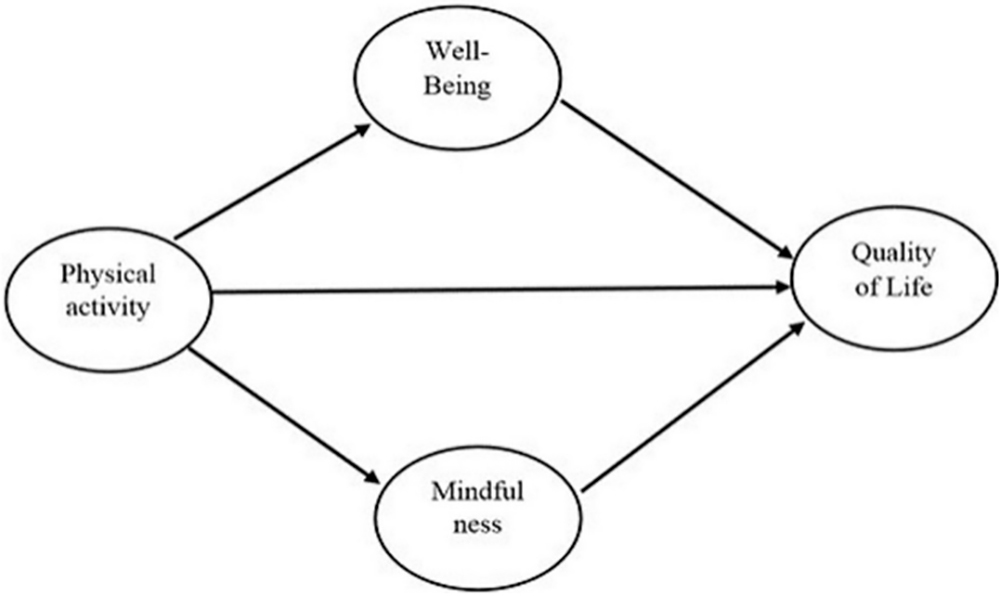
Figure 1. The figure shows the conceptual model of quality of life based on physical activity.
2.2. Selection and Description of Participants
The study population included all junior high school students (grades 7-9) in Zanjan Province, Iran, during the 2024-2025 academic year (N=48,778). Using a four-stage stratified random sampling procedure, 407 students (61.9% boys and 38.1% girls) were selected from the four educational districts of the province.
A multistage stratified random sampling procedure was employed. Educational departments in Zanjan Province, Iran were first stratified into 14 administrative areas based on official classifications from the Provincial Department of Education. These areas were then grouped into three strata according to educational resources and student population density (privileged, semi-privileged, and less-privileged). Subsequently, four areas were randomly selected, comprising one privileged area (the provincial capital), two semi-privileged areas (two cities), and one less-privileged area (one city). Finally, 24 schools were randomly selected from the four areas based on school location (urban/rural), gender, and grade level. The mean age of participants was 13.53±0.79 years.
A total of 407 students were included in the final sample (252 boys and 155 girls), comprising 172 students in Grade 7, 138 in Grade 8, and 97 in Grade 9. Regarding school location, 239 students participated in rural schools and 168 attended urban schools. Inclusion criteria were: (1) enrollment in junior high school (Grades 7-9) in the province; (2) enrollment in a public or independent school; (3) provision of informed consent; and (4) absence of acute physical or mental health conditions (e.g., anxiety, fear, pain, headache, dizziness). Participants with more than 5% missing questionnaire responses were excluded from the analysis.
2.3. Sample Size Determination
The sample size was determined based on SEM guidelines recommending 5-10 participants per observed variable ( 21 ). Considering the 62 observed variables across the study scales and established SEM guidelines, the estimated required sample size ranged from 310 to 620 participants. Questionnaires were then distributed to eligible students and collected upon completion. A total of 407 fully completed questionnaires were included in the final analysis.
2.4. Data Collection and Measurement
2.4.1. Demographic questionnaire: A demographic questionnaire was used to collect demographic data, including age, gender, grade level, school type, and self-reported health history.
2.4.2. Physical Activity Questionnaire (PAQ): The Physical Activity Questionnaire (PAQ) is a self-administered, 9-item scale developed to assess general physical activity among children and adolescents in grades 4-12 (approximately 8-20 years of age) ( 22 ). The questionnaire evaluates habitual physical activity over the previous 7 days using a 5-point Likert scale, and it is scored according to a standardized protocol validated previously in previous research ( 3 ). The PAQ has demonstrated satisfactory content validity, with a content validity index (CVI) of 0.78 and a content validity ratio (CVR) of 0.83 ( 3 ). The overall score of PAQ activity is calculated by averaging the responses across all nine items, in which higher scores indicate greater levels of physical activity ( 22 ). Based on the obtained score, participants were classified into three categories of physical activity: low (1.00-2.33), moderate (2.34-3.66), and high (3.67-5.00) physical activity ( 22 ).
2.4.3. The Student Subjective Wellbeing Questionnaire (SSWQ): The Subjective Well-Being at School Scale consists of 16 items that assess students’ subjective well-being in the school context. It includes four subscales: academic efficacy, educational purpose, joy of learning, and school connectedness. All items are rated on a 5-point Likert scale ranging from 1 to 5 ( 23 ). The Persian version of the scale has been translated using standardized procedures and has demonstrated acceptable validity and reliability ( 24 ).
2.4.4. The Freiburg Mindfulness Questionnaire-Short Form (FMI-SF): This questionnaire is a 14-item scale comprising two subscales: acceptance and presence ( 25 ). Items are rated on a 4-point Likert scale, yielding total scores ranging from 14 to 56. The questionnaire is considered a landmark scale, as it was the first formally developed measure of mindfulness ( 25 ). The Persian version of the Freiburg Mindfulness Inventory-Short Form has been translated using standardized procedures, and its validity has been established ( 26 ).
2.4.5. Children’s Quality of Life Questionnaire (QoL): This questionnaire includes 23 items in four subscales—physical, emotional, social, and school—and is designed to assess health-related quality of life in children and adolescents aged 2-18 years ( 27 ). Items are rated on a 5-point Likert scale, yielding total scores from 0 to 92 ( 27 ). The scale has demonstrated good content validity, with reported CVI and CVR values of 0.81 and 0.85, respectively ( 28 ).
Face validity was confirmed by a panel of five physical education experts, and minor item ambiguities were resolved prior to approval. Internal consistency was acceptable to high, with Cronbach’s alpha coefficients of 0.80 for physical activity, 0.90 for quality of life, 0.78 for mindfulness, and 0.85 for subjective well-being.
2.5. Procedure
After obtaining the necessary approvals from the Provincial Department of Education, Zanjan, Iran, the researcher visited junior high schools selected through stratified random sampling. Before collecting data, students received a clear explanation of the study aims and instructions for completing the questionnaires. Written informed consent was obtained from both students and their parents or legal guardians. The self-administered questionnaire package was completed during regular school hours under the researcher’s supervision. All questionnaires were checked for completeness, and those with more than 5% missing data were excluded. In total, 407 questionnaires were deemed valid and included in the final analysis.
2.6. Data Analysis
Data analyses were performed using SPSS (version 27) and SmartPLS (version 3). Descriptive statistics, including means, standard deviations, median frequencies, and percentages, were used to summarize the study variables. Data normality was examined using the Kolmogorov-Smirnov test. Differences in students’ well-being, mindfulness, and quality of life across physical activity levels were analyzed using the Kruskal-Wallis test. Structural relationships between the variables were assessed using partial least squares structural equation modeling (PLS-SEM) in SmartPLS 3. This variance-based approach was applied to evaluate both the measurement and structural models. The quality of measurement model was examined through convergent and discriminant validity, Cronbach’s alpha, composite reliability, and average variance extracted (AVE). Structural model evaluation was based on path coefficients (β), R-squared values (R²), t-values, and the goodness-of-fit index (GOF). All analyses were conducted at a significance level of α=0.05.
3. Results
A total of 407 junior high school students were included in the final analysis. Eligible participants were Grade 7-9 students from public or non-profit junior high schools in Zanjan Province, Iran.
The sample comprised 407 students (252 boys, 61.9%; 155 girls, 38.1%), with 172 in Grade 7, 138 in Grade 8, and 97 in Grade 9. The mean age was 13.53 ± 0.79 years. Overall, 168 students (41.3%) resided in urban areas and 239 (58.7%) in rural areas. Median scores were 68 (IQR=16) for mental well-being, 73 (IQR=22) for quality of life, and 41 (IQR=13) for mindfulness.
Table 1 summarizes the Kruskal-Wallis results comparing students’ mental well-being, mindfulness, and quality of life at different levels of physical activity. Significant differences were found for psychological well-being (H=35.737, P<0.001), mindfulness (H=35.116, P<0.001), and quality of life (H=96.135, P<0.001).
| Variables | Physical Activity (PA) | N | Mdn | IQR | Kruskal-Wallis | P value |
|---|---|---|---|---|---|---|
| Well-being | Low PA | 153 | 65 | 19.5 | 35.737 | 0.001 |
| Moderate PA | 167 | 68 | 15 | |||
| High PA | 87 | 73 | 9 | |||
| Mindfulness | Low PA | 153 | 39 | 10.5 | 35.116 | 0.001 |
| Moderate PA | 167 | 41 | 11 | |||
| High PA | 87 | 48 | 15 | |||
| Quality of life | Low PA | 153 | 62 | 23.5 | 96.135 | 0.001 |
| Moderate PA | 167 | 74 | 12 | |||
| High PA | 87 | 85 | 13 | |||
| Mdn=Median; IQR=Interquartile Range | ||||||
Table 2 presents the results of structural equation modeling, confirming the adequacy of the measurement model. Both Cronbach’s alpha and composite reliability values fell within acceptable ranges, indicating satisfactory reliability of the constructs.
| Variable | Composite Reliability | Cronbach’s Alpha | Well-Being | Mindfulness | Physical Activity | Quality of Life | |
|---|---|---|---|---|---|---|---|
| 1 | Well-Being | 0.928 | 0.916 | 0.669 | |||
| 2 | Mindfulness | 0.915 | 0.901 | 0.593 | 0.661 | ||
| 3 | Physical Activity | 0.916 | 0.896 | 0.261 | 0.308 | 0.742 | |
| 4 | Quality of Life | 0.932 | 0.923 | 0.437 | 0.433 | 0.478 | 0.611 |
Furthermore, discriminant validity was assessed using the Fornell-Larcker criterion. The square roots of the average variance extracted (AVE) values are shown in Table 2, with inter-construct correlations presented below the diagonal. Discriminant validity is confirmed when each construct is more strongly related to its own items compared to other constructs in the model ( 29 ). As shown in Table 2, this criterion was fulfilled for all constructs, confirming adequacy of the discriminant validity ( 29 ).
The total model fit was assessed using the Goodness-of-Fit (GOF) index, ranging from 0 to 1. As such, values of 0.10, 0.25, and 0.36 represent small, medium, and large global fit, respectively ( 30 ). In this study, the GOF value was 0.279, indicating a medium and acceptable level of total model fit.
The SEM results (Table 3 and Figure 2) showed that physical activity has significant positive effects on quality of life (β=0.361, T=7.246), well-being (β=0.261, T=5.613), and mindfulness (β=0.308, T=6.441). In turn, greater well-being (β=0.234, T=2.890) and mindfulness (β=0.184, T=2.192) were associated with higher quality of life. Additionally, physical activity indirectly affected quality of life through well-being (β=0.061, T=2.425) and mindfulness (β=0.057, T=2.093), supporting a mediating role for both variables.
| Path | β | T value | P value | |
|---|---|---|---|---|
| 1 | Well-Being→ Quality of Life | 0.234 | 2.89 | 0.004 |
| 2 | Mindfulness → Quality of Life | 0.184 | 2.192 | 0.029 |
| 3 | Physical Activity → Well-Being | 0.261 | 5.613 | 0.001 |
| 4 | Physical Activity → Mindfulness | 0.308 | 6.441 | 0.001 |
| 5 | Physical Activity → Quality of Life | 0.361 | 7.246 | 0.001 |
| 6 | Physical Activity → Well-Being→ Quality of Life | 0.061 | 2.425 | 0.016 |
| 7 | Physical Activity → Mindfulness→ Quality of Life | 0.057 | 2.093 | 0.037 |
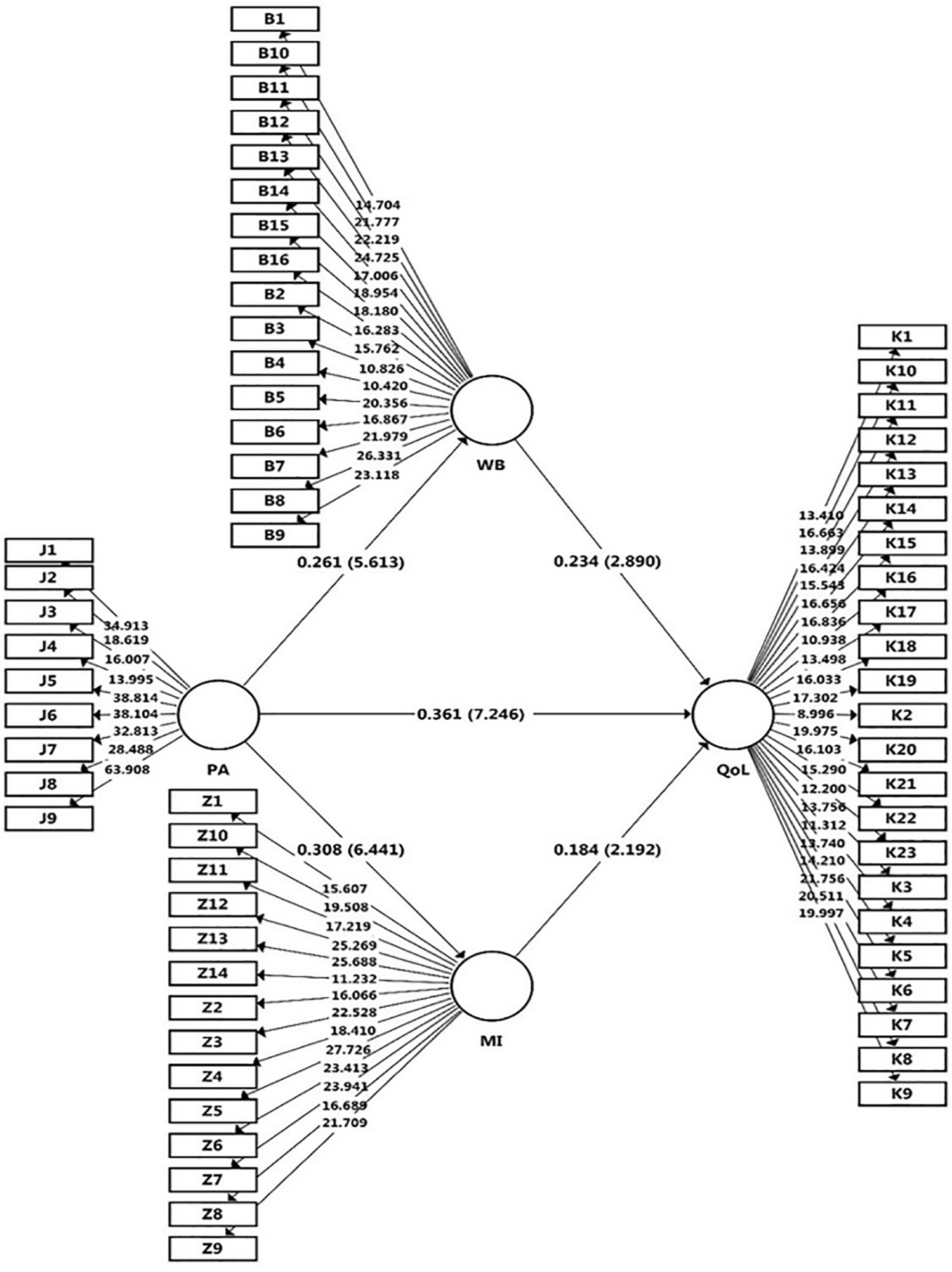
Figure 2. The figure shows the structural model of quality of life based on physical activity (standardized coefficients and t-values); PA=Physical Activity; WB=Well-Being; MI=Mindfulness; QoL=Quality of Life
4. Discussion
This study examined the associations among physical activity, mental well-being, mindfulness, and quality of life in junior high school students using structural equation modeling. Physical activity was associated with higher quality of life both directly and indirectly through psychological well-being and mindfulness. These findings indicated that psychological well-being and mindfulness partly mediate the relationship between physical activity and quality of life, highlighting their role as key psychological approaches relating to physical activity for students’ overall quality of life.
The results of this study indicated that physical activity is a significant predictor of students’ quality of life, with clear differences observed at different levels of physical activity. These findings are consistent with previous research showing that higher physical activity levels are linked to better quality of life and its fundamental dimensions among students ( 1 - 3 , 16 , 26 , 28 ).
The positive relationship between physical activity and quality of life may be explained by both physiological and psychological mechanisms. Regular physical activity improves physical health, muscular strength, and endurance, which can enhance students’ perceptions of their overall well-being ( 28 ). In addition, physical activity has been associated with improvements in daily activities, social participation, academic performance, and other quality-of-life domains, contributing to both physical and psychological well-being ( 1 - 3 , 16 , 28 ).
Overall, these findings suggested that sustained engagement in physical activity—particularly at higher intensities—plays an important role in enhancing students’ quality of life during adolescence, both directly and through its broader health-related benefits. The finding of this research demonstrated that physical activity is positively related with students’ psychological well-being, which in turn predicts quality of life among junior high school students. Significant differences were observed in well-being at different levels of physical activity, with higher activity associated with greater well-being. These results are consistent with the previous studies reporting the positive effects of physical activity on well-being and its dimensions ( 2 , 5 , 6 , 15 , 16 , 28 , 31 , 32 ).
The relationship between physical activity and well-being may be explained by several psychological and physiological mechanisms, including improvements in mental health ]2, 6, 15], reductions in anxiety and negative effect ( 6 , 28 ), and enhanced well-being ( 5 ). Neurobiological processes, such as changes in neurotransmitters and endogenous opioids, may also contribute to improved mood and emotional regulation ( 16 ). Physical activity has also been shown to produce analgesic effects ( 31 - 32 ) In addition, regular physical activity may enhance self-efficacy and self-worth, further supporting mental well-being ( 5 ).
Notably, higher levels of physical activity were associated with greater well-being benefits in comparison to low or moderate levels, suggesting a dose-response relationship. Increased physical activity may reduce sedentary behavior and promote more active use of leisure time. Overall, our findings suggested that mental well-being serves both as an outcome of physical activity and as a key psychological pathway through which physical activity contributes to students’ quality of life. Besides, the results of this study highlight the importance of promoting physical activity within the school setting. Education authorities may consider increasing the provision of structured and unstructured physical activity and integrating sport and exercise into educational programs to support students’ physical health, mental well-being, and overall quality of life.
When consistent physical activity is maintained over an extended period, individuals are more likely to experience positive emotional states and develop habitual patterns ( 5 ), which are consistent with the findings of this study. In addition, the results indicated that physical activity is positively associated with mindfulness among junior high school students, and that higher mindfulness is associated with better quality of life. Significant differences were observed in mindfulness across physical activity levels, with greater mindfulness reported among students engaging in higher levels of physical activity. These results are consistent with previous studies showing positive effects of physical activity on mindfulness and its main dimensions ( 6 - 7 ).
Evidence indicates that physical activity enhances mindfulness ( 6 ), and that integrating physical activity with mindfulness practices can produce sustained benefits for physical health, health-related behaviors, social participation, and overall well-being ( 6 ). In addition, mindfulness-based interventions have been shown to improve quality of life ( 33 ), which is consistent with the present findings. These effects may be explained by psychological mechanisms associated with physical activity, including increased motivation, self-esteem, coping capacity, self-regulation, stress reduction, and acceptance ( 6 - 7 ).
Overall, the results suggested that improvements in students’ quality of life are influenced not only by the physical benefits of activity, but also by key psychological factors, particularly mindfulness and mental well-being. Accordingly, interventions aimed at enhancing quality of life should adopt a comprehensive approach that promotes physical activity while fostering mindfulness and psychological health. These findings highlight the important role of schools in supporting students’ overall well-being and underscore the need for policymakers in the education sector to consider integrated physical and psychological health strategies within school-based sport programs. In addition, these findings underscore the importance of health promotion initiatives in schools. Physical activity emerges as a key contributor to students’ psychological well-being and quality of life, partly due to its effects on mindfulness and mental well-being. Accordingly, educational policymakers should prioritize the implementation of structured physical activity programs in schools to support students’ overall well-being.
4.1. Limitations
Several limitations should be considered when interpreting the findings of this study. The sample was restricted to junior high school students in Zanjan Province, Iran, which may limit the generalizability of the results. All variables were assessed using self-reported questionnaires, thereby increasing the risk of response and recall bias. In addition, the study did not assess different types or intensities of physical activity, examine differences between boys and girls, or evaluate changes over time. The cross-sectional design further precludes causal inference. Further research should use longitudinal designs, more diverse samples, and objective measures of physical activity to better clarify these relationships.
5. Conclusions
The present study demonstrated that physical activity is significantly associated with higher quality of life among junior high school students, both directly and indirectly, through its effects on mindfulness and mental well-being. Higher levels of physical activity were related to greater mindfulness and well-being, highlighting the role of these psychological resources in explaining the benefits of physical activity. These findings underscore the importance of physical activity in supporting students’ progress. Accordingly, promoting physical activity in schools should be considered a priority for educational policymakers, with structured programs encouraged to enhance students’ quality of life, mental well-being, and mindfulness.
Acknowledgment
This article was extracted from the MA thesis of Mr. Ahmad Khani at BU-Ali-Sina University, Hamedan, Iran. Also, the authors extend their sincere appreciation to all students, teachers, and administrators who participated in and facilitated this research.
Authors’ Contribution
Sajad Moemeni: Contribution to the study conception and design; analysis and interpretation of data for the work; drafting the work. Ahmad Khani: Contribution to the study design; validation and interpretation of data for the work; reviewing the work critically for important intellectual content. All authors have read and approved the final manuscript and agree to be accountable for all aspects of the work, such as the questions related to the accuracy or integrity of any part of the work.
Declaration of AI
The authors acknowledge the use of AI-assisted tools (DeepSeek and ChatGPT) for language translation. All content was manually reviewed and edited by the authors to ensure its accuracy and academic integrity; the authors take full responsibility for the final content of the manuscript.
Conflict of Interest
None declared.
Funding
The study was funded by the Deputy of Research at Bu-Ali Sina University (Hamedan Province, Iran) with the Grant No. 403-197.
Ethical Approval
The Ethics Committee of Bu-Ali Sina University approved the present research with the code of IR.BASU.REC.1403.035. Also, written informed consent was obtained from the participants.
References
- Oladejo T, Myezwa H, Pilusa S, Ajidahun AT. Physical activity and health-related quality of life among university students. African Journal for Physical Activity and Health Sciences (AJPHES). 2023; 29(3):289-314. DOI
- Donnelly S, Penny K, Kynn M. The effectiveness of physical activity interventions in improving higher education students’ mental health: A systematic review. Health Promot Int. 2024; 39(2):daae027. Publisher Full Text | DOI | PubMed [ PMC Free Article ]
- Moemeni S. Investigation the Level of Physical Activity in Elementary Students of Hamadan Province, Iran. Int J School Health. 2022; 9(2):99-105. DOI
- Li XY. The relationship between quality of sports friendships and mental health in Chinese junior high school students: the bidirectional chain mediating effects of sport motivation and exercise adherence. BMC Public Health. 2025; 25(1):52. Publisher Full Text | DOI | PubMed [ PMC Free Article ]
- Yao SJ, Ma QS, Liu C, Cao DW, Lyu T, Guo KL. The relationship between physical exercise and subjective well-being among Chinese junior high school students: a chain mediating model. Front Psychol. 2023; 13:1053252. Publisher Full Text | DOI | PubMed [ PMC Free Article ]
- Remskar M, Western MJ, Osborne EL, Maynard OM, Ainsworth B. Effects of combining physical activity with mindfulness on mental health and wellbeing: Systematic review of complex interventions. Mental Health and Physical Activity. 2024; 26:100575. DOI
- El Hajj A, Noulhiane M, Andrieu B, Heutte N, Sirost O. Stress, physical activity, and mindfulness practices among youth amidst COVID-19. Front Sports Act Living. 2024; 6:1493729. Publisher Full Text | DOI | PubMed [ PMC Free Article ]
- Madhesh A, Almohammed OA. Prevalence of depression, anxiety, and stigma among high school students with deafness and its association with their quality of school life: A national study from Saudi Arabia. Res Dev Disabil. 2025; 156:104894. DOI | PubMed
- Ranganathan P, Musoro JZ, Pramesh CS. Measuring quality of life in clinical research - Part 1. Perspect Clin Res. 2025; 16(3):162-165. Publisher Full Text | DOI | PubMed [ PMC Free Article ]
- Eddolls WT, McNarry MA, Lester L, Winn CO, Stratton G, Mackintosh KA. The association between physical activity, fitness and body mass index on mental well-being and quality of life in adolescents. Qual Life Res. 2018; 27(9):2313-2320. Publisher Full Text | DOI | PubMed [ PMC Free Article ]
- Nikbakhsh R, Mofrad SK, Fathizadan A. The effect of passion for physical activity on the psychological well-being of sports facilities participants. Shenakht Journal of Psychology and Psychiatry. 2022; 9(1):84-94. DOI Persian
- Fedewa AL, Ahn S, Aspiranti KB. Mindfulness in Elementary School Teachers: Effects on Teacher Stress, Mental Health, and Mindfulness in the Classroom. Int J School Health 2022;9(2):73-82. 2022; 9(2):73-82. DOI
- Appelqvist-Schmidlechner K, Heikkinen R, Vasankari T, Virtanen T, Pihlainen K, Honkanen T, et al. Relationships between psychosocial well-being and leisure time physical activity among 160.000 young Finnish men: a cross-sectional study during 2015-2021. Arch Public Health. 2023; 81(1):26. Publisher Full Text | DOI | PubMed [ PMC Free Article ]
- Eiroa-Orosa FJ. Understanding Psychosocial Wellbeing in the Context of Complex and Multidimensional Problems. Int J Environ Res Public Health. 2020; 17(16):5937. Publisher Full Text | DOI | PubMed [ PMC Free Article ]
- Herbert C. Enhancing Mental Health, Well-Being and Active Lifestyles of University Students by Means of Physical Activity and Exercise Research Programs. Front Public Health. 2022; 10:849093. Publisher Full Text | DOI | PubMed [ PMC Free Article ]
- Marquez DX, Aguiñaga S, Vásquez PM, Conroy DE, Erickson KI, Hillman C, et al. A systematic review of physical activity and quality of life and well-being. Transl Behav Med. 2020; 10(5):1098-1109. Publisher Full Text | DOI | PubMed [ PMC Free Article ]
- Serrão R, Dias P, Andrés A, Bowe M, Renshaw T. Adolescents’ school-based universal well-being screening: a validation of the student subjective wellbeing questionnaire in Portugal. School Mental Health. 2024; 16(4):1261-1274. DOI
- Khajeh Hasani Rabari F, Rezaei F, Mirzai F, Sedighi F. Investigating the role of coping strategies, personality traits and mindfulness with self-care in leukemia patients. Journal of Assessment and Research in Applied Counseling. 2023; 5(4):51-59. DOI
- Sheng M, Motevalli S. The Mediating Role of Parenting Stress in the Correlation between Internalizing Problems and Maladjustment among School-Age Children in Shanghai, China. Int J School Health. 2024; 11(3):147-156. DOI
- Asgari M, Shafaei H, Ranjbari Sh, Khajeh Aflatoon Mofrad S, Ghorbani S. The Impact of Mindfulness Training in Physical Education on Students’ Motivation, Intention, and Physical Activity. Int J School Health. 2025; 12(3):178-186. DOI
- Mohammadi M, Bahrololoum H, Mokaberian M. The Role of Mental Toughness in the Correlation between Competitive Anxiety and Athlete Burnout in Student-Athletes. Int J School Health. 2026; 13(1):32-43. DOI
- Kowalski KC, Crocker PR, Donen RM. The Physical Activity Questionnaire for Older Children (PAQ-C) and Adolescents (PAQ-A) Manual. Canada: College of Kinesiology, University of Saskatchewan; 2004.
- Renshaw TL, Long ACJ, Cook CR. Assessing adolescents’ positive psychological functioning at school: Development and validation of the Student Subjective Wellbeing Questionnaire. Sch Psychol Q. 2015; 30(4):534-552. DOI | PubMed
- Akbaribalootbangan A, Najafi M, Babaee J. The Factorial Structure of Subjective Well-Being Questionnaire in Adolescent of Qom City. Scientific Journal of School of Public Health and Institute of Public Health Research. 2016; 14(1):45-58. Persian
- Walach H, Buchheld N, Buttenmüller V, Kleinknecht N, Schmidt S. Measuring Mindfulness-The Freiburg Mindfulness Inventory (FMI). Personality and Individual Differences. 2006; 40(8):1543-1555. DOI
- Ghasemi Jobaneh R, Arab Zadeh M, Jalili Nikoo S, Mohammad Alipoor Z, Mohsenzadeh F. Survey the Validity and Reliability of the Persian Version of Short Form of Freiburg Mindfulness Inventory. J Rafsanjan Univ Med Sci. 2015; 14(2):137-50. Persian
- Varni JW, Burwinkle TM, Seid M, Skarr D. The PedsQL 4.0 as a pediatric population health measure: feasibility, reliability, and validity. Ambul Pediatr. 2003; 3(6):329-41. DOI | PubMed
- Eidiyan-Kakhki MM, Salehpour M. Home-based Bodyweight Training: An Emergency Approach to Enhance Students’ Quality of Life. Int J School Health. 2024; 11(4):279-288. DOI
- Henseler J, Ringle CM, Sarstedt M. A new criterion for assessing discriminant validity in variance-based structural equation modeling. J of the Acad Mark Sci. 2015; 43:115-135. DOI
- Hussain S, Fangwei Z, Siddiqi AF, Ali Z, Shabbir MS. Structural Equation Model for Evaluating Factors Affecting Quality of Social Infrastructure Projects. Sustainability. 2018; 10(5):1415. DOI
- Ruiz-Tejada A, Neisewander J, Katsanos CS. Regulation of Voluntary Physical Activity Behavior: A Review of Evidence Involving Dopaminergic Pathways in the Brain. Brain Sci. 2022; 12(3):333. Publisher Full Text | DOI | PubMed [ PMC Free Article ]
- Di Liegro CM, Schiera G, Proia P, Di Liegro I. Physical Activity and Brain Health. Genes. 2019; 10(9):720. Publisher Full Text | DOI | PubMed [ PMC Free Article ]
- Aghaie E, Roshan R, Mohamadkhani P, Shaeeri M, Gholami-Fesharaki M. Well-Being, Mental Health, General Health and Quality of Life Improvement Through Mindfulness-Based Interventions: A Systematic Review and Meta-Analysis. Iran Red Crescent Med J. 2018; 20(3):e16231. DOI


