
1. Introduction
Mindfulness-based training (MBT) has gained increasing attention in sport psychology due to its potential to improve focus, reduce stress, and enhance decision-making under pressure ( 1 ). In this context, MBT refers to sustained, present-moment, non-judgmental attention to internal and external experiences. It encourages the acceptance of thoughts and emotions, thereby supporting concentration, emotional regulation, and athletic performance ( 2 , 3 ).
MBT techniques such as meditation, mindful breathing, and body scanning help athletes stay grounded, minimize distractions, and maintain calm during competition. Research indicated that MBT reduces cortisol levels, improves emotional regulation, and strengthens cognitive and motor functions essential for success in dynamic sports environments ( 4 ). As a psychological skills training method, MBT has been applied across various sports with positive outcomes, particularly in precision-based disciplines like shooting and dart throwing ( 5 , 6 ).
Motor skill is defined as the learned ability to perform movements with precision and efficiency, involving coordination and control of body movements ( 7 ). These skills are fundamental to physical competence and encompass both gross motor skills, which engage large muscle groups and involve full-body movements, as well as fine motor skills, which require the precise control of smaller muscle actions ( 8 ). Research indicated that MBT can enhance motor skill acquisition by improving cognitive control, increasing the enjoyment of physical activity, and promoting adaptive learning strategies ( 9 ). Neuroimaging studies further demonstrate that MBT increases activation in brain regions associated with attention and motor control, such as the prefrontal cortex and insula, underscoring its potential as a trainable intervention to improve motor performance ( 10 , 11 ).
Mindfulness interventions have been shown to enhance motor proficiency, working memory, and emotional regulation in children and adolescents, thereby supporting motor learning and psychological resilience during critical developmental stages ( 12 , 13 ). MBT has demonstrated positive effects across various sports, especially in precision sports like shooting and dart throwing ( 5 , 6 ). Among youth, MBT improves motor proficiency, working memory, and emotional regulation, facilitating better motor learning and psychological resilience ( 12 - 14 ). Recent studies focusing on young novice soccer players have highlighted the role of MBT in enhancing mental focus, attention control, and reducing competitive anxiety, which in turn boosts confidence and performance during critical moments such as penalty shootouts ( 15 , 16 ).
The age range of 10 to 14 years represents a crucial developmental window for acquiring foundational soccer skills due to significant physical, cognitive, and neurological maturation ( 17 ). Structured training during this period is essential to prevent inefficient skill development and long-term deficits that could limit future athletic potential ( 18 , 19 ). Without targeted and structured training, important skills like passing, ball control, and decision-making may develop inefficiently, restricting athletic progression ( 19 ). Although the benefits of MBT are well documented in elite athletes ( 20 ), research is limited on its effects on skill development and mental focus in young novice soccer players ( 21 ). Despite several studies on MBT in elite athletes ( 11 , 22 ), few focus on novice soccer players aged 10 to 14 within real training environments, limiting the understanding of MBT as a tool for skill acquisition and mental focus in this critical group ( 23 , 24 ).
Therefore, an important gap remains in understanding whether the benefits of MBT can be translated into improvements in both technical skill acquisition and mental focus among young novice soccer players during a critical stage of athletic development. Addressing this gap may help determine the practical value of incorporating MBT into youth soccer training programs. Therefore, the present study aimed to investigate the effects of Mindfulness-Based Training (MBT) on soccer skills, specifically passing and shooting, and on mindfulness levels in male novice players aged 10-14 in a real training environment. This study also aimed to provide clear evidence supporting the integration of MBT into youth soccer training programs to enhance both physical performance and psychological skills.
2. Methods
2.1. Design
This was a quasi-experimental study with pre-test-post-test design and a control group conducted from June to August 2024 at indoor sports complex of Miandoab County, West Azerbaijan province, Iran.
2.2. Selection and Description of Participants
Forty male novice soccer players, aged 10 to 14 years, were selected using a convenience sampling technique from those registered in summer programs at Miandoab Gym, West Azerbaijan province, Iran. Recruitment took place in coordination with local sports clubs and recreational centers. The inclusion criteria were: (1) male novice football players who (a) had not participated in regular or organized football activities in the past year, (b) were not registered with the Iranian Football Federation, and (c) did not hold a junior football license; (2) aged between 10 and 14 years; (3) willingness and ability to comply with the study protocol; (4) normal or corrected-to-normal vision, as assessed using the Snellen chart; (5) no diagnosed neurological, musculoskeletal, visual, or hearing disorders that could affect participation in soccer training or performance on the study outcomes; and (6) no previous experience with MBT practice.
Basic demographic information, including age, height, weight, and BMI, was recorded during the initial screening session. The exclusion criteria were: unwillingness to continue, displaying uncontrolled behaviors, or being absent for more than two training sessions.
2.3. Sample Size Determination
The required sample size was calculated based on primary football performance outcomes, particularly passing accuracy, as reported in a similar randomized controlled trial by Norouzi and colleagues ( 21 ). In their study of novice adolescent football players, the intervention group achieved a higher post-test mean score for football passing performance (8.91±1.22) compared with the control group (7.52±1.73). Using these values, the effect size (Cohen’s d ≈ 0.84) was calculated, and the minimum sample size per group was estimated using G*Power (version 3.1.9.7) with α=0.05 and power=0.95, resulting in 18 participants per group. To account for potential dropouts, 20 participants were recruited per group, for a total of 40 individuals. Participation was entirely voluntary, and all participants and their parents were informed about the study aims and procedures. Parents or legal guardians provided written informed consent prior to participation. The participants’ information was anonymized using ID codes, and all sensitive data were securely stored, with access restricted to the research team.
2.4. Randomization
Using a computer-generated random number sequence, the study participants were allocated in a 1:1 ratio to either the mindfulness-based training (MBT) group or the control group. To maintain allocation concealment, sealed, opaque, and consecutively numbered envelopes were prepared beforehand and opened in order by an independent researcher who was not involved in participant recruitment or outcome assessment; no stratification factors were applied. The outcome assessor remained blinded to group allocation, ensuring a single-blind design. The flow diagram of the study is summarized in Figure 1.
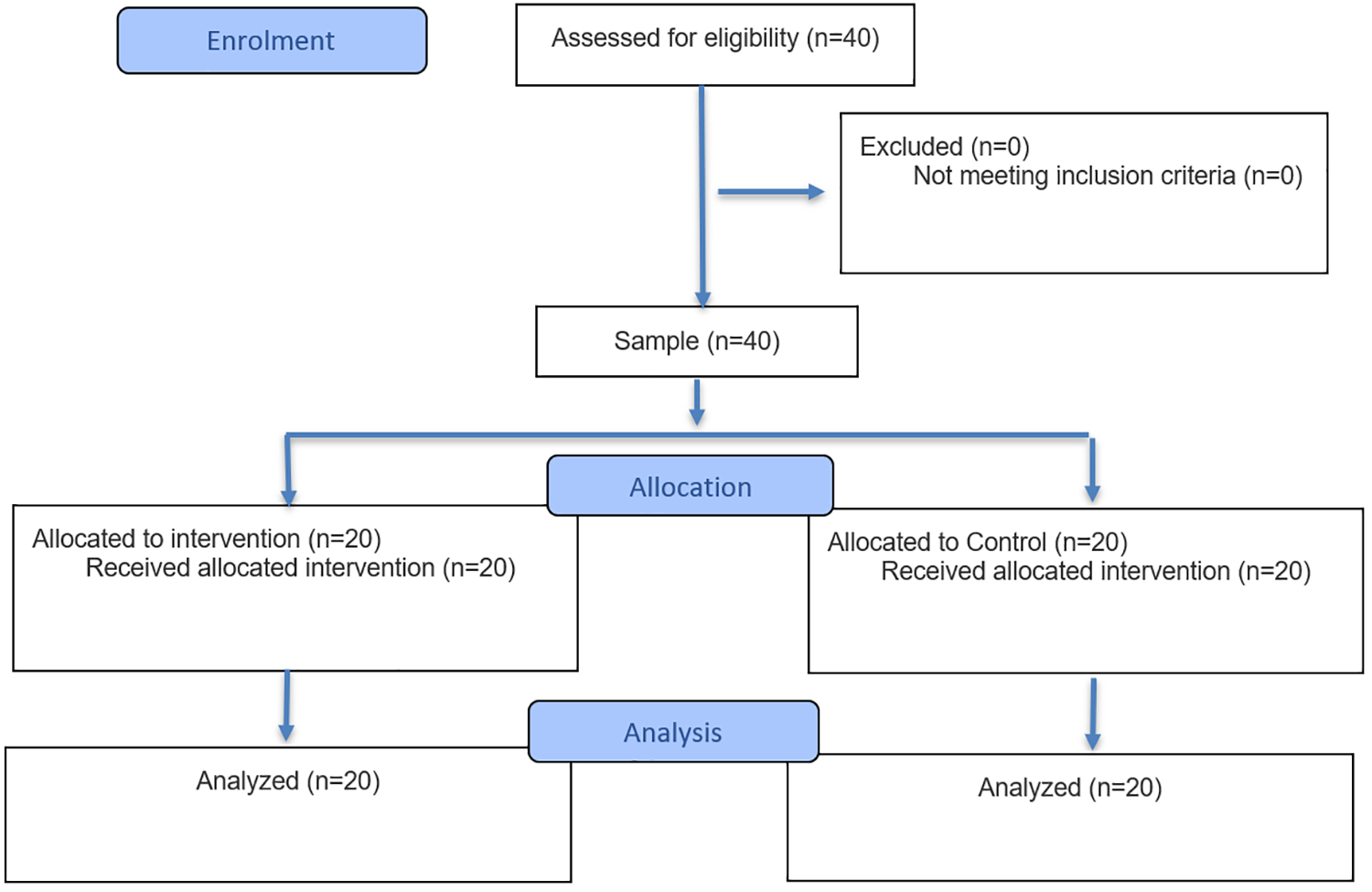
Figure 1. The figure shows the CONSORT flow diagram of the research.
2.5. Data Collection and Measurements
2.5.1. Mindfulness Inventory for Sport (MIS): Mindfulness was assessed using the Mindfulness Inventory for Sport (MIS) developed by Thienot and colleagues, consisting of 51 items across three subscales: awareness, nonjudgment, and refocusing ( 25 ). It uses a 2-point Likert scale ranging from 1 (not at all) to 2 (completely). Subscale scores range from 17 to 34, and the total score ranges from 51 to 102. In Iranian female athletes, MIS has demonstrated good psychometric properties. Ajilchi and colleagues confirmed the three-factor structure of MIS, supporting construct validity and reported strong reliability ( 26 ). Overall, MIS shows robust face and content validity through expert review, high internal consistency (Cronbach’s α=0.82-0.91), and adequate test-retest reliability (r=0.78-0.86) in athlete populations ( 25 - 27 ). Face and content validity were established through expert review by sport psychologists and coaches, ensuring the items are relevant, clear, and representative of the constructs of mindfulness.
2.5.2. Soccer Shooting Test: Shooting accuracy was assessed using the soccer shooting test of Mor and Christian ( 28 ), which evaluates precision but not speed or power. Four circular targets (1.21 m diameter) were placed in each corner of a soccer goal. The participants took shots from a distance of 14.63 m (16 yards), with 10 points awarded for a shot that hit a target and 4 points for shots that passed through the target area. Each participant had one practice shot per target, followed by four test shots, rotating through the four target corners. Points were awarded based on accuracy (2 points for direct hits, 1 point for adjacent hits). The test has demonstrated strong psychometric properties, including high test-retest reliability (r=0.96) and substantial construct validity (r=0.78), indicating its effectiveness in assessing shooting performance among soccer players ( 28 ).
2.5.3. Soccer Passing Test: Passing skill was assessed using the soccer passing test of Mor and Christian ( 28 ). The participants passed the ball from three different positions on the field, each 13.71 m from a target area defined by two cones (45.72 cm high). Positions included center, right, and left. Four passes were made from each position (12 in total). The final passing skill score was the average score across all attempts. This test is validated for adolescents, with reported test-retest reliability of 0.96 ( 28 ).
2.6. Procedure
The participants were randomly assigned to the mindfulness-based training (MBT) or control group. All pre- and post-tests were performed under identical standardized conditions, including consistent time (4-6 PM), lighting, temperature, and equipment.
Before the intervention, a certified coach provided a group briefing on basic passing and shooting techniques. To minimize cross-group contamination, each group was trained on separate days under the direct supervision of the research team, and all sessions were delivered using standardized instructional protocols.
The experimental group completed 12 sessions, each with 20 minutes of soccer skill practice and 20 minutes of MBT practices. MBT, adapted from Zhu and co-workers, focused on mindful breathing and body scan exercises led by a certified instructor with over two years of experience ( 29 ). The control group performed equivalent physical training without MBT components. Although the intervention sessions were slightly longer, prior research supports the benefit of combining MBT with physical training to improve both skill and psychological outcomes ( 30 , 31 ).
2.7. Data Analysis
All statistical analyses were performed using SPSS version 26.0. Before performing the ANCOVA, the relevant assumptions were verified. Data normality was assessed using the Shapiro-Wilk test, homogeneity of variances was examined with Levene’s test, and homogeneity of regression slopes across groups was confirmed. Between-group differences were analyzed using ANCOVA, controlling for pre-test scores, while within-group changes were evaluated with paired t-tests. Statistical significance was set at P<0.05.
3. Results
All participants were male, with 20 in the intervention group and 20 in the control group. The mean age was 13.13±1.03 years in the intervention group and 12.55±1.35 years in the control group. There were no statistically significant differences between the groups in terms of height (1.64±1.60 m vs. 1.60±1.64 m; P=0.59), weight (60.55±5.88 kg vs. 57.85±8.30 kg; P=0.87), or baseline mindfulness scores (58.50±15.22 vs. 51±14.59; P=0.71). These results indicated that the groups were comparable at baseline, allowing any subsequent differences to be attributed to the intervention (Table 1).
| Variable | Intervention Group (n=20) | Control Group (n=20) | P value |
|---|---|---|---|
| Age (years) | 13.13±1.03 | 12.55±1.35 | 0.73 |
| Height (meters) | 1.64±1.60 | 1.60±1.64 | 0.59 |
| Weight (kg) | 60.55±5.88 | 57.85±8.30 | 0.87 |
| Mindfulness score | 58.50±15.22 | 51±14.59 | 0.71 |
Table 2 presents mean and standard deviation values, within-group statistical comparisons, and between-group differences (controlling for baseline scores) in mindfulness scores, football shooting, and passing skills for both the intervention and control groups before and after the intervention.
| Variable | Group | Pre-test Mean±SD | Post-test Mean±SD | Within-Group t | Within-Group P value | Between-Group P value (ANCOVA) |
|---|---|---|---|---|---|---|
| Mindfulness Score | Control (n=20) | 51±14.59 | 51.65±14.05 | -0.497 | 0.625 | — |
| Intervention (n=20) | 58.50±15.22 | 65.75±12.47 | -10.912 | <0.001 | 0.001 | |
| Football Shooting | Control (n=20) | 41.00±8.62 | 40.80±8.82 | 0.89 | 0.38 | — |
| Intervention (n=20) | 47.95±9.10 | 58.85±13.51 | -6.17 | <0.001 | 0.001 | |
| Football Passing | Control (n=20) | 7.70±2.55 | 7.80±2.46 | -0.56 | 0.57 | — |
| Intervention (n=20) | 7.00±1.55 | 9.65±3.01 | -4.52 | <0.001 | 0.001 | |
| SD: Standard Deviation; P<0.01 indicates a statistically significant difference. | ||||||
In the control group, no statistically significant within-group differences were observed for mindfulness, football shooting, or passing skills. Despite slight changes in mean scores, paired t-tests indicated that these changes were not statistically significant (P=0.625 for mindfulness, P=0.38 for shooting, and P=0.57 for passing). In contrast, the intervention group exhibited statistically significant improvements across all three variables. The mean mindfulness score increased from 58.50±15.22 (pre-test) to 65.75±12.47 (post-test), (t=-10.912, P<0.001). Similarly, football shooting scores improved from 47.95±9.10 to 58.85±13.51 (t=-6.17, P<0.001), and passing scores increased from 7.00±1.55 to 9.65±3.01 (t=-4.52, P<0.001). These findings supported the effectiveness of the mindfulness-based intervention in enhancing both mental and technical performance among novice male football players.
The results of the analysis of covariance (ANCOVA) indicated that, after controlling for pre-test scores, there was a statistically significant difference in post-test scores between the intervention (mindfulness-based) and control groups for all three variables including football shooting, football passing, and mindfulness score.
Specifically, the mindfulness-based intervention had a significant effect on shooting performance (F (1, 37)=28.757, P=0.001, partial η²=0.43), as well as on passing performance (F(1, 37)=15.879, P=0.001, partial η²=0.30).
Furthermore, the intervention produced a highly significant improvement in overall mindfulness levels, as measured by the MIS total score (F (1, 37)=246.246, P=0.001, partial η²=0.869). This indicates a very large effect size, with the intervention accounting for approximately 87% of the variance in post-test mindfulness scores.
These results suggested that, after controlling for baseline performance, participants in the intervention group experienced significantly greater improvements in both technical football skills and mindfulness levels compared with those in the control group.
In terms of the effect size, the intervention accounted for 43% of the variance in shooting performance, 30% of the variance in passing performance, and 86.9% of the variance in mindfulness scores, indicating a moderate to large effect on technical skills and a very large effect on sport-related mindfulness in novice male players.
4. Discussion
The present study aimed to examine the effect of a mindfulness-based training (MBT) on the development of technical football skills, specifically shooting and passing, in novice male players aged 10 to 14 years. This age range is a critical period for the development of motor, cognitive, and neurological abilities, representing a sensitive window for acquiring foundational football skills.
Our findings showed that integrating MBI with physical training significantly improved shooting and passing skills in the experimental group. In contrast, the control group, which received only physical training, did not demonstrate significant improvements. Additionally, mindfulness scores increased significantly in the intervention group, underscoring the effectiveness of MBI in enhancing mental focus and attentional control. This enhancement in mindfulness likely contributed to the observed improvements in technical football skills by promoting greater concentration and reducing performance anxiety during skill execution.
4.1. Age-Related Development and Role of MBT
The age range of 10 to 14 years is characterized by rapid development in agility, balance, coordination, decision-making, and cognitive responses ( 32 , 33 ). During this critical period, MBT practices can play a crucial role in enhancing focus, reducing stress, and improving cognitive functioning, which in turn benefits motor learning and the execution of technical skills ( 34 ). Furthermore, given the individual differences in physical and cognitive development, combining MBT with tailored physical training can help maximize the athletic potential of young players ( 19 ). These findings highlighted the value of incorporating MBT programs into youth sports programs to support skill acquisition and overall performance enhancement.
4.2. Increases in Mindfulness and Psychological-Neurological Mechanisms
The results showed a significant increase in mindfulness scores among the study participants in the intervention group, with a large effect size (partial η²=0.52). This finding is consistent with prior research demonstrating that structured MBT programs can enhance mindfulness traits in athletes ( 6 ). The observed improvements may be due to several mechanisms, including better emotion regulation and increased psychological resilience, which are particularly important during adolescence ( 35 ). From a cognitive and neurodevelopmental perspective, MBT practices helps young athletes develop a nonjudgmental awareness of their internal experiences, thereby strengthening attentional control and reducing experiential avoidance ( 36 ). Over time, these processes not only improve immediate performance but also support sustained mental well-being and adaptive coping strategies essential for long-term athletic and personal growth ( 37 ).
4.3. Effects of MBT on Technical Football Performance
The study results demonstrated a significant impact of MBT on technical football performance. The effect sizes were moderate to large, with partial η²=0.43 for shooting and 0.30 for passing. These results align with a systematic review by Lochbaum and co-workers, which reported a moderate average effect size (d=0.51) for sport psychology interventions, including mindfulness, on athletic performance ( 38 ). The observed effect sizes support the integration of MBT as a valuable complement to technical training for youth athletes, particularly beginners.
Our findings are consistent with those of Mashhoot and colleagues, who reported significant improvements in shooting, passing, and dribbling among beginner football players following MBT in Iraq ( 39 ). Similarly, Arslan and Ermiş found that combining motor training with MBT enhances training effectiveness, supporting our results ( 40 ). However, our findings partially contrast with Köksal and colleagues, who focused on motor coordination training without MBT and did not observe a direct effect of MBT on technical skills ( 41 ). These differences may stem from variations in the nature and duration of the interventions.
4.4. Limitations
While our study offered valuable insights, several limitations should be noted. First, the sample size was relatively small and limited to one geographic area, which may affect the generalizability of the results. Second, the study focused only on male participants; future research should explore potential gender differences. Third, while technical performance was assessed, psychological variables such as attentional control, anxiety, or motivation, which could mediate the effect of MBT were not measured. Additionally, although shooting and passing performance were evaluated using the Soccer Shooting and Passing Tests of Mor and Christian, formal evidence regarding their face, content, or construct validity is limited. This represents a methodological limitation and should be considered when interpreting the results.
5. Conclusions
This study provided empirical evidence supporting the effectiveness of a short-term mindfulness-based training (MBT) in improving football passing and shooting skills among beginner adolescent players. The findings suggested that MBT can enhance motor performance even in early stages of skill acquisition, highlighting its potential as a complementary approach to technical coaching. By cultivating present-moment awareness and reducing performance-related distractions, MBT may facilitate more effective learning and execution of sport-specific skills.
Given the increasing demands for mental skills training in youth sports, incorporating MBI into regular football training programs could foster both psychological and motor development. Coaches and educators are encouraged to consider MBT as a low-cost, accessible, and evidence-based strategy to support the holistic development of young athletes. Future research should include follow-up assessments, explore combining MBT with other interventions, and use neurocognitive tools to better understand its mechanisms.
Acknowledgment
This article was extracted from the MSc thesis of Mr. Mohammad Yousefi at Urmia University, Urmia, Iran. Also, the authors sincerely thank all participants who contributed to the completion of this study.
Authors’ Contributions
Mohammad Yousefi: Contribution to the conception and design of the study; data collection and analysis; drafting the work and reviewing it critically for important intellectual content. Razieh Khanmohammadi: Contribution to the conception and design of the study; drafting the work and reviewing it critically for important intellectual content. All authors have reviewed and approved the final manuscript and take responsibility for all aspects of the work, including questions regarding the accuracy or integrity of any part.
Declaration of AI
The authors acknowledge the use of AI-assisted tools (ChatGPT/OpenAI) for editing the language, improving the clarity, and refining the wording of some parts of the manuscript. All content was manually reviewed and edited by the authors to ensure its accuracy and academic integrity; the authors take full responsibility for the final content of the manuscript.
Conflict of Interest
None declared.
Funding
None.
Ethical Approval
The Ethics Committee of Urmia University, Urmia, Iran approved the present research with the code of IR.URMIA.REC.1403.030. Also, written informed consent was obtained from the participants.
References
- Liu F, Zhang Z, Liu S, Zhang N. Examining the Effects of Brief Mindfulness Training on Athletes’ Flow: The Mediating Role of Resilience. Evid Based Complement Alternat Med. 2021; 2021:6633658. Publisher Full Text | DOI | PubMed [ PMC Free Article ]
- Jekauc D, Kittler C, Schlagheck M. Effectiveness of a Mindfulness-Based Intervention for Athletes. Psychology. 2017; 8(1):1-3. DOI
- Kaufman KA, Glass CR, Pineau TR. Mindful sport performance enhancement (MSPE): Development and applications. In Baltzell A, editor. Mindfulness and performance. New York: Cambridge University Press; 2016.
- Zhu Y, Sun F, Li C, Chow DHK. Acute Effects of Brief Mindfulness Intervention Coupled with Carbohydrate Ingestion to Re-Energize Soccer Players: A Randomized Crossover Trial. Int J Environ Res Public Health. 2020; 17(23):9037. Publisher Full Text | DOI | PubMed [ PMC Free Article ]
- Bühlmayer L, Birrer D, Röthlin P, Faude O, Donath L. Effects of Mindfulness Practice on Performance-Relevant Parameters and Performance Outcomes in Sports: A Meta-Analytical Review. Sports Med. 2017; 47(11):2309-2321. DOI | PubMed
- Si XW, Yang ZK, Feng X. A meta-analysis of the intervention effect of mindfulness training on athletes’ performance. Front Psychol. 2024; 15:1375608. Publisher Full Text | DOI | PubMed [ PMC Free Article ]
- Adolph KE, Hoch JE. The Importance of Motor Skills for Development. Nestle Nutr Inst Workshop Ser. 2020; 95:136-144. DOI | PubMed
- Rohisfi E, Neviyarni N. Analisis Belajar Keterampilan Motorik. Edukatif: Jurnal Ilmu Pendidika. 2021; 3(1):27-34. DOI Indonesian
- Liu H-Y, Lu FJ, Hsu Y, Gill DL, Chiu Y-H, Peng Y-H. Interactive Effects on Motor Performance of Mindfulness, Performance Under Pressure, Self-Talk, and Motor Task Characteristics. Percept Mot Skills. 2022; 129(2):307-327. DOI | PubMed
- Falcone G, Jerram MW. Brain Activity in Mindfulness Depends on Experience: a Meta-Analysis of fMRI Studies. Mindfulness. 2018; 9(3):1319-1329. DOI
- Tang Y-Y, Hölzel BK, Posner MI. The neuroscience of mindfulness meditation. Nat Rev Neurosci. 2015; 16(4):213-25. DOI | PubMed
- Tarrasch R, Margalit-Shalom L, Berger R. Enhancing Visual Perception and Motor Accuracy among School Children through a Mindfulness and Compassion Program. Front Psychol. 2017; 8:281. Publisher Full Text | DOI | PubMed [ PMC Free Article ]
- Behaein N, Farsi A, Franz E, Lipowski M. The effect of a course mindfulness exercises on working memory indexes in adolescents. Shenakht Journal of Psychology and Psychiatry. 2023; 10(3):94-103. DOI Persian
- Gross M, Moore ZE, Gardner FL, Wolanin AT, Pess R, Marks DR. An empirical examination comparing the Mindfulness-Acceptance-Commitment approach and Psychological Skills Training for the mental health and sport performance of female student athletes. International Journal of Sport and Exercise Psychology. 2018; 16(4):431-451. DOI
- Zadkhosh SM, Zandi HG, Ghorbannejad M. The effects of Mindfulness-Based Cognitive Therapy (MBCT) on cognitive skills in young soccer players. Exercise and Quality of Life. 2019; 11(1):5-11. DOI
- Shi L, Jing L, Wang H, Liu Y. Exploring the association of mindfulness, confidence, competitive state anxiety, and attention control in soccer penalty shootouts. Front Psychol. 2024; 15:1439654. Publisher Full Text | DOI | PubMed [ PMC Free Article ]
- Săvescu DV, Sandra M. Aspects regarding the development of basic motor skills in 10- 12 year old children in football. Perspectives of the coach. Geosport for Society. 2021; 18(1):1-8. DOI
- Mujezinović E, Kapidžić A, Muratović M, Užičanin E, Babajić F. THE EFFECTS OF PROGRAMMED WORK ON THE DEVELOPMENT OF BASIC MOTOR SKILLS IN YOUNG FOOTBALL PLAYERS. Sport Scientific And Practical Aspects. 2022; 19(2):27-33. DOI
- Grygus I, Gamma T, Godlevskyi P, Zhuk M, Zukow W. Methodological aspects of developing motor skills in children of different ages during football club activities. Journal of Education, Health and Sport. 2024; 64:55525. DOI
- Noetel M, Ciarrochi J, Van Zanden B, Lonsdale C. Mindfulness and acceptance approaches to sporting performance enhancement: A systematic review. International Review of Sport and Exercise Psychology. 2019; 12(3):139-175. DOI
- Norouzi E, Norouzi Seyed Hossini R, Afrouzeh MS, Vaezmousavi M, Gerber M, Puehse U, et al. Examining the Effectiveness of a PETTLEP Imagery Intervention on the Football Skill Performance of Novice Athletes. Journal of Imagery Research in Sport and Physical Activity. 2019; 14(1)DOI
- Sappington R, Longshore K. Systematically Reviewing the Efficacy of Mindfulness-Based Interventions for Enhanced Athletic Performance. Journal of Clinical Sport Psychology. 2015; 9(3):232-262. DOI
- Christie AW, Patel NP. Athlete mindful skills associated with reaction time among recreational football players: An analytical study. Journal of Society of Indian Physiotherapists. 2024; 11(3):08-10. DOI
- Oguntuase SB, Sun Y. Effects of mindfulness training on resilience, self-confidence and emotion regulation of elite football players: The mediating role of locus of control. Asian Journal of Sport and Exercise Psychology. 2022; 2(3):198-205. DOI
- Thienot E, Jackson B, Dimmock J, Grove JR, Bernier M, Fournier JF. Development and preliminary validation of the mindfulness inventory for sport. Psychology of Sport and Exercise. 2014; 15(1):72-80. DOI
- Ajilchi B, Mohebi M, Zarei S, Kisely S. Effect of a mindfulness programme training on mental toughness and psychological well-being of female athletes. Australas Psychiatry. 2022; 30(3):352-356. DOI | PubMed
- Wieczorek A, Renner K-H, Schrank F, Seiler K, Wagner M. Psychometric Properties of the Mindfulness Inventory for Sport (German Version). Front Psychol. 2022; 13:864208. Publisher Full Text | DOI | PubMed [ PMC Free Article ]
- Mor D, Christian V. The development of a skill test battery to measure general soccer ability. NCJHPE. 1979; 15(1):30.
- Zhu Y, Sun F, Li C, Huang J, Hu M, Wang K, et al. Acute effects of mindfulness-based intervention on athlete cognitive function: An fNIRS investigation. J Exerc Sci Fit. 2022; 20(2):90-99. Publisher Full Text | DOI | PubMed [ PMC Free Article ]
- Wang Y, Lei SM, Fan J. Effects of Mindfulness-Based Interventions on Promoting Athletic Performance and Related Factors among Athletes: A Systematic Review and Meta-Analysis of Randomized Controlled Trial. Int J Environ Res Public Health. 2023; 20(3):2038. Publisher Full Text | DOI | PubMed [ PMC Free Article ]
- Kelemen B, Tóth R, Benczenleitner O, Tóth L. Effects of group mindfulness intervention on high-level distance runners: a quasi-experimental study. Front Sports Act Living. 2025; 7:1556404. Publisher Full Text | DOI | PubMed [ PMC Free Article ]
- Fransen J, Bennett KJM, Woods CT, French-Collier N, Deprez D, Vaeyens R, et al. Modelling age-related changes in motor competence and physical fitness in high-level youth soccer players: implications for talent identification and development. Science and Medicine in Football. 2017; 1(3):203-208. DOI
- Paśko W, Śliż M, Paszkowski M, Zieliński J, Polak K, Huzarski M, et al. Characteristics of Cognitive Abilities among Youths Practicing Football. Int J Environ Res Public Health. 2021; 18(4):1371. Publisher Full Text | DOI | PubMed [ PMC Free Article ]
- Mohammed OY, Attia A. Small-sided game activities impact the specific motor skills and skill-related competencies of football players between the ages of 12 and 14 years. Journal of Physical Education. 2024; 36(4):923-940. DOI
- Zhang J, Sun J, Zhou Y, Gong L, Huang S. The effect of mindfulness training on the psychological state of high-level athletes: Meta analysis and system evaluation research. J Sports Sci. 2025; 43(6):600-622. DOI | PubMed
- Röthlin PH, Horvath S, Trösch S, Holtforth MG, Birrer D. Differential and shared effects of psychological skills training and mindfulness training on performance-relevant psychological factors in sport: a randomized controlled trial. BMC Psychol. 2020; 8(1):80. Publisher Full Text | DOI | PubMed [ PMC Free Article ]
- Jones BJ, Kaur S, Miller M, Spencer RMC. Mindfulness-Based Stress Reduction Benefits Psychological Well-Being, Sleep Quality, and Athletic Performance in Female Collegiate Rowers. Front Psychol. 2020; 11:572980. Publisher Full Text | DOI | PubMed [ PMC Free Article ]
- Lochbaum M, Stoner E, Hefner T, Cooper S, Lane AM, Terry PC. Sport psychology and performance meta-analyses: A systematic review of the literature. PLoS One. 2022; 17(2): e0263408. Publisher Full Text | DOI | PubMed [ PMC Free Article ]
- Mashhoot HA, Faraeen M, Algnabe AH, Abdi H, Meshkati Z. Examining the Effectiveness of a Mindfulness-Based Training Program on Achievement Motivation, Self-Confidence, and Sports Performance among Novice Football Students in Iraqi Schools. International Journal of Sport Studies for Health. 2025; 8(1):79-85. DOI
- Arslan Y, Ermiş E. The Effects Of Life Kinetic Exercises On Technical Skills And Motor Skills Performance In Young Football Players. European Journal of Physical Education and Sport Science. 2023; 9(4):132-144. DOI
- Köksal M, Gül GK, Doğanay M, Álvarez-García C. Effects of coordination training on the technical development in 10-/13-year-old football players. J Sports Med Phys Fitness. 2021; 61(4):497-504. DOI | PubMed

