
1. Introduction
Premenstrual syndrome (PMS) is one of the most prevalent conditions affecting individuals of reproductive age, characterized by cyclical physical, psychological, and behavioral changes. Approximately 50-80% of women experience PMS with varying degrees of symptoms during their reproductive years, ranging from mild to severe ( 1 ). PMS symptoms typically appear 6 to 12 days before the onset of menstruation and resolve with the start of bleeding, or at most, within two days afterwards. This syndrome is recognized as a neuroendocrine-psychiatric disorder, the precise etiology of which remains incompletely understood, and encompasses a wide spectrum of physical and psychological manifestations ( 1 , 2 ). Frequent psychological manifestations include irritability, mood instability, and anxiety, as well as feelings of despair, depression, and a diminished ability to focus. The most common physical symptoms are breast tenderness and swelling, abdominal bloating, musculoskeletal pain, headache, fatigue, increased appetite, and weight gain ( 3 ).
The severity of premenstrual syndrome (PMS) cannot be measured by hormonal or laboratory tests; instead, it is determined by the extent to which symptoms affect women’s daily functioning. This assessment is typically carried out through clinical interviews and evaluation of how symptoms influence various aspects of women’s lives ( 4 ). PMS symptoms usually first appear during adolescence, coinciding with the onset of menstruation ( 5 ). A girl’s initial experience of menstruation and its effects often occurs during her school years, and studies showed that PMS can significantly impair academic performance. Common consequences include reduced classroom concentration, fatigue, difficulty in completing assignments, decreased motivation, lower grades, increased school absenteeism, and an overall decline in academic functioning ( 6 , 7 ).
Studies showed that one factor influencing the severity of premenstrual syndrome (PMS) is mental health. Depression, anxiety, and stress levels are significantly higher in individuals with PMS than in those without it ( 8 , 9 ). Everyday stress and anxiety related to school exams among students can also exacerbate PMS symptoms ( 10 ).
Exam-related stress and anxiety can indirectly affect the severity of PMS by fostering negative attitudes towards menstruation ( 11 ). Women’s attitudes and beliefs about menstruation are key factors in the occurrence and intensity of PMS; for example, women who view menstruation as bothersome and predictable tend to report more severe PMS symptoms. There is a direct correlation between the severity of menstrual symptoms - such as physical pain and functional impairment - and the development of a negative outlook towards menstruation, which subsequently worsens PMS symptoms ( 12 , 13 ).
Furthermore, women’s health-seeking behaviors to alleviate PMS symptoms are also influenced by their beliefs, such as feeling ashamed of menstruation or thinking that symptoms must simply be endured, which reduce the likelihood of seeking treatment to relieve PMS symptoms ( 14 ).
The reactions of significant individuals in women’s lives also play an important role in how they cope with premenstrual changes. Positive understanding and responses from others regarding women’s premenstrual changes can reduce negative emotions and enable the use of effective coping strategies. Social support has a direct effect on alleviating PMS symptoms. For students, such support may come from family, friends, or teachers. Barari and colleagues reported that girls who receive greater support from parents and peers report milder PMS symptoms ( 11 ). Moreover, social support is recognized as a factor in stress reduction. In some studies, higher levels of perceived empathy from teachers are linked to a significant reduction in students’ experiences of stress, anxiety, and depression ( 15 , 16 )
Environmental factors and access to healthcare services can significantly influence the severity and recurrence of premenstrual syndrome (PMS) or premenstrual dysphoric disorder (PMDD), particularly among students. Limited access to healthcare, insufficient education about menstrual health, and school environments lacking adequate facilities to meet the specific needs of adolescent girls may exacerbate symptoms and reduce their ability to manage them effectively. These limitations in schools can also increase students’ anxiety during menstruation ( 17 ).
Conversely, access to school-based counselling services, knowledgeable health educators, and supportive resources can enhance students’ self-efficacy in managing PMS symptoms and empower them to adopt healthier behaviors ( 17 , 18 ).
The factors previously discussed regarding the severity of PMS symptoms correspond to various constructs of the BASNEF model (beliefs, attitudes, subjective norms, and enabling factors) and can be analyzed within this framework. According to the BASNEF model, a belief may be formed based on an individual’s personal experiences, societal influences, or information obtained through reading and listening. Attitudes result from an individual’s beliefs; that is, an attitude represents a positive or negative evaluation of a behavior and the value of performing it. An individual’s perception of societal pressure and the expectations of others define subjective norms. Enabling factors are the necessary resources and competencies that bridge the gap between intention and actual execution ( 19 ).
Evidence suggested that behavioral change models can be applied to predict health-related outcomes. The prevalence of premenstrual syndrome (PMS) is higher among high school adolescent girls compared with other age groups ( 20 ), and one important factor influencing PMS severity is mental health. However, based on the literature search, no study has analyzed this issue within the framework of the BASNEF model. Therefore, the aim of this study was to investigate the predictive value of BASNEF model constructs in relation to the severity of PMS symptoms and to analyze the mediating role of mental health in this relationship.
2. Methods
2.1. Design
This cross-sectional study was conducted among female students in 8th and 9th grades in Shiraz, Iran.
2.2. Selection and Description of Participants
2.2.1. Inclusion Criteria: Students in 8th and 9th grades, with full consent for participation from both the student and their parents, and girls who had experienced menarche at least six months prior and had regular menstrual cycles (21-35 day intervals and 3-7 day durations) were included in the study.
2.2.2. Exclusion Criteria: Experiencing stressful life events in the past three months, such as the death of a close relative or friend, parental divorce, or having a severe psychiatric disorder (e.g., major depression, panic attacks, schizophrenia) under medical supervision (based on self-report from the student, parents, or school authorities), or receiving medical treatment for any chronic illness.
The participants were recruited using a multistage random sampling method. First, two education districts were selected from the four districts of Shiraz, Iran through simple random sampling technique. Then, two junior girls’ high schools were randomly selected from each of the districts. Next, one 8th-grade class and one 9th-grade class were randomly selected from each school, and all students in the selected classes who met the inclusion criteria and whose parent signed the informed consent form entered the study.
2.3. Sample Size Calculation
The sample size was calculated using NCSS PASS version 15 software, based on an estimated correlation coefficient of 0.25 between PSST prevention behaviors and Health Belief Model constructs, as reported by Khalilzadeh and colleagues ( 21 ). The calculation assumed a 95% confidence level (α=0.05), 95% power, and an estimated 10% nonresponse rate, resulting in a sample size of 220. This sample size meets various rules of thumb, which recommend at least 100 or 200 participants ( 22 ), or 10 cases per variable for structural equation modelling ( 23 ). After distributing questionnaires to 230 students, 221 participants completed them.
2.4. Data Collection and Measurements
In this study, data were collected using several instruments, a demographic information form, the Premenstrual Symptoms Screening Tool (PSST), a researcher-developed questionnaire based on the BASNEF model, and the Depression Anxiety Stress Scale-21 items (DASS-21).
a) Demographic Information Questionnaire
This questionnaire collected information on participants’ age, school grade, parents’ educational level, and parents’ job and economic status.
b) Premenstrual Symptoms Screening Tool (PSST)
PSST was originally developed in English by Steiner and co-workers in Canada ( 24 ). It comprises 19 items in two separate sections. The first section contains 14 items addressing mood, physical, and behavioral symptoms, while the second section includes 5 items evaluating the extent to which these symptoms interfere with regular life routines. Each item is rated on a four-point Likert scale from 0 (“not at all”) to 3 (“severe”). Domain-specific scores (emotional, physical, behavioral) and daily life impact scores are calculated by summing the relevant items, with a total score range of 0 to 57; higher scores indicate more severe symptoms. The Persian version of PSST was validated by Hariri and colleagues. Content validity, evaluated using CVR and CVI, showed acceptable values (0.7 and 0.8, respectively) ( 25 ).
c) Researcher-Developed Questionnaire Based on BASNEF Model
Guided by the BASNEF model constructs, the research team developed a 41-item questionnaire covering beliefs (8 items), attitudes (7 items), enabling factors (9 items), subjective norms (8 items), and knowledge (9 items) regarding PMS. Items assessing BASNEF constructs used a five-point Likert scale from “strongly agree” to “strongly disagree”, scored from 1 to 5. Knowledge items offered “true”, “false”, and “I do not know” responses; correct answers scored 1, while incorrect or “I do not know” responses scored 0.
The Content Validity Ratio (CVR) and Content Validity Index (CVI) were used to assess the content validity of the questionnaire, based on feedback from an expert panel of ten professionals in health education, health promotion, and reproductive health. CVR values ranged from 0.63 to 1.0, exceeding Lawshe’s recommended threshold ( 26 ), while CVI values ranged from 0.80 to 1.0, meeting the criteria suggested by Waltz and Bausell ( 27 ). Internal consistency was assessed using Cronbach’s alpha, with values between 0.6 and 0.9 considered acceptable. Test-retest reliability over a two-week interval in 20 students showed satisfactory intra-class correlation coefficients (ICC=0.63-0.88, P=0.01).
f) Depression, Anxiety, and Stress Scales-21 Items (DASS-21): This questionnaire consists of 21 items related to symptoms of negative emotions (depression, anxiety, and stress). Each subscale includes seven questions with a four-point Likert scale, ranging from zero to three. Brown and colleagues ( 28 ) reported Cronbach’s α for the three subscales - depression, anxiety, and stress - as 0.96, 0.89, and 0.93, respectively. The Persian version of this questionnaire was validated by Sahebi and co-workers ( 29 ). In the present study, Cronbach’s alpha for DASS-21 was 0.85, and its validity was evaluated by ten professionals in health education, health promotion, and reproductive health, yielding a CVI of 0.91 and a CVR of 0.82.
2.5. Procedure
After obtaining the necessary permits from the Department of Education, visits were made to the selected junior high schools, which had been chosen through simple random sampling. Students in the eighth and ninth grades, after providing informed consent from themselves and their parents, were briefed by the researcher on how to complete the questionnaire. Subsequently, each student completed the self-administered questionnaires within a time frame of 10 to 15 minutes. After excluding incomplete and deficient questionnaires, 221 completed questionnaires were analyzed.
2.6. Data Analyses
Data were analyzed using SPSS version 24, with α<0.05 as significance level. The normal distributions of the quantitative variables of the study were confirmed using the Kolmogorov-Smirnov test (P>0.05). To provide an overview of the participants’ characteristics, frequencies and descriptive data were calculated. The associations among the core variables were then tested via Pearson correlation coefficients and linear regression model was employed to evaluate associations between independent and dependent variables. Structural equation modeling (SEM) using AMOS version 24 was applied to assess the fitness of the proposed model using multiple indices, including the chi-square to degrees of freedom ratio (CMIN/df), root mean square error of approximation (RMSEA), goodness-of-fit index (GFI), comparative fit index (CFI), incremental fit index (IFI), Tucker-Lewis index (TLI), and normed fit index (NFI).
3. Result
A total of 221 students who met the inclusion criteria (studying in 8th or 9th grade, full consent from both the student and their parents, having experienced menarche at least six months earlier, and having regular menstrual cycles) participated in the study. Among the respondents, 100 students were in the 8th grade and 121 were in the 9th grade. The majority of fathers were employed part-time, while most mothers were housewives. Most parents had a high school diploma. The socioeconomic status of most participants was classified as good. Table 1 presents the distribution of participants by demographic variables and grade level.
| Variable | Grade | |||
|---|---|---|---|---|
| Eights | Ninth | Total | ||
| N (%) | N (%) | N (%) | ||
| Frequency | 100 (45.2) | 121 (54.8) | 221(100) | |
| Father’s Job | Full-time | 47 (47.0) | 44 (37.0) | 91(41.6) |
| Part-time | 45 (45.0) | 64 (53.8) | 109(49.8) | |
| Unemployed | 0 (0.0) | 3 (2.5) | 3(1.4) | |
| Retired | 5 (5.0) | 6 (5.0) | 11(5.0) | |
| Died | 3 (3.0) | 2 (1.7) | 5(2.3) | |
| Mother’s Job | Full-time | 11 (11.0) | 14 (11.6) | 25(11.3) |
| Part-time | 14 (14.0) | 14 (11.6) | 28(12.7) | |
| Housewife | 74 (74.0) | 88 (72.7) | 162(73.7) | |
| Retired | 0 (0.0) | 3 (2.5) | 3(1.4) | |
| Died | 1 (1.0) | 2 (1.7) | 3(1.4) | |
| Father’s Education Level | Illiterate | 8 (8.4) | 6 (5.0) | 14(6.5) |
| <Diploma | 22 (23.2) | 23 (19.0) | 45(20.8) | |
| Diploma | 37 (38.9) | 52 (43.0) | 89(41.2) | |
| College | 28 (29.5) | 40 (33.1) | 68(31.5) | |
| Mother’s Education Level | Illiterate | 14 (14.3) | 7 (5.8) | 21(9.6) |
| <Diploma | 19 (19.4) | 29 (24.0) | 48(21.9) | |
| Diploma | 41 (41.8) | 50 (41.3) | 91(41.6) | |
| College | 24 (24.5) | 35 (28.9) | 59(26.9) | |
| Economic Status | Excellent | 10(10.2) | 16(13.6) | 26(12.0) |
| Good | 49(50.0) | 56(47.5) | 105(48.6) | |
| Moderate | 34(34.7) | 44(37.3) | 78(36.1) | |
| Poor | 5(5.1) | 2(1.7) | 7(3.2) | |
As shown in Table 2, findings from the Pearson correlation analysis revealed that the severity of premenstrual syndrome (PMS), as measured by PSST, was positively and significantly correlated with knowledge (r=0.223, P<0.01) and mental health (r=0.778, P<0.01). Conversely, it was negatively and significantly correlated with beliefs (r=-0.318, P<0.01) and enabling factors (r=-0.237, P<0.01). No significant correlations were observed between PMS severity and attitudes (r=0.133, P=0.052) or subjective norms (r=-0.031, P=0.646).
| Variable | Mean (SD) | 1 | 2 | 3 | 4 | 5 | 6 | 7 |
|---|---|---|---|---|---|---|---|---|
| 1- Knowledge | 4.16(1.82) | 1 | ||||||
| 2- Belief | 24.44(4.07) | 0.042 | 1 | |||||
| 3- Attitude | 24.65(3.79) | 0.319** | 0.194** | 1 | ||||
| 4- Enabling Factors | 27.66(5.22) | 0.042 | 0.156* | 0.016 | 1 | |||
| 5- Subjective Norms | 26.76(5.26) | 0.098 | 0.221** | 0.268** | 0.323** | 1 | ||
| 6- Mental Health | 28.67(15.31) | 0.143* | -0.397** | 0.100 | -0.327** | -0.163* | 1 | |
| 7- PMS Severity | 27.30(12.0) | 0.223** | -0.318** | 0.133 | -0.237** | -0.031 | 0.778** | 1 |
| PMS: Premenstrual Symptoms | ||||||||
The multiple linear regression model indicates that several BASNEF model constructs and mental health were significantly associated with PSST as the dependent variable. Among these, mental health status emerged as the strongest predictor (β=0.752, P<0.001). Additionally, knowledge (β=0.096, P=0.039) and subjective norms (β=0.112, P=0.023) also had significant effects on the dependent variable (Table 3).
| Unstandardized Coefficients | Standardized Coefficients B | t | P value | ||
|---|---|---|---|---|---|
| B | Std. Error | ||||
| Knowledge | -0.632 | 0.304 | 0.096 | 2.078 | 0.039 |
| Belief | -0.120 | 0.144 | -0.041 | -0.834 | 0.405 |
| Attitude | 0.005 | 0.155 | 0.002 | 0.032 | 0.975 |
| Enabling Factors | -0.075 | 0.114 | -0.032 | -0.663 | 0.508 |
| Subjective Norms | 0.260 | 0.114 | 0.112 | 2.286 | 0.023 |
| Mental Health | 0.596 | 0.040 | 0.752 | 14.797 | <0.001 |
| PMS: Premenstrual Symptoms | |||||
The extracted model in SEM (Figure 1) shows that mental health, knowledge, and subjective norms had the strongest direct effects on PSST. While knowledge and subjective norms had both direct and indirect effects on PSST, the other variables - beliefs, enabling factors, and attitude - affected PSST only indirectly through the mediating role of mental health. Additionally, mental health, enabling factors, and knowledge had the highest total effects on PSST. Table 4 presents the direct, indirect, and total effects of the BASNEF model constructs and mental health on PSST. The analysis confirmed that the model demonstrated an acceptable fit. The specific indices used to evaluate this, along with their respective threshold values, are provided in Table 5.
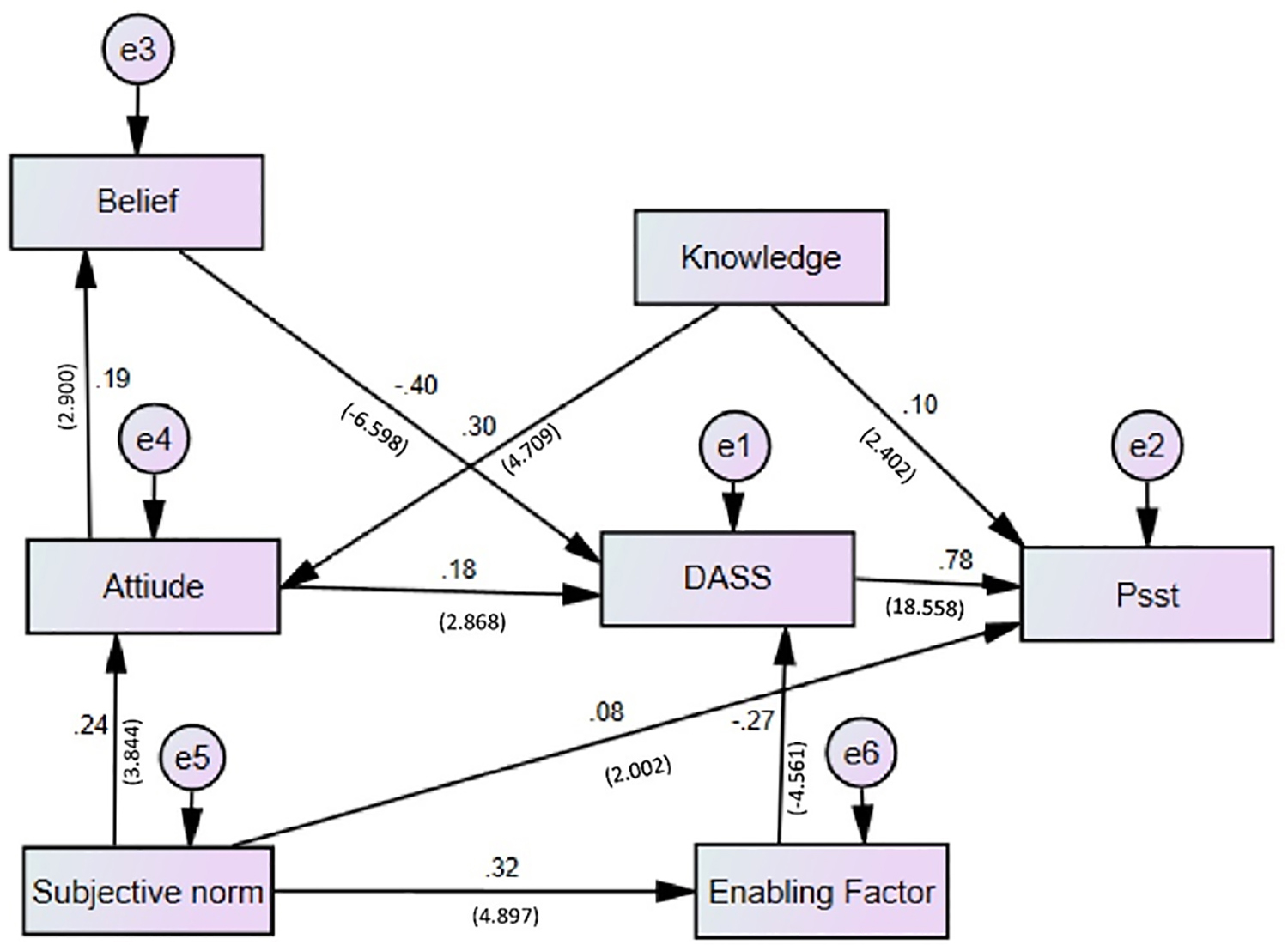
Figure 1. The figure shows the finalized structural equation model. Path values represent standardized coefficients (β) and t-values (in brackets).
| Variable | Direct | Indirect | Total |
|---|---|---|---|
| DASS | 0.777 | 0.00 | 0.777 |
| Knowledge | 0.101 | 0.023 | 0.123 |
| Belief | 0.00 | -0309 | -0.309 |
| Attitude | 0.00 | 0.076 | 0.076 |
| Subjective Norm | 0.084 | -0.050 | 0.034 |
| Enabling Factor | 0.00 | -0.212 | -0.212 |
| DASS: Depression, Anxiety and Stress Scale; PMS: Premenstrual Symptoms | |||
| Index | Computed Index | Acceptable Range |
|---|---|---|
| CMIN/df (P) | 1.776 (0.052) | <5 (>0.05) |
| CFI | 0.975 | >090 |
| TLI | 0.937 | >090 |
| IFI | 0.976 | >090 |
| NFI | 0.950 | >090 |
| RMSEA | 0.059 | <0.08 |
| CMIN/df: minimum discrepancy of confirmatory factor analysis/degrees of freedom; CFI: Comparative Fit Index; TLI: Tucker-Lewis Index; IFI: Incremental Fit Index; NFI: Normed Fit Index; RMSEA: The Root Mean Square Error of Approximation | ||
4. Discussion
We aimed to develop a predictive model to better understand the factors contributing to the severity of PMS in adolescents, based on the BASNEF model and considering the mediating role of mental health. Overall, the findings indicated that mental health was the strongest predictor of PMS severity. Regardless of the influence of knowledge - which is not a construct of the BASNEF model and is measured as a modifying variable in most cases - enabling factors emerged as the most influential negative predictor among the BASNEF constructs. This means that higher enabling factors (such as having sufficient knowledge and skills, appropriate facilities at school for exercise, access to painkillers and sanitary pads, and suitable food in the school cafeteria) are associated with experiencing less severe PMS.
Research findings indicated a significant positive relationship between PMS intensity and the DASS scale. This suggests that psychological distress - specifically elevated stress, anxiety, and depression - is closely linked to more acute premenstrual symptoms. The linear regression model also confirmed that poor mental health is the strongest predictor of PSST. These results were consistent with previous studies ( 30 , 31 ).
A significant but weak positive correlation was also observed between knowledge and PMS severity (r=0.223, P<0.01). Knowledge was also a statistically significant predictor of PSST in linear regression analysis. This finding may be explained by the possibility that individuals experiencing more pronounced PMS symptoms tend to have greater knowledge about the syndrome, or that increased awareness enables participants to report their symptoms more accurately, resulting in higher PSST scores. Based on the literature search, few studies have explored the extent to which knowledge correlates with the severity of PMS symptoms. In one of the few studies, Dadi Givshad and colleagues in Iran reported a negative association between knowledge and PMS severity, which is inconsistent with our findings ( 32 ). This discrepancy may be due to the type of questions included in the knowledge questionnaires.
Our study showed that beliefs and PMS severity were negatively. However, beliefs did not significantly predict PSST scores in the linear regression model. According to the BASNEF model, beliefs can be shaped by personal or societal experiences, as well as information obtained through reading or hearing about a topic. In this context, the more negative an individual’s beliefs regarding premenstrual issues, the more severe their PMS symptoms tend to be. This finding was consistent with the results of Narvel and colleagues in India ( 33 ). In another study by Qalawa and co-workers, the correlation between students’ health beliefs and their PMS coping strategies was statistically significant, which may lead to experiencing less severe PMS symptoms ( 34 ).
In this study, attitudes refer to how an individual values a specific behavior and whether they believe it will effectively reduce PSST. The findings indicated that attitudes did not have a statistically significant relationship with the severity of PMS; furthermore, attitude was not a meaningful predictor for PSST, suggesting that positive attitudes alone, without consistent or high-quality implementation of the associated behaviors, may not substantially reduce symptoms. This finding was consistent with the study by Dadi Givshad and colleagues ( 32 ).
Subjective norms, which in this study refer to the social stigma and expectation of concealing menstruation from family, friends, and others, were not significantly correlated with PMS severity. However, the linear regression model and SEM indicated that subjective norm is a significant positive predictor of greater PMS symptom severity. This finding was consistent with the results of previous studies ( 35 , 36 ), who reported that taboos and prejudicial beliefs related to menstruation contributed to delays in seeking healthcare and negative health outcomes.
Enabling factors, which include skills and available resources, showed a significant negative correlation with PMS severity. This indicates that higher levels of skills and access to resources are associated with reduced severity of PMS symptoms. However, linear regression modelling revealed that this factor was not a significant predictor for PSST, but it indirectly had a negative effect on PSST through the mediating roles of mental health, subjective norms, and attitudes. Consistent with our findings, Betsu and colleagues, in a systematic analysis of menstrual hygiene management strategies, reported that interventions increasing menstrual knowledge, product access, or school support tend to reduce the intensity of PMS ( 37 ). The findings of some other studies ( 38 , 39 ) also confirmed our results.
A model was developed to explain the correlations among the BASNEF constructs and PMS severity (PSST) through the mediating role of mental health. The findings indicated that poorer mental health, assessed by DASS-21 scores, was the most important direct predictor of PSST and played a central role in the model. Positive beliefs and enabling factors were associated with reduced PMS symptoms, while knowledge and subjective norms had overall positive effects on PSST. Model fit indices showed that all values were within acceptable ranges. Overall, the fit indices suggested that the model demonstrated an acceptable fit both statistically and according to established criteria, and the data were consistent with the proposed model structure ( 40 ).
4.1. Limitations
Since this study was conducted exclusively among adolescent students in Shiraz, Iran, caution should be exercised when extrapolating these conclusions to different ages, cities, or countries. Additionally, as this was a self-reported questionnaire study, participants may have underreported or overreported their experiences. Finally, although efforts were made to validate a predictive model, some potential confounding factors - such as genetic influences, dietary habits, or levels of physical activity - were not fully controlled.
5. Conclusions
Overall, the BASNEF model suggests that interventions to reduce stress and psychological burden (DASS) are essential for lowering PMS severity (PSST). Strengthening beliefs and enhancing enabling factors can play a protective role, while increasing knowledge and improving attitudes may indirectly contribute to better behavioral outcomes.
Acknowledgement
The present article was extracted from the MSc thesis of Ms. Marzieh Etebari in Health Education and Health Promotion at the School of Health, Shiraz University of Medical Sciences, Shiraz, Iran (Project code: 31531). The authors express their sincere gratitude to the all the students, teachers and parents who helped us conduct this research. Also, Artificial intelligence (AI)-assisted technologies were used in writing this manuscript.
Authors’ Contribution
Masoud Karimi: Made significant contributions to the conceptualization and design of the study, data acquisition, analysis, and interpretation; drafted the work and critically reviewed the manuscript. Marzieh Etebari: Conducted literature reviews, assisted in data gathering and data interpretation; critically reviewed the manuscript. Mohammad Hossein Sharifi: Provided contributions to the conception and design of the work, analysis and interpretation of data; critically reviewed the manuscript. Mahin Nazari: Contributed to data analysis and interpretation; drafted the work and critically reviewed the manuscript. All authors have reviewed and approved the final manuscript and take responsibility for all aspects of the work, including questions regarding the accuracy or integrity of any part.
Conflict of Interest
None declared.
Funding
This study was funded by vice chancellor of research of Shiraz University of Medical Sciences. Shiraz, Iran, (Grant No.:31531).
Ethical Approval
The ethics committee of Shiraz University of Medical Sciences, Shiraz, Iran approved the present study with the code of IR.SUMS.SCHEANUT.REC.1403.088. The study was conducted in accordance with the principles of the Declaration of Helsinki. The purpose, importance, and necessity of the research were explained to the participants. It is worth noting that the participants and their parents signed the informed consent form before the intervention. They were also assured that their information would remain anonymous. The study did not result in any financial, physical, or psychological harm to the participants.
References
- Khazaie H, Ghadami MR, Khaledi-Paveh B, Chehri A, Nasouri M. Sleep quality in university students with premenstrual dysphoric disorder. Shanghai Arch Psychiatry. 2016; 28(3):131-138. Publisher Full Text | DOI | PubMed [ PMC Free Article ]
- Jafarnejad F, Mojahedi M, Shakeri M, Sardar M. Effect of Aerobic Exercise Program on Premenstrual Syndrome in Women of Hot and Cold Temperaments. J Babol Univ Med Sci. 2016; 18(8):54-60. Persian
- Yilmaz-Akyuz E, Aydin-Kartal Y. The effect of diet and aerobic exercise on Premenstrual Syndrome: Randomized controlled trial. Revista de Nutrição. 2019; 32(6)DOI
- Takenoshita C, Shimizu K, Iida M, Taka F, Maeda E, Jung S, et al. Development and validation of a premenstrual symptom screening tool for working women in relation to absenteeism. BMC Womens Health. 2025; 25(1):546. Publisher Full Text | DOI | PubMed [ PMC Free Article ]
- Chang HC, Cheng YC, Yang CH, Tzeng YL, Chen CH. Effects of Yoga for Coping with Premenstrual Symptoms in Taiwan-A Cluster Randomized Study. Healthcare (Basel). 2023; 11(8):1193. Publisher Full Text | DOI | PubMed [ PMC Free Article ]
- Buddhabunyakan N, Kaewrudee S, Chongsomchai C, Soontrapa S, Somboonporn W, Sothornwit J. Premenstrual syndrome (PMS) among high school students. Int J Womens Health. 2017; 9:501-505. Publisher Full Text | DOI | PubMed [ PMC Free Article ]
- Hashim MS, Obaideen AA, Jahrami HA, Radwan H, Hamad HJ, Owais AA, et al. Premenstrual syndrome is associated with dietary and lifestyle behaviors among university students: a cross-sectional study from Sharjah, UAE. Nutrients. 2019; 11(8):1939. Publisher Full Text | DOI | PubMed [ PMC Free Article ]
- Abu Alwafa R, Badrasawi M, Haj Hamad R. Prevalence of premenstrual syndrome and its association with psychosocial and lifestyle variables: a cross-sectional study from Palestine. BMC Womens Health. 2021; 21(1):233. Publisher Full Text | DOI | PubMed [ PMC Free Article ]
- AKALIN A, KARPUZLUK A. Prevalence of Premenstrual Syndrome and its Relationship with Mental Health and Lifestyle Variables Among Nursing Students: A Descriptive and Correlational Study. Turkiye Klinikleri Journal of Nursing Sciences. 2025; 17(2):397-405. DOI
- Rathi AK, Agrawal M, Baniya GC. A study of impact of stress: examinations on menstrual cycle among medical students. International Journal of Research in Medical Sciences. 2019; 7(12):4703. DOI
- Barari M, Shahhosseini Z, Hosseinnataj A, Khaleghi F, Lolaty HA. Predicting Premenstrual Syndrome Among University Students: Considering Anger, Social Support, Childhood Adversity, and Stress Related Factors, Menstrual Attitudes, and Sex Role Satisfaction. J Nurs Midwifery Sci. 2026; 13(1):e165764. DOI
- Meng Y, Chang L, Hou L, Zhou R. Menstrual attitude and social cognitive stress influence autonomic nervous system in women with premenstrual syndrome. Stress. 2022; 25(1):87-96. DOI | PubMed
- Kook H. Factors associated with premenstrual syndrome among nursing students based on the theory of unpleasant symptoms. J Nurs Women’s Health. 2023; 8(196):2577 . DOI
- Uchibori M, Eguchi A, Ghaznavi C, Tanoue Y, Ueta M, Sassa M, et al. Understanding factors related to healthcare avoidance for menstrual disorders and menopausal symptoms: A cross-sectional study among women in Japan. Prev Med Rep. 2023; 36:102467. Publisher Full Text | DOI | PubMed [ PMC Free Article ]
- Vakili F, Nasiri M, Jahanfar S, Alamolhoda SH, Hamzehgardeshi Z, Salehi F, et al. A communicative model of premenstrual syndrome with social determinants of health: a path analysis. BMC Womens Health. 2025; 25(1):208 doi 101186/s12905-025-03745-9*. Publisher Full Text | PubMed [ PMC Free Article ]
- Ampofo J, Bentum-Micah G, Xusheng Q, Sun B, Asumang RM. Exploring the role of teacher empathy in student mental health outcomes: a comparative SEM approach to understanding the complexities of emotional support in educational settings. Front Psychol. 2025; 16:1503258. Publisher Full Text | DOI | PubMed [ PMC Free Article ]
- Akanzum J, Pienaah CKA. Review of the effects of adequate sanitary facilities on the participation and performance of the school girl child in Ghana. ISABB Journal of Health and Environmental Sciences. 2023; 8(1):1-14. DOI
- Rahmawati A, Arinda FP. “I Don’t Know Why I’m Crying”: Understanding Emotional Experiences of Premenstrual Syndrome in Women. World Psychology. 2025; 4(1):168-176. DOI
- Hubley J. Communicating Health: An Action Guide to Health Education and Health Promotion. USA: Macmillan; 1993.
- Ranjbaran M, Omani Samani R, Almasi-Hashiani A, Matourypour P, Moini A. Prevalence of premenstrual syndrome in Iran: A systematic review and meta-analysis. Int J Reprod Biomed. 2017; 15(11):679-686. Publisher Full Text | DOI | PubMed [ PMC Free Article ]
- Khalilzadeh P, Amirzadeh-Iranagh J, Khalkhali HR, Maheri M. Predictors of lifestyle related to reducing the premenstrual syndrome symptoms based on the Health Belief Model constructs among the first-grade high school female students in Urmia. Iranian Journal of Health Education and Health Promotion. 2023; 10(4):385-398. DOI
- Boomsma A. Nonconvergence, improper solutions, and starting values in LISREL maximum likehood estimation. Psychometrika. 1985; 50(2):229-42. DOI
- Hundleby JD. Reviews: Nunnally, Jum. Psychometric Theory. New York: McGraw-Hill, 1967. 640 + xiii pp. $12.95. American Educational Research Journal. 1968; 5(3):431-3. DOI
- Steiner M, Macdougall M, Brown E. The premenstrual symptoms screening tool (PSST) for clinicians. Arch Womens Ment Health. 2003; 6(3):203-9. DOI | PubMed
- Hariri FZ, Moghaddam-Banaem L, Siah Bazi S, Saki Malehi A, Montazeri A. The Iranian version of the Premenstrual Symptoms Screening Tool (PSST): a validation study. Arch Womens Ment Health. 2013; 16(6):531-7. DOI | PubMed
- Lawshe CH. A quantitative approach to content validity. Personnel Psychology. 1975; 28(4):563-575. DOI
- Waltz CF, Bausell BR. Nursing Research: Design, Statistics, and Computer Analysis. Philadelphia: F.A. Davis Company; 1981.
- Brown TA, Chorpita BF, Korotitsch W, Barlow DH. Psychometric properties of the Depression Anxiety Stress Scales (DASS) in clinical samples. Behav Res Ther. 1997; 35(1):79-89. DOI | PubMed
- Sahebi A, Asghari MJ, Salari R. Validation of depression anxiety and stress scale (DASS-21) for an Iranian population. Journal of Developmental Psychology Iranian Psychologists. 2005; 4(1):36-54.
- Akbarzadeh M, Heydari N, Abootalebi M, Ghodrati F. Correlation between Mental Health and Premenstrual Syndrome in Students of Shiraz University of Medical Sciences. J Health Sci Surveillance Sys. 2017; 5(4):176-179.
- Roy N, Imran S, Siddiky A, Sultana S, Mahmud S, Rashid R, et al. Premenstrual dysphoric disorder and its co-existence with depression, anxiety, and stress as risk factors for suicidal ideation and suicide attempts among university students in Bangladesh: A single-site survey. PLoS One. 2025; 20(4):e0321097. Publisher Full Text | DOI | PubMed [ PMC Free Article ]
- Dadi Givshad R, Nourani Saadoldin S, Esmaily H. The relationship of perceived severity of premenstrual syndrome with knowledge, attitude and recorded severity of syndrom by a daily calendar among university students in Iran. Journal of Midwifery and Reproductive Health. 2016; 4(1):522-529. DOI
- Narvel H, Merchant H, Kore G, Nayak A, De Sousa A. A Study on Premenstrual Syndrome symptoms and their association with the Attitudes towards Menstruation in Nursing Staff. Indian Journal of Mental Health. 2018; 5(4):481. DOI
- Qalawa SAA, Alsuhaibani HO, Alluhaydan AA, Alghaidani AA. Health beliefs and coping strategies regarding premenstrual syndrome among health college students at Qassim University. International Journal of Health Sciences. 2022; 6(S8): 4264-4277. DOI
- Åkerman E, Wängborg A, Persson M, Sörensdotter R, Klingberg-Allvin M. Navigating menstrual stigma and norms: a qualitative study on young people’s menstrual experiences and strategies for improving menstrual health. BMC Public Health. 2024; 24(1):3401. Publisher Full Text | DOI | PubMed [ PMC Free Article ]
- Qutishat M, Shakman L, Alyaqoubi S. Premenstrual Syndrome and the attitudes toward seeking Professional Psychological Help among College students in Oman. Womens Health Rep (New Rochelle). 2024; 5(1):744-754. Publisher Full Text | DOI | PubMed [ PMC Free Article ]
- Betsu BD, Medhanyie AA, Gebrehiwet TG, Wall LL. Menstrual hygiene management interventions and their effects on schoolgirls’ menstrual hygiene experiences in low and middle countries: A systematic review. PLoS One. 2024; 19(8):e0302523. Publisher Full Text | DOI | PubMed [ PMC Free Article ]
- Belay S, Kuhlmann AKS, Wall LL. Girls’ attendance at school after a menstrual hygiene intervention in northern Ethiopia. Int J Gynaecol Obstet. 2020; 149(3):287-291. DOI | PubMed
- Austrian K, Kangwana B, Muthengi E, Soler-Hampejsek E. Effects of sanitary pad distribution and reproductive health education on upper primary school attendance and reproductive health knowledge and attitudes in Kenya: a cluster randomized controlled trial. Reprod Health. 2021; 18(1):179. Publisher Full Text | DOI | PubMed [ PMC Free Article ]
- Cangur S, Ercan I. Comparison of Model Fit Indices Used in Structural Equation Modeling Under Multivariate Normality. Journal of Modern Applied Statistical Methods. 2015; 14(1):152-167. DOI

