
1. Introduction
Oral health is a fundamental aspect of overall well-being since it enables individuals to perform essential daily functions such as eating (and communicating with others ( 1 ). Dental caries, a disease characterized by the localized destruction of dental hard tissues, can be a significant issue in the public health discipline ( 2 ). The disease originates within the bacterial biofilm coating the tooth surface and if untreated, it can progressively damage and weaken both the crown and root portions of the teeth ( 3 ).
Dental caries affects an estimated 3.5 billion people worldwide ( 4 ). Despite advances in dental care provision, dental caries remains a major problem, especially among children who are vulnerable to this disease ( 4 ). The pathogenesis of dental caries involves intricate interactions over time between acid-producing bacteria, fermentable carbohydrates, and host factors such as saliva and tooth structure. The disease arises from an ecological imbalance in the physiological equilibrium between tooth minerals and oral microbial biofilms, causing the demineralization of tooth enamel ( 3 ). There are many risk factors that contribute to the onset and progression of dental caries. These include inadequate salivary flow, high levels of cariogenic bacteria, insufficient fluoride exposure, and poor oral hygiene practices. In addition, socioeconomic determinants such as low income, limited educational opportunities, and restricted access to dental care are important risk factors ( 2 ).
One of the primary measures used to assess the prevalence of dental caries is the Decayed, Missing, and Filled for Permanent Teeth (DMFT) index, determined by the mean number of decayed, missing, and filled teeth ( 5 ). However, DMFT has limitations in assessing the distribution of caries within populations. It averages caries levels across the entire group, potentially masking smaller subgroups in which the prevalence of caries is exceptional ( 6 ). To overcome this limitation, the Significant Caries Index (SiC) was introduced for identifying these high-risk individuals and enabling targeted interventions in order to address their specific needs. By focusing on this subgroup, SiC helps reduce oral health disparities and improve overall oral health in populations ( 5 ).
In Thailand, dental caries continues to be a key public health challenge, especially among school-aged children. Data from the National Oral Health Survey consistently indicated high levels of dental caries among 12-year-old children. For example, the National Oral Health Survey revealed that 52.3% of 12-year-old children had dental caries, a percentage almost identical to the 52.0% reported in 2012. This trend suggests that dental caries continues to be a significant issue in Thailand, with prevalence rates higher than the global average ( 7 ). The prevalence of dental caries in Narathiwat province, retrieved from the Health Data center of Thailand, has exceeded the national average. Between 2019 and 2023, the prevalence of dental caries among children aged 6, 9, and 12 years in Rueso, Narathiwat, Thailand was 11.28%, 41.51%, and 50.48%, respectively. Among 12-year-olds, the average DMFT score of 2.97 was significantly higher than the national average ( 8 ).
Narathiwat Provincial Public Health Dentistry Department, a government agency in Thailand which is responsible for public health dentistry in the province, has been actively involved in monitoring dental caries among school-aged children through annual oral health status surveys. The department has implemented several public health initiatives to combat dental caries, including fissure sealant and fluoride varnish projects to prevent decay and strengthen enamel resistance. In addition, restorative treatments are provided to treat carious lesions, while educational programs promote oral hygiene and healthy dietary habits. These programs are designed to reduce caries by addressing the immediate needs of children with existing dental issues and preventing the onset of new cases. In addition to these efforts, systematic analysis and interpretation of health data must be enhanced to achieve a thorough understanding of the situation of caries in this province.
By focusing on key health indicators, risk factors, and protective measures, this study aimed to provide a clearer and more accurate representation of the oral health landscape in Narathiwat province, Thailand.
2. Methods
2.1. Design
This cross-sectional study was conducted from March 2024 to January 2025 in Rueso District, Narathiwat province, Thailand.
2.2. Selection and Description of Participants
The researchers initially retrieved 4630 oral health records of schoolchildren aged 6–12 years from the Health Data Center (HDC) at Rueso Hospital, Narathiwat Province, Thailand, between 2019 and 2023. These oral health records were part of a dental check-up program established by the Ministry of Public Health. The inclusion criteria were as follows: 1) enrolled schoolchildren aged 6–12 years, 2) Thai nationality, 3) residency in Rueso District, Narathiwat Province, Thailand and 4) documented dental examination records. The following exclusion criteria were applied: 1) incomplete records, 2) dft (Decayed and Filled Teeth) or DMFT (Decayed, Missing, and Filled Teeth) values exceeding 20, and 3) an abnormal number of teeth beyond age-specific standards.
2.3. Sample Size Determination
A systematic random sampling method ( 9 ) was employed to select the study participants. Data were sorted by personal identification number (PID), which is determined by various factors such as birth date, agency code, and regional code. It should be noted that sorting by PID may correlate with socioeconomic factors, potentially introducing bias. To mitigate this risk, a random starting point was selected within the first sampling interval. Subsequent samples were drawn based on this interval until the desired sample size was reached. This approach ensured that each unit in the target population had an equal chance of selection, thereby minimizing bias and improving the representativeness of the sample.
2.4. Data Collection and Measurements
After receiving approval from the Human Research Ethics Committee of Thaksin University (COA No. TSU 2024_132, REC No. 0357), data were extracted from electronic medical records using the HOSxP program, which encompassed 43 different files. These files included general information, oral health status, and dental service needs. The data were recorded by trained dental personnel, including dentists and dental public health officers. Permission to access the HDC database was obtained through a formal request submitted to the Narathiwat Provincial Public Health Office, Thailand.
2.5. Procedure
Data retrieval involved transferring records from HDC to secure storage and using the PID to extract relevant information including personal details, address, health insurance status, and dental examination results. Data were screened for completeness and flagged if dft or DMFT values exceeded the standard for the age group. Incomplete records were also excluded from the study. Once cleaned and verified, the data were prepared for statistical analysis, calculating individual dft and DMFT scores as recorded.
2.6. Data Analysis
The data were analyzed using Stata software. Descriptive statistics were used to analyze demographic characteristics, dental data, and prevalence of caries as percentage, mean, standard deviation, median, and interquartile range. Inferential statistics were used to compare mean differences in dental caries indices (dft, DMFT, and SiC) using independent t-tests and one-way ANOVA, depending on the comparison groups. Non-parametric tests such as the Mann–Whitney U test and the Kruskal–Wallis test were also used when data distributions did not meet parametric assumptions, as assessed by the Shapiro-Wilk test. The analysis set a significance level of 0.05 and a confidence level of 95%.
3. Results
Out of 4630 oral health records reviewed, a total of 4630 schoolchildren aged 6–12 years met the inclusion criteria and were included in the final analysis. The inclusion criteria required participants to be enrolled schoolchildren aged 6–12 years, of Thai nationality, residing in Rueso District, Narathiwat Province, and having complete dental examination records. The exclusion criteria included incomplete data, dft or DMFT values exceeding 20, and an abnormal number of teeth beyond age-specific standards.
Table 1 indicates that the gender distribution of the study participants was nearly equal, with male and female children comprising 50.52% and 49.48%, respectively and indicating a balanced representation of both genders throughout the study period. In terms of age distribution, most participants were 11 years old, accounting for 19.14%, followed by 12-year-olds at 16.44% and 6-year-olds at 12.51%. The age distribution for participants aged 7 to 10 was relatively consistent across the study years. However, from 2020 to 2023, there was a noticeable decline in participation, especially among the 6- and 7-year-old age groups. Regarding religious affiliation, the study sample was predominantly Muslim, at 94.12%. This trend was consistent across all study years. On the other hand, Buddhists represented a smaller portion of the sample, accounting for only 4.88% of the total participants over the five years.
| Year | ||||||
|---|---|---|---|---|---|---|
| Demographic | 2019 n (%) | 2020 n (%) | 2021 n (%) | 2022 n (%) | 2023 n (%) | Total n (%) |
| Gender | ||||||
| Male | 374 (49.73) | 823 (51.27) | 507 (49.61) | 347 (52.98) | 288 (48.32) | 2339 (50.52) |
| Female | 378 (50.27) | 782 (48.73) | 515 (50.39) | 308 (47.02) | 308 (51.68) | 2291 (49.48) |
| Age (years) | ||||||
| 6 | 228 (30.32) | 70 (4.36) | 128 (12.52) | 69 (10.53) | 84 (14.09) | 579 (12.51) |
| 7 | 104 (13.83) | 155 (9.66) | 104 (10.18) | 108 (16.49) | 76 (12.75) | 547 (11.81) |
| 8 | 58 (7.71) | 197 (12.27) | 180 (17.61) | 118 (18.02) | 62 (10.40) | 615 (13.28) |
| 9 | 50 (6.65) | 205 (12.77) | 184 (18.00) | 78 (11.91) | 84 (14.09) | 601 (12.98) |
| 10 | 87 (11.57) | 248 (15.45) | 139 (13.60) | 83 (12.67) | 84 (14.09) | 641 (13.84) |
| 11 | 161 (21.41) | 362 (22.55) | 143 (13.99) | 120 (18.32) | 100 (16.78) | 886 (19.14) |
| 12 | 64 (8.51) | 368 (22.93) | 144 (14.09) | 79 (12.06) | 106 (17.78) | 761 (16.44) |
| Religion | ||||||
| Buddhism | 17 (2.26) | 103 (6.42) | 67 (6.56) | 21 (3.21) | 18 (3.02) | 226 (4.88) |
| Islam | 735 (97.74) | 1502 (93.58) | 955 (93.44) | 634 (96.79) | 578 (96.98) | 4404 (94.12) |
The dental caries status of schoolchildren aged 6-12 years in Rueso, Narathiwat Province, Thailand, was assessed using the dft, SiC (dft), DMFT, and SiC (DMFT) indices. The dft index displayed significant fluctuations, starting at 2.61 in 2019, decreasing to 1.7 in 2020, and peaking at 4.33 in 2023. This trend was mirrored in the SiC (dft) index. However, the average decreased significantly, starting at 9.7 in 2019 and decreasing to 5.3 in 2023. The DMFT index for permanent dentition revealed a relatively stable dental caries status over the past five years, with only minor changes, increasing from 1.35 in 2019 to 1.81 in 2023. The SiC (DMFT) index exhibited a relatively stable trend, similar to the DMFT index, but with a significant decrease in the average, rising from 3.54 in 2019 to 3.13 in 2023. The lowest points for all indices were observed primarily in 2022, as presented in Figure 1.
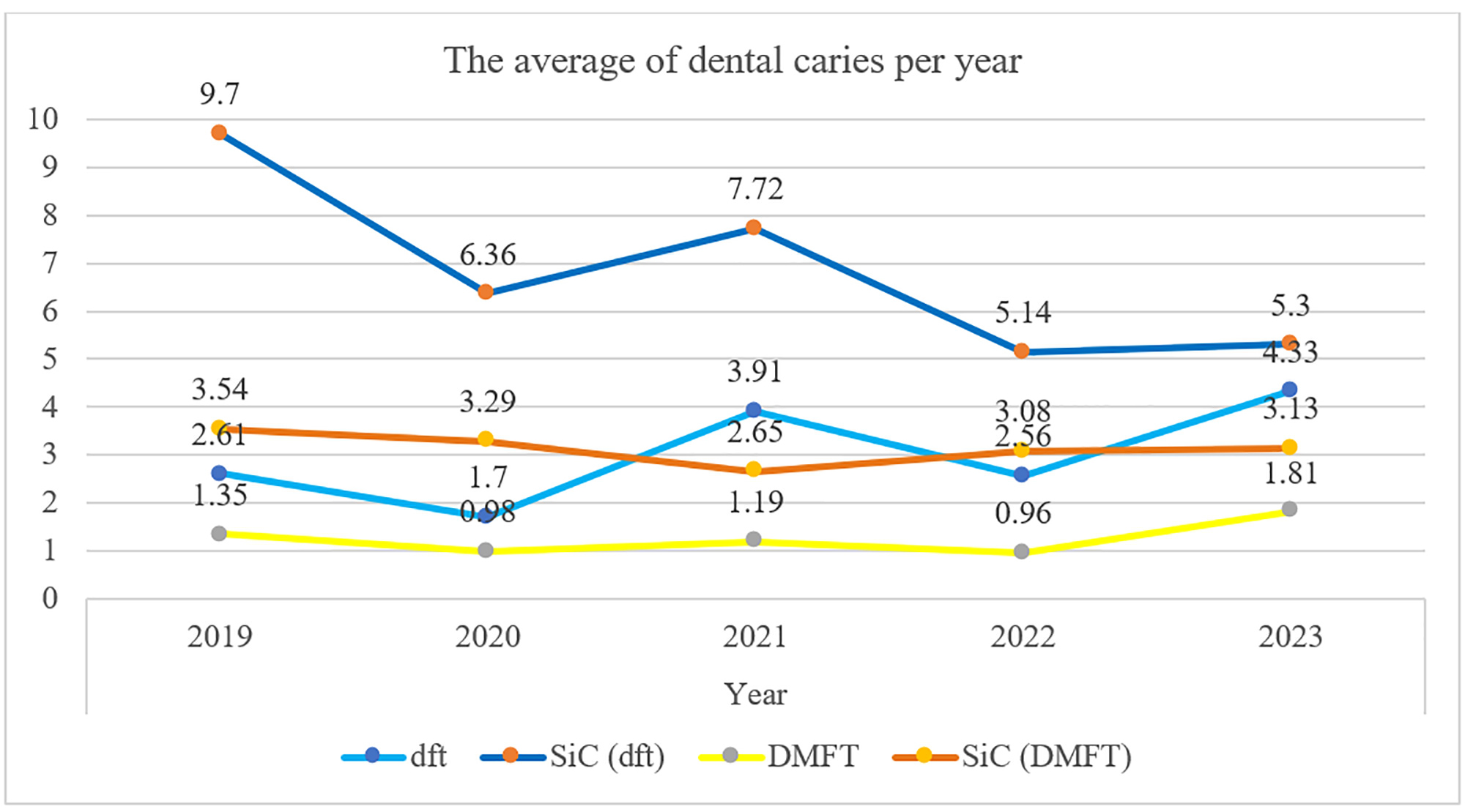
Figure 1. The figure shows the annual average of dental caries and related indices from 2019 to 2023. dft: Decayed and Filled Teeth (primary teeth); SiC (dft): Significant Caries Index (primary teeth); DMFT: Decayed, Missing, and Filled Teeth (permanent teeth); SiC (DMFT): Significant Caries Index (permanent teeth)
Table 2 shows the prevalence of dental caries in primary and permanent teeth revealed variations in prevalence when categorized by gender and age. In primary teeth, dental caries was more common in male children (51.84%) than female ones (48.16%). However, female children had a slightly higher prevalence of dental caries in permanent teeth (52.69%) than male ones (47.31%). Overall, including both primary and permanent teeth, female children had a higher rate of dental caries (50.18%) than male ones (49.82%). When analyzing age, the prevalence of dental caries in primary teeth decreased with age, reaching its peak in 8-year-olds (18.25%) and dropping to its lowest in 12-year-olds (3.92%). By contrast, the prevalence of dental caries in permanent teeth increased from ages 6 to 11, with a slight decrease at age 12. The highest prevalence was observed in 11-year-olds (25.79%), while the lowest was in 6-year-old children (2.42%). Overall, there was a rising trend in prevalence with age, starting at 12.60% among 6-year-old children and peaking at 18.64% among 11-year-olds, before slightly decreasing to 13.37% among 12-year-olds. In addition, the overall prevalence of dental caries (65.12%) was higher than that in primary teeth (44.62%) and permanent teeth (40.54%).
| Dental Caries | Primary Teeth n=4630 | Permanent Teeth n=4630 | Overall n=4630 | |||
|---|---|---|---|---|---|---|
| dft=0 | dft≥1 | DMFT=0 | DMFT≥1 | Caries Free | dft+DMFT≥1 | |
| n (%) | n (%) | n (%) | n (%) | n (%) | n (%) | |
| n=2564 | n=2066 | n=2753 | n=1877 | n=1615 | n=3015 | |
| Gender | ||||||
| Male | 1268 (49.45) | 1071 (51.84) | 1451 (52.71) | 888 (47.31) | 837 (51.83) | 1502 (49.82) |
| Female | 1296 (50.55) | 995 (48.16) | 1302 (47.29) | 989 (52.69) | 778 (48.17) | 1513 (50.18) |
| Age (years) | ||||||
| 6 | 204 (7.96) | 375 (18.15) | 537 (19.51) | 42 (2.24) | 199 (12.32) | 380 (12.60) |
| 7 | 233 (9.09) | 314 (15.20) | 421 (15.29) | 126 (6.71) | 209 (12.94) | 338 (11.21) |
| 8 | 238 (9.28) | 377 (18.25) | 404 (14.67) | 211 (11.24) | 188 (11.64) | 427 (14.16) |
| 9 | 237 (9.24) | 364 (17.62) | 316 (11.48) | 285 (15.18) | 148 (9.16) | 453 (15.02) |
| 10 | 328 (12.79) | 313 (15.15) | 297 (10.79) | 344 (18.33) | 189 (11.70) | 452 (14.99) |
| 11 | 644 (25.12) | 242 (11.71) | 402 (14.6) | 484 (25.79) | 324 (20.06) | 562 (18.64) |
| 12 | 680 (26.52) | 81 (3.92) | 376 (13.66) | 385 (20.51) | 358 (22.17) | 403 (13.37) |
| Total | 2564 (55.38) | 2066 (44.62) | 2753 (59.46) | 1877 (40.54) | 1615 (34.88) | 3015 (65.12) |
| dft: Decayed and Filled Teeth; DMFT: Decayed, Missing, and Filled Teeth | ||||||
Table 3 compares the dental caries indices of students classified by gender, revealing significant differences in each index. The average number of decayed and filled teeth in the primary dentition (dft) was higher in male children (Mean=2.95, SD=0.09) than in female ones (Mean=2.64, SD=0.08). This difference was statistically significant with a P value of <0.001. Similarly, for the SiC (dft) index, male children had a higher average of decayed teeth (Mean=6.80, SD=0.17) than female ones (Mean=6.29, SD=0.18), with a statistically significant difference and a P value of <0.001. The study found that the average number of decayed, missing, and filled teeth in permanent dentition (DMFT) was higher in female children (Mean=1.32, SD=0.04) than male ones (Mean=1.07, SD=0.04), with a statistically significant difference and a P value of <0.001. For the SiC (DMFT) index, female children had a higher average of decayed teeth (Mean=3.30, SD=0.06) than male ones (Mean=2.91, SD=0.09), with a statistically significant difference and a P value of <0.001. These results demonstrated that the average number of decayed teeth classified by gender differed significantly. Male children had a higher average in primary dentition, while female ones had a higher average in permanent dentition.
| Caries Index | Male | Female | Total | P value | |||
|---|---|---|---|---|---|---|---|
| n | Mean (SD) | n | Mean (SD) | n | Mean (SD) | ||
| Primary dft | 2339 | 2.95 (0.09) | 2219 | 2.64 (0.08) | 4630 | 2.80 (0.06) | <0.001 |
| SiC (dft) | 742 | 6.80 (0.17) | 800 | 6.29 (0.18) | 1542 | 6.57 (0.12) | <0.001 |
| Permanent DMFT | 2339 | 1.07 (0.04) | 2219 | 1.32 (0.04) | 4630 | 1.19 (0.03) | <0.001 |
| SiC (DMFT) | 742 | 2.91 (0.09) | 800 | 3.30 (0.06) | 1542 | 3.11 (0.06) | <0.001 |
| Statistical test used: The Wilcoxon rank-sum test was employed as appropriate, given that the data did not meet parametric assumptions; dft: Decayed and Filled Teeth; DMFT: Decayed, Missing, and Filled Teeth; SiC: Significant Caries Index; SD: Standard Deviation | |||||||
Table 4 compares the dental caries indices of schoolchildren aged 6 to 12 years, revealing significant differences across the age groups. The average number of decayed and filled teeth in primary dentition (dft) decreased continuously with age, starting at 6.00 (SD=6.00) at age 6 and decreasing to 0.29 (SD=1.05) at age 12, with a P value of <0.001. The high standard deviation (SD) at age 6 suggests extreme variability, which could be attributed to a small number of children with higher dft scores, reflecting actual cases of severe dental caries. The SiC (dft) index decreased from 13.28 (SD=3.25) at age 6 to 0.87 (SD=1.67) at age 12, with a P value of <0.001.
| Caries Index | Age | n | Mean ±SD | P value |
|---|---|---|---|---|
| Primary Teeth | ||||
| dft | 6 | 579 | 6.00±6.00 | <0.001 |
| 7 | 547 | 4.90±5.22 | ||
| 8 | 615 | 4.25±4.21 | ||
| 9 | 601 | 3.20±3.45 | ||
| 10 | 641 | 2.05±2.83 | ||
| 11 | 886 | 0.82±1.76 | ||
| 12 | 761 | 0.29±1.05 | ||
| Total | 4630 | 2.80±4.18 | ||
| SiC (dft) | 6 | 193 | 13.28±3.25 | <0.001 |
| 7 | 182 | 11.33±2.72 | ||
| 8 | 205 | 9.28±2.20 | ||
| 9 | 200 | 7.40±2.11 | ||
| 10 | 213 | 5.48±2.37 | ||
| 11 | 295 | 2.47±2.28 | ||
| 12 | 254 | 0.87±1.67 | ||
| Total | 1542 | 6.57±4.87 | ||
| Permanent Teeth | ||||
| DMFT | 6 | 579 | 0.12±0.49 | <0.001 |
| 7 | 547 | 0.49±1.08 | ||
| 8 | 615 | 0.70±1.22 | ||
| 9 | 601 | 1.11±1.56 | ||
| 10 | 641 | 1.62±2.19 | ||
| 11 | 886 | 1.88±2.50 | ||
| 12 | 761 | 1.82±2.62 | ||
| Total | 4630 | 1.19±2.02 | ||
| SiC (DMFT) | 6 | 193 | 0.36±0.79 | <0.001 |
| 7 | 182 | 1.47±1.44 | ||
| 8 | 205 | 2.08±1.25 | ||
| 9 | 200 | 2.93±1.42 | ||
| 10 | 213 | 4.03±2.17 | ||
| 11 | 295 | 4.68±2.41 | ||
| 12 | 254 | 4.74±2.63 | ||
| Total | 1542 | 3.11±2.48 | ||
| Statistical test used: The Kruskal–Wallis test was employed as appropriate, given that the data did not meet parametric assumptions; dft: Decayed and Filled Teeth; DMFT: Decayed, Missing, and Filled Teeth; SiC: Significant Caries Index; SD: Standard Deviation | ||||
The average number of decayed, missing, and filled teeth in permanent dentition (DMFT) increased with age, starting at 0.12 (SD=0.49) at age 6, rising to 1.88 (SD=2.50) at age 11, and slightly decreasing to 1.82 (SD=2.62) at age 12, with a P value of <0.001. The SiC (DMFT) index exhibited a similar trend, increasing from 0.36 (SD=0.79) at age 6 to 4.74 (SD=2.63) at age 12, with a P value of <0.001. Significant statistical differences were found when comparing by age. The average number of decayed teeth decreased with age, while the average number of decayed teeth in permanent dentition increased. It was also observed that the average number of decayed teeth in primary dentition was higher than in permanent dentition.
4. Discussion
The results of this study revealed an increase in dental caries among schoolchildren aged 6–12 years in Rueso, Narathiwat province, Thailand, particularly in primary teeth. The average dft fluctuated significantly, starting at 2.61 teeth per person in 2019, decreasing in 2020, and peaking at 4.33 teeth per person in 2023. This trend is consistent with previous studies ( 10 , 11 ), which concurred that these fluctuations in dental caries rates could be attributed to various factors, including changes in oral health behavior and limited access to dental services during the COVID-19 pandemic in 2020. Consequently, some children may develop dental caries over time due to delayed dental care.
For permanent teeth, the average DMFT remained relatively stable over five years, and increased slightly from 1.35 in 2019 to 1.81 in 2023. This reflects a certain level of success in controlling dental caries in children in accordance with the policy of the Ministry of Public Health, which promotes the implementation of fluoride varnish, sealants, and oral health promotion programs in schools. These efforts aligned with the findings of previous studies ( 12 , 13 ), which reported that the DMFT index in Switzerland has remained relatively stable due to effective access to dental care and preventive measures.
Regarding the significant index caries (SiC), which reflects the severity of caries in high-risk children, it was found that the trend for both primary and permanent teeth closely mirrored the dft/DMFT averages. Specifically, the SiC scores were three times higher for primary teeth and twice as high for permanent teeth. These trends underscore the difficulties in managing oral health in this group, where children often lack proper oral care habits. They may not brush regularly or may consume high-sugar foods ( 10 , 14 , 15 ). Moreover, the socioeconomic and educational background of parents has been demonstrated to significantly impact oral health outcomes ( 14 , 16 ). Many families in the Narathiwat province, Thailand are living with low incomes and have limited access to education. According to the National Economic and Social Development Office, the Gross Domestic Product (GDP) of Narathiwat in 2022 was approximately USD 1.74 billion, which corresponds to a GDP per capita of approximately USD 2,485, making it the region with the lowest economic status in the country ( 17 ). The Narathiwat Statistics Bureau ( 17 ) reported that 54.38% of workers have only obtained a primary education. These findings were consistent with the previous studies ( 16 , 18 , 19 ), which suggested that economic, social, and behavioral factors significantly impact oral health outcomes. Aqeeli and colleagues ( 14 ) also discovered that children from families with low socioeconomic status and education are at a higher risk of developing dental caries. High SiC values indicate a need for preventive measures targeting high-risk children, such as providing dental checkups in schools, educating parents, and promoting proper brushing habits from a young age. Grieshaber and co-workers ( 12 ) demonstrated that proactive dental services can effectively reduce the gap in the prevalence of dental caries across different groups.
This study revealed that gender differences significantly affected the incidence of dental caries. The dft and SiC scores were higher in male children, while female ones had higher DMFT scores and overall prevalence, and higher SiC scores in permanent teeth. This difference may be influenced by various factors, including oral health behaviors, food consumption practices, access to dental care, and social and cultural factors. Primary teeth typically erupt between the ages of 6 months and 2.5 years and begin to shed around age 6. During this period, parents tend to have more control over their children’s oral care than the children themselves ( 10 , 14 ). Female children appear to follow their parent’s recommendations for oral health care more than male ones, especially regarding diet, brushing habits, and dental visits. This was consistent with studies carried out previously which found that the prevalence of dental caries is higher in male children. In the previous studies ( 20 , 21 ), it was found that gender influences caries occurrence differently, with girls having a higher risk of developing caries due to factors such as dietary habits and less frequent dental visits. Furthermore, in the previous research findings ( 20 , 21 ), it was indicated that female children place more emphasis on oral health care and are more likely to follow their parent’s recommendations than male ones. However, further research is needed to confirm this hypothesis.
Permanent teeth erupt around the age of 6, when children take more responsibility for oral care. Female children were found to exhibit risky eating behaviors that increase the risk of caries, such as consuming more sweets, candies, and chocolates. This finding aligned with the study of Obradović and colleagues ( 11 ), which revealed that male children had higher DMFT scores in primary teeth, while female children had higher DMFT scores in permanent teeth. Similarly, studies carried out by Shi and colleagues ( 22 ) in Bosnia and Herzegovina and Al-Shamrani ( 23 ) in Saudi Arabia reported similar gender trends, indicating that female children are more susceptible to caries in permanent teeth, likely due to variations in eating habits and oral care practices. However, Aqeeli and colleagues ( 14 ) found that the severity of dental caries increased in male children, emphasizing the importance of gender-sensitive oral health promotion strategies.
When age was taken into account, it was found that the prevalence, average dft, and SiC in primary teeth decreased with age, while permanent teeth exhibited an increase. The decrease in caries in primary teeth can be attributed to the transition from primary to permanent teeth in children aged 6–12, as well as the natural loss of primary teeth, which reduces the number of teeth susceptible to caries. This change was consistent with the previous studies ( 10 , 24 ), which found that the prevalence of caries in young children decreases as they grow older and develop more permanent teeth. However, for permanent teeth, SiC increased with age, and DMFT increased from ages 6–11 before decreasing at age 12. The early increase in caries in permanent teeth may be attributed to the incomplete maturation of newly erupted teeth, rendering them more susceptible to bacterial and acid damage, particularly in the first 2–4 years post-eruption. This is reflected in the fact that teeth are more likely to decay during this period, and children in this age group often consume high-sugar diets and have poor oral hygiene practices, such as irregular or incorrect brushing. This finding was consistent with the research of Aqeeli and colleagues ( 14 ), which demonstrated that improper brushing and excessive sugar consumption lead to increased prevalence of caries among schoolchildren.
Overall, the prevalence of dental caries increased between ages 6–9 and decreased around ages 10–12. The decrease in prevalence in the older age group could be attributed to improved oral health knowledge and behaviors that focus more on brushing habits, consuming healthier food, and willingness to visit the dentist. This was consistent with the previous findings ( 12 , 25 ), which indicated that access to dental services and oral health education are crucial factors in reducing the prevalence of caries in adolescents. These findings emphasized the importance of promoting oral health in school-age children, especially during the transition from primary to permanent teeth, as this can prevent the rise in the prevalence of caries.
4.1. Limitations
There were certain limitations to this study. The study participants were selected from areas with access to dental professionals; thus, the sample may not fully represent the entire population. Nevertheless, the sample size of this study is sufficient to provide a reliable representation of the study area. Although dental examinations were not standardized in advance, the examiners were professionally trained to ensure the accuracy of the results. However, non-standardized examinations may have introduced inter-examiner variability, which could potentially affect the consistency and reliability of the results. Efforts were made to minimize such errors, and errors in data recording were reduced through a thorough data cleaning process and validation, which enhanced the reliability of the data used for analysis. Future research should consider using longitudinal cohort designs to investigate the prevalence of dental caries in relation to various factors, such as oral health behaviors, access to dental care, living environments, fluoride levels in water, and parental influences such as age, education level, occupation, and income. These designs will allow for a better understanding of how these factors interact over time and contribute to the development of dental caries. Identifying these root causes can help inform the development of more effective prevention and intervention strategies. In addition, extending the study to other provinces would offer valuable insights into whether the observed trends are unique to Narathiwat, Thailand.
5. Conclusions
This study provides significant evidence on the trends and prevalence of dental caries in schoolchildren aged 6-12 years in Rueso, Narathiwat, Thailand. The key findings revealed significant gender- and age-related differences in dft, DMFT, SiC (dft), and SiC (DMFT) indices, indicating variations in the patterns of caries experience. Notably, SiC values highlighted the disproportionate burden of caries within specific subgroups, suggesting that certain children experience a higher severity of the disease. Therefore, effective dental health strategies must be tailored to address the distinct influence of age and gender on these caries indices, moving beyond a uniform approach to ensure targeted and effective interventions.
Acknowledgments
The authors would like to thank Rueso Hospital, Thailand for their support and permission to access the Health Data Center database. We also extend our gratitude to the dental statistical personnel for their accurate data recording and guidance during the analysis process, as well as to all the participants in the study. This article was extracted from a thesis conducted as part of the MSc thesis of Miss Huda Juma in the Faculty of Health and Sports Science at Thaksin University, Thailand. In addition, the authors acknowledge the support and supervision provided throughout the research process.
Authors’ Contribution
Huda Juma: Contributed substantially to the conception and design of the study, collected and analyzed the data, interpreted the findings; drafted the manuscript. Tum Boonrod: Contributed substantially to the design of the study; reviewed the manuscript critically for important intellectual content. Vallop Ditsuwan: Contributed substantially to the design of the study; reviewed the manuscript critically for important intellectual content. Dusanee Suwankhong: Contributed to the conception and design of the study; reviewed the manuscript critically for important intellectual content. Witchada Simla: Contributed to the analysis and validation of data and ensured alignment with the study objectives and reporting accuracy; drafted the manuscript. All authors have read and approved the final manuscript and agree to be accountable for all aspects of the work, such as the questions related to the accuracy or integrity of any part of the work.
Conflict of Interest
None declared.
Funding
None.
Ethical Approval
The research was conducted in accordance with ethical guidelines approved by the Human Research Ethics Committee of Thaksin University, Thailand (COA No. TSU 2024_132, REC No. 0357). Since this study used secondary data from the Health Data Center without direct contact with participants, the requirement for written informed consent was waived by the ethics committee. All data were anonymized to protect the identity of participants and were used exclusively for research purposes. Formal approval to access and use the data was granted by the administration of Rueso Hospital, Narathiwat Province, Thailand.
References
- GBD 2017 Oral Disorders Collaborators, Bernabe E, Marcenes W, Hernandez CR, Bailey J, Abreu LG, et al. Global, Regional, and National Levels and Trends in Burden of Oral Conditions from 1990 to 2017: A Systematic Analysis for the Global Burden of Disease 2017 Study. J Dent Res. 2020; 99(4):362-373. Publisher Full Text | DOI | PubMed [ PMC Free Article ]
- World Health Organization. Global oral health status report: towards universal health coverage for oral health by 2030. Geneva: WHO; 2022.
- Pitts NB, Zero DT, Marsh PD, Ekstrand K, Weintraub JA, Ramos-Gomez F, et al. Dental caries. Nat Rev Dis Primers. 2017; 3:17030. DOI | PubMed
- Jain N, Dutt U, Radenkov I, Jain S. WHO’s global oral health status report 2022: Actions, discussion and implementation. Oral Dis. 2024; 30(2):73-79. DOI | PubMed
- World Health Organization. Oral health surveys: basic methods. Geneva: WHO; 2013.
- Arora B, Khinda VIS, Kallar S, Bajaj N, Brar GS. Prevalence and comparison of dental caries in 12-year-old school-going children in rural and urban areas of Ferozepur city using sic index. Dent Oral Craniofac Res. 2015; 1(2):38-41. DOI
- Bureau of Dental Health, Department of Health, Ministry of Public Health. The 9th Thailand National Oral Health Survey Report, 2023. Nonthaburi ,Thailand: Ministry of Public Health; 2024.
- Ministry of Public Health. Average DMF score in 12-year-old children in Narathiwat Province, Fiscal Year 2023. Nakhon Pathom, Thailand: Ministry of Public Health; 2023. Available from: https://www.anamai.moph.go.th
- Ahmed SK. How to choose a sampling technique and determine sample size for research: A simplified guide for researchers. Oral Oncology Reports. 2024; 12:100662. DOI
- Prabakar J, Arumugham IM, Sri Sakthi D, Kumar RP, Leelavathi L. Prevalence and Comparison of Dental Caries experience among 5 to 12 year old school children of Chandigarh using dft/ DMFT and SiC Index: A Cross-sectional study. J Family Med Prim Care. 2020; 9(2):819-825. Publisher Full Text | DOI | PubMed [ PMC Free Article ]
- Obradović M, Dolić O, Milovanović V, Karaman N, Mišić M, Miljević V, et al. Caries Experience in Primary and Permanent Dentition in Children Up to 15 Years of Age from Bosnia and Herzegovina-A Retrospective Study. Children. 2023; 10(4):754. Publisher Full Text | DOI | PubMed [ PMC Free Article ]
- Grieshaber A, Waltimo T, Haschemi AA, Bornstein MM, Kulik EM. Dental caries and associated factors in 7-, 12- and 15-year-old schoolchildren in the canton of Basel-Landschaft, Switzerland: Changes in caries experience from 1992 to 2021. Int J Paediatr Dent. 2024; 34(2):169-178. DOI | PubMed
- Torres-Sánchez AM, Lucas-Rincón SE, Pontigo-Loyola AP, Mendoza-Rodríguez M, Jimenez-Gayosso SI, Casanova-Rosado AJ, et al. Trends in the Use of Pit and Fissure Sealants in Adolescents and Their Impact on the Decayed, Missing, and Filled Teeth (DMFT) Index: An Ecological Study in Mexico. Cureus. 2024; 16(10):e72064. Publisher Full Text | DOI | PubMed [ PMC Free Article ]
- Aqeeli A, Alsharif AT, Kruger E, Tennant M, Bakeer H. Caries prevalence and severity in association with sociodemographic characteristics of 9-to-12-year-old school children in Al-Madinah, Saudi Arabia. Saudi Dent J. 2021; 33(8):897-903. Publisher Full Text | DOI | PubMed [ PMC Free Article ]
- Cheever VJ, Mohajeri A, Patel K, Burris RC, Hung M. Impact of Free Sugar Consumption on Dental Caries: A Cross-Sectional Analysis of Children in the United States. Dent J (Basel). 2025; 13(2):48. Publisher Full Text | DOI | PubMed [ PMC Free Article ]
- Mbawalla HS, Nyamuryekung’e KK, Mtaya-Mlangwa M, Masalu JR. Dental Caries Pattern Amongst Tanzanian Children: National Oral Health Survey. Int Dent J. 2023; 73(5):731-737. Publisher Full Text | DOI | PubMed [ PMC Free Article ]
- National Statistical Office of Thailand. Narathiwat Provincial Statistical Report 2023. Narathiwat, Thailand: National Statistical Office of Thailand; 2023. Available from: https://www.nso.go.th/sites/2014/Pages/Province-statistics.aspx
- Mamani SJT, Mukamurigo J, Uwambaye P, Andegiorgish AK. Prevalence of dental caries and associated factors among secondary school students in Kigali, Rwanda: a cross-sectional study. BMC Oral Health. 2025; 25(1):285. Publisher Full Text | DOI | PubMed [ PMC Free Article ]
- Marandi M, Babaei A, Momeni Z. Association of maternal oral health literacy with dental caries status of 6-9-year-old children according to the caries assessment spectrum and treatment (CAST) index. BMC Oral Health. 2025; 25(1):538. Publisher Full Text | DOI | PubMed [ PMC Free Article ]
- El Tantawi M, Folayan MO, Bhayat A. Oral Health Status and Practices, and Anthropometric Measurements of Preschool Children: Protocol for a Multi-African Country Survey. JMIR Res Protoc. 2022; 11(4):e33552. Publisher Full Text | DOI | PubMed [ PMC Free Article ]
- Aslan Ceylan J, Aslan Y, Ozcelik AO. The effects of socioeconomic status, oral and dental health practices, and nutritional status on dental health in 12-year-old school children. Egyptian Pediatric Association Gazette. 2022; 70(1):1-10. DOI
- Shi R, Lin C, Li S, Deng L, Lin Z, Xiu L. Obesity is negatively associated with dental caries among children and adolescents in Huizhou: a cross-sectional study. BMC Oral Health. 2022; 22(1):76. Publisher Full Text | DOI | PubMed [ PMC Free Article ]
- Al-Shamrani SS. Dental caries experience and oral health-related quality of life among 5-12-year-old children in Riyadh city, Saudi Arabia. International Journal of Medical Science and Dental Research. 2021; 4(2):14-20.
- Alhabdan YA, Albeshr AG, Yenugadhati N, Jradi H. Prevalence of dental caries and associated factors among primary school children: a population-based cross-sectional study in Riyadh, Saudi Arabia. Environ Health Prev Med. 2018; 23(1):60. Publisher Full Text | DOI | PubMed [ PMC Free Article ]
- Chen Z, Zhu J, Zhao J, Sun Z, Zhu B, Lu H, et al. Dental caries status and its associated factors among schoolchildren aged 6-8 years in Hangzhou, China: a cross-sectional study. BMC Oral Health. 2023; 23(1):94. Publisher Full Text | DOI | PubMed [ PMC Free Article ]

