
1. Introduction
Adolescents presenting with clinical symptoms of aggression often exhibit a complex interplay of behavioral, emotional, and cognitive factors. Such individuals may engage in frequent physical or verbal outbursts, property damage, or disruptive and defiant behaviors in both academic and home settings ( 1 ). These behaviors can have significant negative consequences, impacting academic performance, social relationships, and overall well-being ( 2 ). Moreover, individuals exhibiting aggressive behaviors may also grapple with underlying mental health conditions, including depression, anxiety, or attention-deficit/hyperactivity disorder (ADHD), which can further exacerbate aggressive tendencies ( 3 , 4 ).
Rumination, a repetitive cognitive process characterized by a persistent focus on negative thoughts and emotions, has been identified as a significant risk factor for aggressive behavior among adolescents ( 5 ). Individuals who engage in rumination tend to dwell on past failures, negative self-evaluations, and pessimistic future outcomes. This constant focus on negative cognitions can create a vicious cycle, leading to increased emotional distress, heightened irritability, and a heightened sense of vulnerability (6, 7). Furthermore, rumination can impair problem-solving abilities, as individuals may become so preoccupied with negative thoughts that they are unable to think critically or generate effective solutions to challenges ( 8 ).
The connection between rumination and aggression is complex and multifaceted. Rumination can contribute to aggression by creating a state of emotional arousal and increasing the likelihood of impulsive responses to perceived threats or provocations ( 9 ). Additionally, ruminative thoughts can reinforce negative self-perceptions, leading to feelings of anger, resentment, and a desire for revenge ( 10 ). Furthermore, rumination can interfere with social problem-solving skills, making it difficult for individuals to effectively manage interpersonal conflicts and resolve disagreements in a constructive manner ( 11 ).
Anxiety sensitivity, characterized by a fear of negative sensations and their potential consequences, has been implicated in various psychological difficulties, including aggressive behavior ( 12 ). Individuals with high levels of anxiety sensitivity may be overly concerned about physical symptoms such as heart palpitations, sweating, or trembling, and may interpret these sensations as signs of impending danger or disaster ( 13 ). This heightened fear and avoidance of negative sensations can lead to a state of hyperarousal and increased reactivity, making it more difficult for individuals to regulate their emotions and respond to situations in a calm and controlled manner ( 14 ).
Individuals with high levels of anxiety sensitivity may be more likely to perceive ambiguous or ambiguous social situations as threatening, leading to heightened arousal and increased reactivity ( 15 ). This increased reactivity can manifest in aggressive behaviors as a means of self-defense or to assert control over perceived threats ( 16 ). Additionally, anxiety sensitivity can interfere with social problem-solving skills, making it difficult for individuals to effectively manage interpersonal conflicts and resolve disagreements in a constructive manner ( 17 ).
Problem-solving skills training is a cognitive-behavioral intervention that empowers individuals with a diverse array of strategies for effectively identifying, analyzing, and resolving problems ( 18 ). This training typically involves instructing individuals in problem-solving steps such as defining the problem, generating alternative solutions, evaluating the potential consequences of each solution, selecting the optimal solution, and implementing and evaluating the chosen solution ( 19 ). By learning these skills, individuals can develop greater self-efficacy and confidence in their ability to overcome challenges ( 20 ).
Problem-solving skills training has been shown to be effective in addressing various psychological difficulties, including anxiety, depression, and stress ( 21 ). By teaching individuals to approach problems in a systematic and structured manner, this intervention can help them to break down complex problems into smaller, more manageable steps. This can reduce feelings of overwhelm and helplessness, while also promoting a sense of control and agency. Additionally, problem-solving skills training can help individuals to develop more adaptive coping strategies, such as seeking support from others or engaging in relaxation techniques, which can further contribute to their overall well-being ( 22 ).
Adolescent aggression remains a significant public health concern, often leading to negative consequences for both individuals and society. Despite the prevalence of aggressive behavior, there is a dearth of evidence-based interventions targeting the underlying cognitive and emotional factors that contribute to this problem. Rumination and anxiety sensitivity have been identified as key psychological processes that can exacerbate aggressive tendencies. This study aimed to fill this research gap by investigating the effectiveness of problem-solving skills training as an intervention for reducing rumination and anxiety sensitivity in adolescents exhibiting clinically significant aggression. By targeting these core psychological processes, this intervention offers a promising approach to preventing and treating aggressive behavior.
2. Methods
The study employed a quasi-experimental pre-test-post-test control group design with a one-month follow-up period. The study population comprised female high school students exhibiting aggressive behaviors and seeking counseling services at educational centers in Ahvaz, Iran, during the year 2023. Fifty female high school students exhibiting aggressive behaviors and seeking counseling services at educational centers in Ahvaz, Iran, during 2023, were recruited using a convenience sampling method. A power analysis was conducted using G*Power software to determine the necessary sample size to detect a significant difference at the 0.05 significance level with 95% statistical power. The estimated post-test mean scores for anxiety sensitivity, derived from prior research ( 23 ), were 28.96±4.13 and 47.44±5.31 for the problem-solving skills training and control groups, respectively. The inclusion criteria were: female gender, informed consent, absence of serious mental or physical health conditions, and a score above the mean on an aggression inventory. The study participants were then randomly assigned to either an experimental or a control group (n=25 per group) using a random number table. A list of participants was created and numbered sequentially. Participants were randomly assigned to either the experimental or control group using simple randomization (Figure 1). A list of participants was sequentially numbered, and a random number table was used to assign each participant to a group. This method ensured that each participant had an equal chance of being assigned to either group, minimizing potential bias.
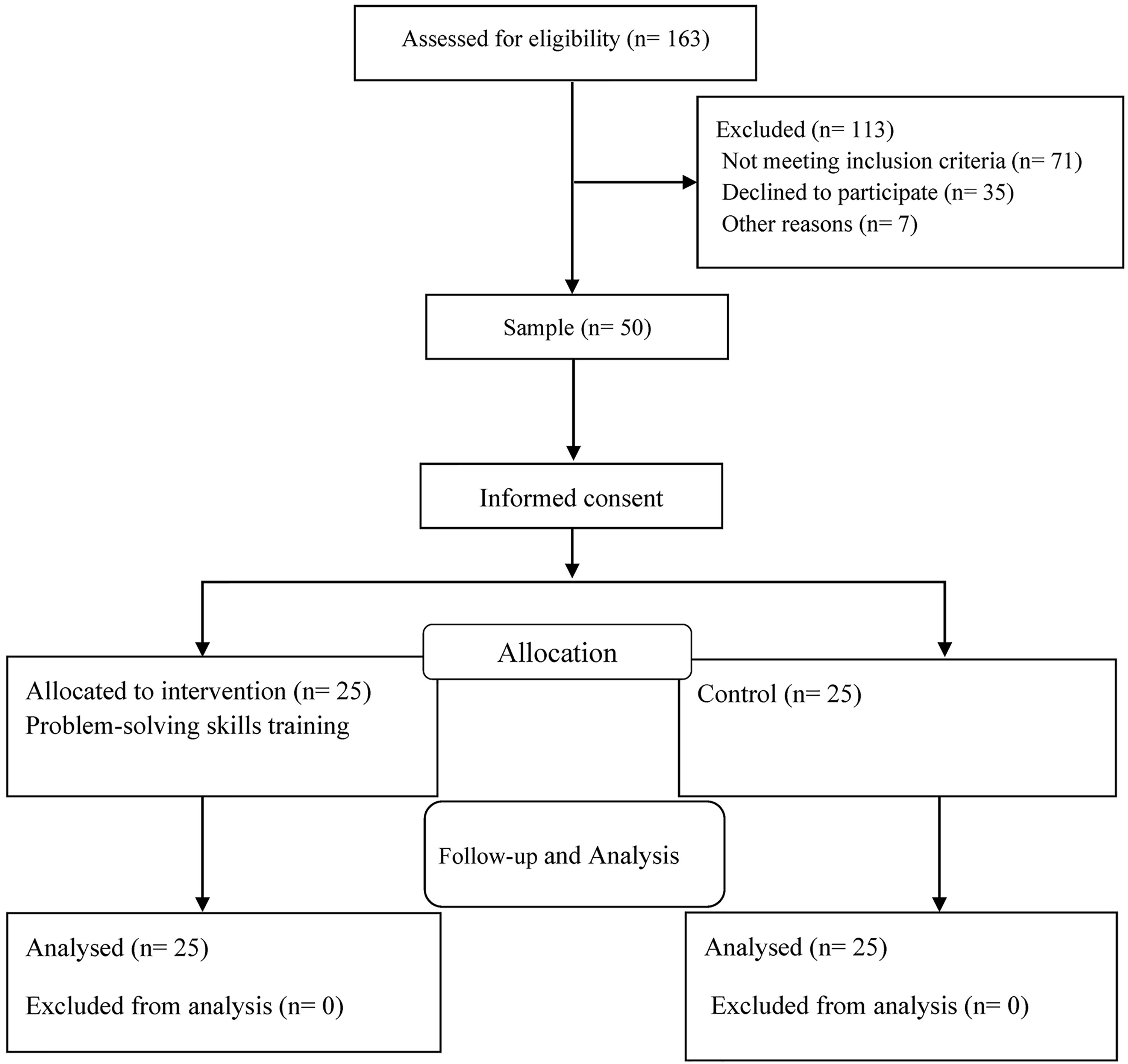
Figure 1. The figure shows the CONSORT flow diagram of the study.
2.1. Procedure
Following ethical approval, the researcher contacted educational counseling centers in Ahvaz, Iran to identify female students exhibiting aggressive behaviors. Eligible students were invited to participate in the study following a review of their files and an initial screening. A pre-test assessment was administered. The experimental group received six 90-minute sessions of problem-solving skills training ( 24 ) conducted by the first author, who had specialized training in this area. The control group received no intervention. A post-test was administered to both groups immediately following the training sessions, and a follow-up assessment was conducted one month later. Table 1 provides a summary of the problem-solving skills training sessions.
| Sessions | Goals | Content |
|---|---|---|
| 1 | Introduction, Overview, and Emotional Regulation Training | Pre-test administration; raising students’ awareness of their emotions. |
| 2 | Orientation and Impulse Control Training | Inhibiting impulsive reactions and understanding problems as a normal part of life. In impulse control training, participants first learn to recognize physical signs of arousal and then are taught relaxation strategies to manage anger when faced with a problem. These strategies include counting, deep breathing, and positive self-talk. |
| 3 | Problem Identification and Goal Setting | This session focuses on problems that are important but may not be clear or obvious. Students learn about the roots of problems, how they arise, the factors that contribute to them, and potential solutions. |
| 4 | Problem-Solving Training | The problem-solving process consists of: a) Information gathering: defining and describing the problem to be solved in as much detail as possible. b) Generating alternative solutions: brainstorming to come up with as many solutions as possible, which are then written on the board. c) Selecting the best solution and implementing it. |
| 5 | Contemplating Consequences, Decision Making, and Role-Playing | Participants engage in role-playing to express their inner feelings and learn to manage their emotions by releasing anger in a controlled manner rather than suppressing it. |
| 6 | Planning, Post-test Administration | In this session, students are taught to plan for testing their chosen solution by describing the specific steps to be taken. They are sensitized to the significant impact of this strategy on increasing their feelings of personal control and understanding. Finally, by providing information about locus of control, they are informed that feeling more confident and responsible reduces aggression. The post-test is administered. |
2.2. Measures
2.2.1. Ruminative Response Scale (RRS)
The Ruminative Response Scale (RRS) is a 22-item self-report measure designed to assess individual responses to negative emotions. It comprises two subscales: reflective pondering and brooding. The participants rate each item on a four-point Likert scale, ranging from “never” to “often.” The total score ranges from 22 to 88, with higher scores indicating greater rumination ( 25 ). Aghebati and colleagues ( 26 ) reported robust psychometric properties for RRS, including high internal consistency (Cronbach’s alpha=0.90) and excellent content validity (CVI=0.99, CVR=0.97).
2.2.2. Anxiety Sensitivity Index (ASI)
The Anxiety Sensitivity Index (ASI) is a widely used self-report measure that assesses individuals’ fear of negative sensations and their potential consequences. It comprises 16 items rated on a five-point Likert scale, with higher scores indicating greater anxiety sensitivity. ASI includes three subscales: physical concerns, cognitive control, and social evaluation ( 27 ). Previous research demonstrated the robust psychometric properties of ASI, including high internal consistency (Cronbach’s alpha>0.90) and strong content validity (CVR=0.98, CVI=0.85) ( 28 ). Consistent with these findings, the present study also reported adequate internal consistency for ASI, with a Cronbach’s alpha of 0.84.
2.3. Data Analysis
Descriptive statistics, such as mean and standard deviations, were computed for all variables to provide a comprehensive overview of the data. The Kolmogorov-Smirnov test was used to assess the normality of the data distribution. Repeated measures ANOVA, implemented using SPSS version 25, was employed to analyze the data. Furthermore, independent t-tests were used to compare the experimental and control groups at pre-test, post-test, and follow-up assessments. Chi-square tests were conducted to compare the groups on demographic variables. Statistical significance was determined at a significance level of α=0.05.
3. Results
The study sample comprised 50 female students exhibiting aggressive behaviors, with a mean age of 15.46 years (SD=2.38). The mean age of participants in the experimental group (M=15.75, SD=2.09) was slightly lower than that of the control group (M=15.17, SD=2.67), but this difference was not statistically significant (P=0.397). In the experimental group, 28% of participants were in the seventh grade, 36% in the eighth grade, and 36% in the ninth grade. In the control group, 24% were in the seventh grade, 32% in the eighth grade, and 44% in the ninth grade. There was no significant difference between the groups in terms of grade level distribution (P=0.846). Thus, the groups were comparable in terms of demographic variables, such as age and grade level. Table 2 presents descriptive statistics, including mean and standard deviations, for rumination and anxiety sensitivity in both the problem-solving skills training and control groups at the pre-test, post-test, and follow-up stages.
| Groups | Stage | Problem-solving skills training group | Control group | P (between-group | ||
|---|---|---|---|---|---|---|
| Mean | SD | Mean | SD | |||
| Rumination | Pre-test | 63.72 | 2.49 | 65.00 | 3.15 | 0.118 |
| Post-test | 53.00 | 2.43 | 65.24 | 3.41 | 0.001 | |
| Follow-up | 52.44 | 2.52 | 65.46 | 3.29 | 0.001 | |
| P (within-group) | 0.001 | 0.797 | - | |||
| Anxiety sensitivity | Pre-test | 49.12 | 5.74 | 48.28 | 5.34 | 0.595 |
| Post-test | 28.96 | 4.13 | 47.44 | 5.31 | 0.001 | |
| Follow-up | 28.28 | 4.16 | 49.96 | 5.44 | 0.001 | |
| P (within-group) | 0.001 | 0.579 | - | |||
| SD: Standard Deviation | ||||||
The repeated measures ANOVA revealed significant main effects of time and group for both rumination and anxiety sensitivity. Specifically, both rumination and anxiety sensitivity significantly decreased over time (P<0.001). Additionally, significant group differences were observed for both variables (P<0.001), indicating that the experimental group demonstrated significantly greater decreases in rumination and anxiety sensitivity compared with the control group. These findings provided strong support for the efficacy of problem-solving skills training in reducing rumination and anxiety sensitivity in students with aggression symptoms.
Figure 1 presents the changes in rumination and anxiety sensitivity scores over time for students with aggression symptoms in both the problem-solving skills training and control groups across the pre-test, post-test, and follow-up stages (P<0.001). As shown in Figure 2, students with aggression symptoms who received problem-solving skills training experienced significant decreases in both rumination and anxiety sensitivity compared to the control group, particularly at the post-test and follow-up stages (P<0.001). These findings suggested that problem-solving skills training is an effective intervention for reducing rumination and anxiety sensitivity in this population, potentially mitigating the negative consequences of aggression symptoms.
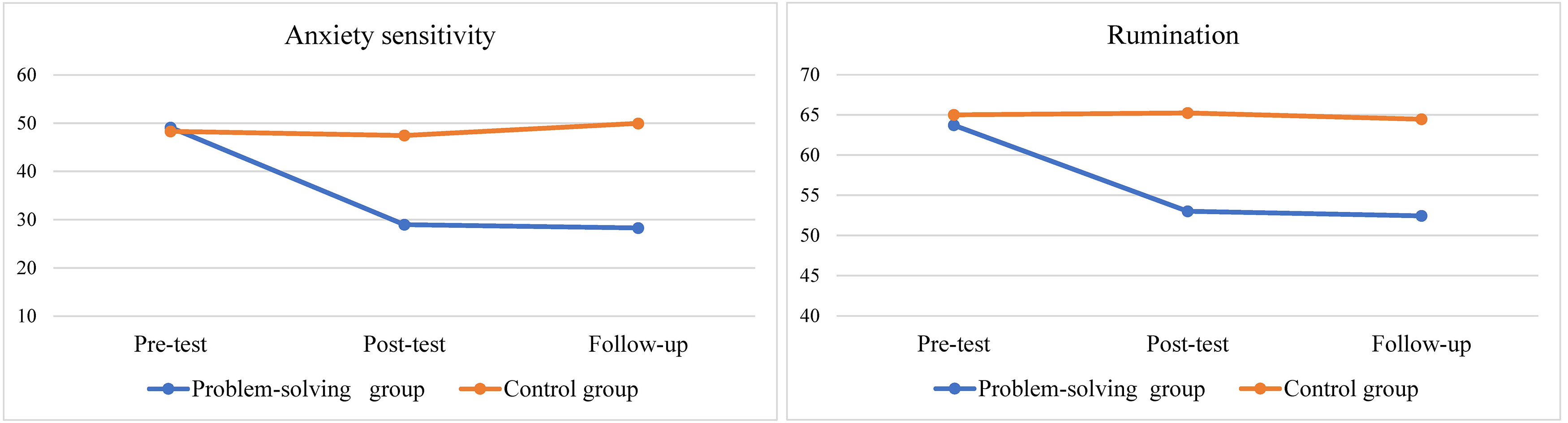
Figure 2. The figure shows the changes in rumination and anxiety sensitivity scores over time.
4. Discussion
This study evaluated the efficacy of problem-solving skills training as an intervention for reducing rumination and anxiety sensitivity in students exhibiting clinically significant aggression. The results of the present study demonstrated the effectiveness of problem-solving skills training in significantly decreasing rumination among students exhibiting aggressive behaviors. This effect was sustained at the one-month follow-up assessment. These findings aligned with previous research ( 29 , 30 ). Both studies reported positive effects of problem-solving skills training on various psychological outcomes, including reduced anxiety, improved academic performance, and enhanced self-efficacy ( 29 , 30 ). Moreover, these findings were consistent with the studies by Kakabraee and Seidy ( 31 ) on the effectiveness of interpersonal problem-solving skills training on social problems of preschool students, and by Aligholizadeh Jahani and Bayrami ( 32 ), which highlighted the impact of social problem-solving skills training in reducing aggression among adolescent students.
Rumination, a maladaptive cognitive pattern associated with emotional disorders, is often perpetuated by the belief that it can lead to problem-solving and improved understanding. Individuals with generalized anxiety disorder, in particular, may engage in rumination as a coping mechanism to reduce uncertainty and prevent negative outcomes ( 17 ). However, the repetitive nature of ruminative thoughts can exacerbate distress and hinder problem-solving. Problem-solving skills training, which targets the underlying emotional processes associated with rumination, offers a promising approach to reducing negative thought patterns and their associated consequences ( 29 ).
The intolerance of uncertainty and excessive worry characteristic of anxiety disorders can predispose individuals to ruminative thought patterns. By acquiring problem-solving skills, aggressive students can develop a more adaptive coping style, characterized by delayed gratification, increased effortful control, and enhanced emotional regulation ( 30 ). This approach is expected to reduce aggressive behaviors by fostering a more proactive and solution-focused mindset.
The results of the present study demonstrated the efficacy of problem-solving skills training in significantly decreasing anxiety sensitivity among students exhibiting aggressive behaviors. This effect was sustained at the one-month follow-up assessment. These findings align with a previous study conducted by Hashemi ( 33 ).
These findings can be explained by the fact that problem-solving skills training empowers clients using their existing resources and abilities in the process of change, fostering a sense of hope. Therapists enhance clients’ feelings of self-efficacy and autonomy by empowering them to generate and structure their own solutions. The effectiveness of problem-solving skills training likely stems from its ability to motivate clients by cultivating a sense of self-efficacy and autonomy in generating and structuring solutions ( 19 ). In essence, this approach shifts the focus from problems and pathologies to the positive and healthy aspects of life, treating each client as a self-directed and resourceful individual with unique strengths and qualities. These differences enhance clients’ motivation to find personalized solutions ( 21 ). Consequently, this skill helped students in the sample group to become more flexible, reducing stress and anxiety.
By empowering students to build psychological resources and effectively cope with academic challenges, this approach improved their quality of life ( 31 ). Furthermore, by assisting aggressive students in developing solutions to reduce their aggression, this training seemed to increase their self-satisfaction. All of these factors may contribute to the effectiveness of problem-solving skills in reducing aggression and anxiety sensitivity in students.
4.1. Limitations
The sample size of 50 participants, while adequate for detecting significant effects, may limit the generalizability of the findings to larger and more diverse populations of female students with aggression symptoms. The quasi-experimental design, which included a single control group, may not fully account for confounding variables that could influence the outcomes. A more rigorous design with multiple control groups or a longitudinal approach could strengthen the causal inference regarding the effectiveness of problem-solving skills training. Additionally, the implementation of the intervention was limited to a specific context (educational counseling centers in Ahvaz, Iran) and a particular population (female high school students). It remains to be seen whether the findings can be replicated in other settings and with different populations. Future research could explore the effectiveness of problem-solving skills training in diverse cultural and socioeconomic contexts, as well as with different age groups and genders.
5. Conclusions
This study provided strong evidence for the effectiveness of problem-solving skills training in mitigating rumination and anxiety sensitivity among students exhibiting aggressive behaviors. The substantial reductions observed in both constructs post-intervention suggest that this approach is a promising therapeutic intervention for this population. These findings contributed to the growing body of literature supporting the positive impact of problem-solving skills training on various psychological outcomes. Future research could explore the long-term effects of this intervention and its applicability across diverse populations and cultural contexts.
Acknowledgment
This article was extracted from a part of the PhD dissertation of Ms. Saeide Hasani Rad in the Department of Psychology, Ahvaz Branch, Islamic Azad University, Ahvaz, Iran. The researchers wish to thank all the individuals who participated in the study.
Authors’ Contribution
Saeide Hasani Rad: Substantial contributions to the conception and design of the work; the acquisition, analysis, and interpretation of data for the work, drafting the work. Sasan Bavi: Substantial contributions to the conception and design of the work; the acquisition, analysis, and interpretation of data for the work, drafting the work and reviewing it critically for important intellectual content. Alireza Heidari: Substantial contributions to the design of the work, drafting the work and reviewing it critically for important intellectual content. All authors have read and approved the final manuscript and agree to be accountable for all aspects of the work, such that the questions related to the accuracy or integrity of any part of the work.
Conflict of Interest
None declared.
Funding
None.
Ethical Approval
The study was approved by the Ethics Committee of the Islamic Azad University-Ahvaz Branch, Iran with the code of IR.IAU.AHVAZ.REC.1403.215. Also, written informed consent was obtained from the participants.
References
- Muarifah A, Mashar R, Hashim IHM, Rofiah NH, Oktaviani F. Aggression in Adolescents: The Role of Mother-Child Attachment and Self-Esteem. Behav Sci (Basel). 2022; 12(5):147. Publisher Full Text | DOI | PubMed [ PMC Free Article ]
- Voulgaridou I, Kokkinos CM. Relational Aggression in Adolescents Across Different Cultural Contexts: A Systematic Review of the Literature. Adolescent Research Review. 2023; 8(4):457-480. DOI
- Puiu AA, Wudarczyk O, Goerlich KS, Votinov M, Herpertz-Dahlmann B, Turetsky B, et al. Impulsive aggression and response inhibition in attention-deficit/hyperactivity disorder and disruptive behavioral disorders: Findings from a systematic review. Neurosci Biobehav Rev. 2018; 90:231-246. DOI | PubMed
- Brown RH, Speyer LG, Eisner MP, Ribeaud D, Murray A. Exploring the effect of ADHD traits on the moment-to-moment interplay between provocation and aggression: Evidence from dynamic structural equation modeling. Aggress Behav. 2023; 49(5):469-479. DOI | PubMed
- Castro T, Pinto TM, Morais A, Costa R, Jongenelen I, Lamela D. The effect of parenting behaviours on adolescents’ rumination: a systematic review of longitudinal studies. Eur Child Adolesc Psychiatry. 2024; 33(11):3739-3752. Publisher Full Text | DOI | PubMed [ PMC Free Article ]
- Joubert AE, Moulds ML, Werner-Seidler A, Sharrock M, Popovic B, Newby JM. Understanding the experience of rumination and worry: A descriptive qualitative survey study. Br J Clin Psychol. 2022; 61(4):929-946. Publisher Full Text | DOI | PubMed [ PMC Free Article ]
- Mehraban R, Hosseini Nasab SD, Alivandi Vafa M. Effect of Emotion Regulation Training on Aggression, Rumination, and Self-control in Female Junior High School Students with Low Academic Performance. Int J School Health. 2023; 10(1):12-18. DOI
- Hitchcock P, Forman E, Rothstein N, Zhang F, Kounios J, Niv Y, et al . Rumination Derails Reinforcement Learning with Possible Implications for Ineffective Behavior. Clin Psychol Sci. 2022; 10(4):714-733. Publisher Full Text | DOI | PubMed [ PMC Free Article ]
- Eikey EV, Caldeira CM, Figueiredo MC, Chen Y, Borelli JL, Mazmanian M, et al. Beyond self-reflection: introducing the concept of rumination in personal informatics. Personal and Ubiquitous Computing. 2021; 25(3):601-616. DOI
- Uzun K, Arslan G. Rumination and Forgiveness in Emerging Adults: Mediating Role of Mindfulness and Humility. Psychol Rep. 2024;00332941241256641. DOI | PubMed
- Hasegawa A, Kunisato Y, Morimoto H, Nishimura H, Matsuda Y. How do Rumination and Social Problem Solving Intensify Depression? A Longitudinal Study. J Ration Emot Cogn Behav Ther. 2018; 36(1):28-46. DOI
- Raines EM, Viana AG, Trent ES, Conroy HE, Woodward EC, Zvolensky MJ, et al. The explanatory role of anxiety sensitivity in the association between effortful control and child anxiety and depressive symptoms. Cogn Behav Ther. 2020; 49(6):501-517. Publisher Full Text | DOI | PubMed [ PMC Free Article ]
- Leigh E, Clark DM. Understanding Social Anxiety Disorder in Adolescents and Improving Treatment Outcomes: Applying the Cognitive Model of Clark and Wells (1995). Clinical Child and Family Psychology Review. 2018; 21(3):388-414. DOI
- McNally RJ. Anxiety sensitivity and panic disorder. Biol Psychiatry. 2002; 52(10):938-46. DOI | PubMed
- Kirschner H, Hilbert K, Hoyer J, Lueken U, Beesdo-Baum K. Psychophsyiological reactivity during uncertainty and ambiguity processing in high and low worriers. J Behav Ther Exp Psychiatry. 2016; 50:97-105. DOI | PubMed
- Hayatipoor S, Bavi S, Khalafi A, Dasht Bozorgi Z, Gatezadeh A. Effects of Stress Management Training on Cognitive Avoidance and Emotion Regulation Strategies in Female Students with Social Anxiety Disorder: A Mindfulness and Emotional Schema Therapy Approach. Int J School Health. 2024; 11(1):40-49. DOI
- Alipour F, mesrabadi j, Rahimi S. Problem-Solving Skills and Anxiety Relation: A Meta Analysis. Social Cognition. 2022; 10(20):139-164. DOI
- Vosoughi Kalantari A, Marashian FS, Dasht Bozorgi Z, Hafezi F. Effectiveness of Cognitive-Behavioral Play Therapy on Behavioral Adjustment and Problem-Solving Skills in Students with Dyslexia. Int J School Health. 2025; 12(1):53-62. DOI
- Şenocak SÜ, Demirkıran F. Effects of problem-solving skills development training on resilience, perceived stress, and self-efficacy in nursing students: A randomised controlled trial. Nurse Educ Pract. 2023; 72:103795. DOI | PubMed
- Oanh TTH, Thuy LT, Huyen NTT. The effect of simulation-based training on problem-solving skills, critical thinking skills, and self-efficacy among nursing students in Vietnam: a before-and-after study. J Educ Eval Health Prof. 2024; 21:24. DOI
- Metz K, Lewis J, Mitchell J, Chakraborty S, McLeod BD, Bjørndal L, et al. Problem-solving interventions and depression among adolescents and young adults: A systematic review of the effectiveness of problem-solving interventions in preventing or treating depression. PLoS One. 2023; 18(8):e0285949. Publisher Full Text | DOI | PubMed [ PMC Free Article ]
- Ezeddine G, Souissi N, Masmoudi L, Trabelsi K, Puce L, Clark CCT, et al. The problem-solving method: Efficacy for learning and motivation in the field of physical education. Front Psychol. 2022; 13:1041252. Publisher Full Text | DOI | PubMed [ PMC Free Article ]
- Davoudi M, Pouladi Rishehri A, Danesh E. Effectiveness of Acceptance and Commitment Therapy on Pregnancy Concerns, Stress Coping Schemas, and Interpersonal Sensitivity in Pregnant Women with Pregnancy Anxiety. Applied Family Therapy Journal (AFTJ). 2024; 5(4):74-85. DOI
- Zhou T, Luo Y, Xiong W, Meng Z, Zhang H, Zhang J. Problem-Solving Skills Training for Parents of Children with Chronic Health Conditions: A Systematic Review and Meta-Analysis. JAMA Pediatr. 2024; 178(3):226-236. Publisher Full Text | DOI | PubMed [ PMC Free Article ]
- Townshend K, Hajhashemi K. Ruminative Response Scale (RRS). In: Medvedev ON, Krägeloh CU, Siegert RJ, Singh NN, editors. Handbook of Assessment in Mindfulness Research. Cham: Springer International Publishing; 2022.
- Aghebati A, Joekar S, Alimoradi H, Ataie S. Psychometric Properties of the Persian Version of Co-Rumination Questionnaire. Iran J Psychiatry Behav Sci. 2020; 14(2):e68464. DOI
- Robinson A, Weitzner DS, Calamia M. Factor structure of the anxiety sensitivity index-3 in a sample of older adults. Eur J Ageing. 2022; 19(4):1543-1548. Publisher Full Text | DOI | PubMed [ PMC Free Article ]
- Foroughi AA, Mohammadpour M, Khanjani S, Pouyanfard S, Dorouie N, Parvizi Fard AA. Psychometric properties of the Iranian version of the Anxiety Sensitivity Index-3 (ASI-3). Trends Psychiatry Psychother. 2019; 41(3):254-261. DOI | PubMed
- Janbaz Laily S, Golparvar F, Sadeghi A. The Effect of Teaching the Problem Solving and Communication Skills in The Classroom on Academic Emotions of High School Students. Educational Psychology. 2021; 17(59):353-374. DOI Persian
- Molaei Moghbeli A, Kazemi Y, Davarpanah A. Effectiveness of problem-solving skill training with storytelling approach on student s academic self-disability. Journal of Educational Psychology Studies. 2023; 19(48):152-168. Persian
- Kakabraee K, Seidy M. The Effectiveness of Interpersonal Problem Solving Skills Training on Social Problems of Preschool Students. Journal of Applied Psychological Research. 2019; 9(4):159-175. DOI Persian
- Aligholizadeh Jahani E, Bayrami M. Effectiveness of Social Problem-Solving Skills Training on Reducing Aggression among Adolescent Students in Tabriz. Journal of School Psychology. 2023; 12(2):101-113. DOI
- Hashemi Z. The Effectiveness of training problem solving skills and metacognitive therapy on the recurrence of negative thoughts in students with brilliant talent with anxiety and depression disorder. Educ Strategy Med Sci. 2021; 13(6):628-638. Persian


