
1. Introduction
The lack of a clear, unified definition of school counselor identity causes role confusion and impedes the advancement of the school counseling profession in several areas such as licensure portability and recognition as a profession. Arguments over the role of the school counselor have gone on for many years ( 1 ). Counseling has been promoted and advanced by many critical initiatives. One of the major developments was the increased awareness of the significance of developing a robust professional identity in counseling ( 2 ). Fitzgerald ( 3 ) considered professional identity as a set of roles and activities, knowledge, competencies, values and beliefs, participation in a professional association, and recognition by the public and other professional groups. School counselors as individuals who develop personally, socially, emotionally, and academically during their professional lives have a unique position ( 4 ). As school counselors begin to think about their role as professional school counselors, it is important to consider the many characteristics of the word professional. One dimension of professional school counselor development is the development of a professional identity. Professional identity is not a static concept; rather, it is continuously and actively growing and changing due to contradictory situations such as organizational changes which require people to reshape their identities and discuss them ( 5 ). A strong professional identity is related to higher level self-esteem, job fidelity, job satisfaction, self-efficacy, and protection against burnout of school counselors ( 6 , 7 ). School counseling programs are most effective when school counselors have a robust professional identity ( 8 ). The rationale for having a robust professional identity among counseling professionals consists of increased likelihood of ethical practices, enhanced knowledge of counseling roles, and eventually, better chances for career survival ( 9 ). In the field of school counseling, school counselors play a variety of roles. The role of school counselors is always changing and it is necessary to have personal and professional knowledge about the roles and responsibilities of school counselors. The development of the role of the counselor in the school and even participating in activities outside the description of the duties of the counselor are not unusual in schools. The role and duties of the school counselor are a topic that has been discussed for a long time ( 10 , 11 ). Harrison ( 12 ), in his research on the professional identity of school counselors, believed that many school counselors play broad and ill-defined roles. For more effective support, it is required to focus on the professional identity of school counselors. In addition, professional counseling organizations should promote the status of counseling in schools as a significant and perceptible professional role. Without a clear framework which defines the roles of school counselors, school counselors may experience role confusion. A clear professional identity with a focus on role clarity can empower counselors. Harrison ( 12 ) also suggested that professional bodies take the lead in creating school counseling models which fit the counselors’ cultural milieu and the complexity of the school. In another research, Mecadon-Mann and Tuttle ( 13 ) found a significant difference in the components of professional identity development between school counselors who participated in post-master’s supervision and those who did not. School counselors who pursued post-master’s supervision had stronger identity scores focused on roles, responsibilities, leadership, and advocacy for social justice.
Although professional identity development is a longitudinal endeavor which initiates with an MA (Master of Art) in Counseling, and proceeds with a higher educational level (i.e., PhD level), most of the studies addressing professional identity development among school counselors were qualitative ( 12 , 13 ). Furthermore, no previous research has directly examined the development of the professional identity of school counselors in the context of Iran. Therefore, given the importance of developing professional identity for school counselors and the lack of related research, the present study aimed to examine the dimensions of professional identity development for school counselors.
2. Methods
This qualitative investigation applied the thematic analysis. Thematic analysis can be used in different theoretical frameworks for different purposes as it provides basic skills in qualitative analysis ( 14 ). Thematic analysis is used to detect qualitative and verbal patterns and provides codes related to them. Using this technique, textual data can be analyzed to provide rich, detailed data from disparate, diversified sources.
The study population were 11 school counselors (six female and five male school counselors) in Ahvaz, Iran in the academic year of 2023-2024 who were selected through purposive sampling method. The inclusion criteria were: practicing as a school counselor in schools for the last five years, holding a master degree in Counseling or related fields (e.g., Psychology and Educational Sciences), and being introduced as an active and interested counselor by the Ministry of Education. The exclusion criteria were unwillingness to take part in the interviews, and unawareness of the topic of the interviews.
In the present study, semi-structured interviews were applied to investigate the development of the professional identity of school counselors. This type of interview was used to obtain detailed and coherent data based on open-ended questions. The semi-structured interview method is extensively applied in qualitative research. The duration of the interviews was between 45 and 60 minutes. Interviews initiated with the general question “What are the factors affecting the development of the professional identity of school counselors?” Then, based on the received answers, more detailed questions were formulated to get deeper information.
For data collection, the list of school counselors who met the inclusion criteria were obtained from the Education Department of Ahvaz, Iran. Then, they were called and invited to participate in the study. The researcher gave a summary of the significance and objectives of the study to the participants. Once all participants had agreed to take part, arrangements were made to coordinate the timing and location for conducting the interviews. The interviews were held in a counseling center in Ahvaz, Iran from June 2023 to December 2023. The interviews were carefully documented with the voluntary approval of the participants. They were guaranteed that a code would be utilized in place of their names within the final research report. During the interviews, the participants were asked the same questions. Although the questions were open-ended and had the necessary flexibility, the overall structure of the interviews was the same. After the end of each interview and before the beginning of the next interview, the recording of the interview was transcribed for data analysis.
Attrid-Stirling’s ( 15 ) thematic analysis was used to analyze the data. The present study involved analyzing transcriptions of interview recordings to identify key information. Initial codes were developed for each interview before themes were identified and cross-checked with the codes. These themes were then categorized and grouped together. Ultimately, overarching and global themes were derived from the analysis.
King and Horrocks ( 16 ) proposed four processes for evaluating thematic analysis, which include: 1. Using Independent Coders and Expert Panels, 2. Feedback from participants, 3. Triangulation, 4. Thick Description. In the current research, in order to evaluate the content analysis, experts familiar with the research subject as well as external independent coders were used for coding. In all stages of coding, when the proposed concepts were not understood comprehensively, the transcriptions of the interviews were provided to the participants to ensure the compatibility of the codes with the proposed concept.
During the present study, ethical issues were considered, including: anonymity and confidentiality of data, providing sufficient information regarding the research process, and obtaining an informed consent to participate in the study. The participants included six female and five male school counselors. The demographic information is reported in Table 1.
| Participants | Gender | Age | Level of education | Major | Working experience | Job title |
|---|---|---|---|---|---|---|
| 1 | Female | 49 | MA | Counseling | 23 | School counselor |
| 2 | Female | 42 | MA | Psychology | 18 | School counselor |
| 3 | Female | 32 | MA | School counseling | 12 | School counselor |
| 4 | Male | 43 | PhD | Counseling | 22 | School counselor and head of the provincial counseling group |
| 5 | Male | 45 | MA | General psychology | 14 | School counselor and head of district counseling |
| 6 | Male | 44 | PhD | Counseling | 25 | School counselor in schools for gifted students |
| 7 | Male | 46 | PhD | Counseling | 27 | School counselor and Farhangian University lecturer |
| 8 | Female | 40 | MA | General psychology | 9 | School counselor in schools for exceptional students |
| 9 | Female | 34 | PhD | Counseling | 8 | School counselor and Farhangian University lecturer |
| 10 | Female | 35 | PhD | Counseling | 10 | School counselor |
| 11 | Male | 45 | PhD | Counseling | 15 | Faculty member with experience in school counseling |
3. Results
According to Table 2, from the semantic phrases and sentences extracted from the professional identity development interviews, 34 basic themes, eight organizing themes (i.e., personality traits, attitudes and beliefs, values, professional participation, professional knowledge and awareness, organizational culture, social support, and financial benefits), and three global themes (i.e., the internal dimension of professional identity, the professional orientation dimension, the external dimension of professional identity) were identified. The internal dimension of professional identity included personality traits, attitudes and beliefs, and values. The professional orientation dimension included professional participation and expertise and awareness. The external dimension of the professional identity consisted of organizational culture, social support, and financial benefits.
| Basic themes | Organizing themes | Global themes |
|---|---|---|
| Motivated, efficient, creative, progressive, empathetic, and self-fulfilling | Personality traits | The internal dimension of professional identity |
| Being up-to-date | Attitudes and beliefs | |
| Being accepted by others | ||
| Becoming a role model | ||
| Being interested in the profession | ||
| Being a wise reference | ||
| Caring for the welfare of others | Values | |
| Compassion and kindness | ||
| Individual development | ||
| Benevolence | ||
| Membership in scientific associations | Professional participation | Professional orientation dimension |
| Having a supervisor | ||
| Communication with professionals | ||
| Participation in technical courses | ||
| Specialized study | Professional knowledge and awareness | |
| Practical experience | ||
| Professional skills | ||
| Ethics | ||
| Educational promotion | ||
| The role of organizational officials and employees | Organizational Culture | The external dimension of professional identity |
| Organizational support | ||
| Organizational rules and expectations | ||
| Spouse and family support | Social support | |
| Social interactions | ||
| The role of the media | ||
| Possibilities | Financial benefits | |
| Financial issues | ||
| Encouragement | ||
| Salary |
3.1.1. Personality traits: Personality is a set of durable and distinctive features which may change depending on the circumstances. Through knowing the personality traits of school counselors, their professional identity can be understood and predicted. Most of the participants referred to the internal motivation of counselors as a necessity to continue the path of professional development. Being motivated, efficient, creative, progressive, empathetic, and self-fulfilling were the personality traits of a professional counselor in this study.
Participant 3:
“The desire to progress, if it exists in an individual, can start the progress to become a professional. In other words, an individual should seek his growth”.
Participant 6:
“When I was a student, I either was a class representative or played the role of a teacher when the teacher was not in the class. I had a good empathy with my classmates; this was my distinctive feature”.
Participant 7:
“In my opinion, the motivation within an individual makes him a more dynamic counselor”.
3.1.2. Attitudes and beliefs: Human behavior is a reflection of his attitudes and beliefs. A school counselor’s attitudes are a set of mentalities and behaviors which illuminate his ideas about a student’s potential for success. The attitudes and beliefs of a school counselor with a high professional identity are positive and serve to attend to the demands of the students of the school and to offer optimal services.
Participant 2:
“Considering that the science of Psychology is constantly changing, it is important for me to be up-to-date”.
Participant 7:
“I think that a school counselor who likes his work and is interested in it enjoys his work; this interest can be a factor in continuing his career”.
Participant 11:
“If a counselor is highly accepted, he can be an important element in the school, and many people imitate the way he speaks, the way he walks, the way he puts on clothes, and the way he shows his emotions”.
3.1.3. Values: Values can guide thoughts and behaviors. The values of a school counselor are the virtues which help him to have a correct and desirable behavior when interacting with students and other clients; they give identity to his behaviors. In this study, the values of a school counselor with a professional identity included caring for the welfare of others, compassion and kindness, benevolence, and personal growth.
Participant 1:
“About education, I can be of great help to the students. In fact, I can be a good guide for them”.
Participant 8:
“The family no longer needs to take their child to the counselors outside the school and pay additional fees because there is a professional counselor at the school from whom the family can get the information they need”.
Participant 9:
“Maybe the counselor is like the heart of the school; the counselor is a vital and sensitive point”.
3.2. Professional orientation dimension
3.2.1. Professional participation: School counselors with a robust professional identity support the school counseling profession by being members of professional organizations and associations, participating in conferences and courses, or having a supervising professor. Through these contributions, they showed that they are professionals.
Participant 9:
“In my opinion, the first thing a counselor should do is to gain access to current knowledge and to become a member of groups or associations. In other words, he should not distance himself from the scientific community. We cannot progress and grow in secret; we must be in communication with other employees and colleagues”.
Participant 11:
“Novice counselors should have a supervisor or a supervising teacher so that they can be in constant contact regarding the situations they face, especially the challenging situations, to use the experiences of the supervising teacher”.
3.2.2. Professional knowledge and awareness: School counselors acquire professional knowledge and awareness through continuing education at higher university levels, developing professional skills, and gaining experience in the counseling profession. School counselors with high professional knowledge and awareness have a correct understanding of the issues related to their field and profession, seek to know the latest developments, and obtain new information about the school counseling profession. These counselors can provide students with the most up-to-date counseling services.
Participant 8:
“I try to improve myself academically, strengthen my knowledge and skills, and acquire more skills in technical courses”.
Participant 10:
“We have to specialize in one area. In other words, we should have a specialized or professional look at our job and devote some time reading specialized books”.
3.3. External dimension of professional identity
3.3.1. Organizational culture: One aspect of the professional identity of school counselors stems from organizational culture. Organizational culture indicates the values, beliefs, attitudes, and behaviors which are formed within an organization and determine the identity of the organization. Organizational culture is an important factor in the success of employees in the organizations. According to the participants, educational rules and the support of officials and employees play an important role in the development of the professional identity of school counselors.
Participant 3:
“The reason why the educational system has worked very well compared to other organizations and has led the professional growth of its employees is that it has allowed all its employees to continue their education”.
In addition, Participant 11 argued:
“School counselors need support for their professional development. That is, the school principal, school staff, and students should be able to believe in the counselor. They should know that the counselor can play a very important role in this organization”.
3.3.2. Social support: Social support refers to the support given to a person by his family, friends, and other people. A person’s relationship with his family and the support he receives from the surroundings and other people have positive impacts on him and provide the basis for his growth. Spouses, family, friends, colleagues, media, and virtual space can play an effective role in the development of the professional identity of school counselors.
Participant 3:
“My wife was my only supporter. She provided the ground for me to finish my education successfully. For example, we shared the responsibilities of the family”.
Participant 7 argued:
“The media should create culture, enter the field of mental health, and advertise its counseling services. For example, it can support this profession by making films and series, and making it more popular among people”.
3.3.3. Financial benefits: Financial benefits can increase the motivation of many employees at work. Creating different opportunities for employees to enjoy financial benefits is a great way to boost motivation and create a sense of accomplishment and appreciation in employees. Incentives motivate people and play a substantial role in improving the quality and performance of employees. In an encouraging environment, school counselors are provided with an opportunity to develop their professional identity in addition to job motivation.
Participant 1:
“When the conditions are ready for the school counselor, he can definitely grow. For example, if he has an independent counseling room and facilities such as tools, questionnaires, or software, he can develop by using the available facilities”.
Participant 4:
“Financial issues can be the basis for the promotion and growth of my professional identity. For example, if I want to get a higher university degree, I first ask myself if it is financially beneficial for me and if education gives me an incentive to improve. This can be a platform for the growth of professional identity”.
Given the dimensions identified in Table 2, the researchers designed the model of professional identity development in school counselors (Figure 1).
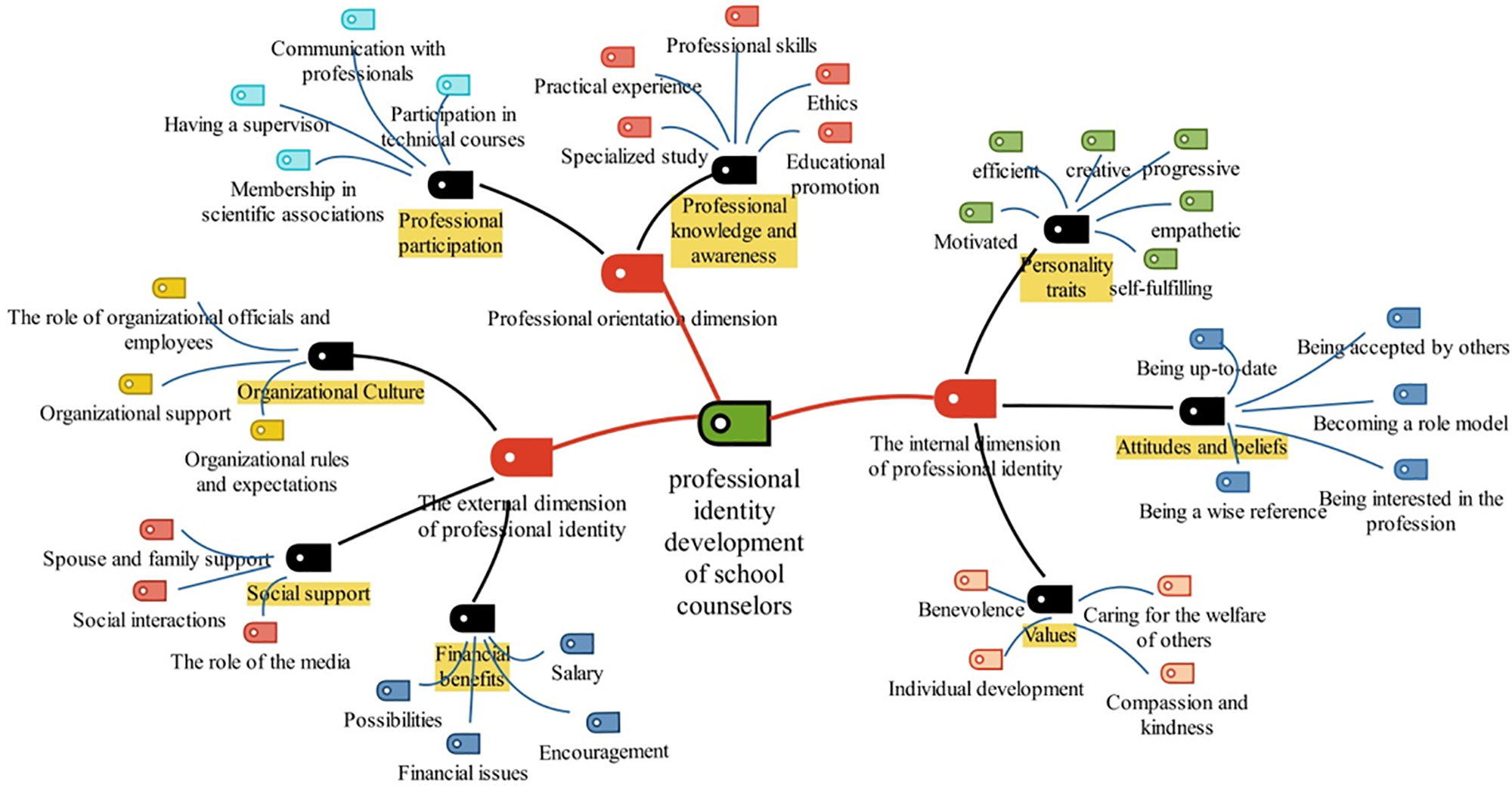
Figure 1. The figure shows the model of professional identity development of school counselors.
4. Discussion
The present study aimed to detect the dimensions of professional identity development in school counselors using a qualitative approach and thematic analysis method. The findings of this study were summarized and coded in three overarching themes, including the internal dimension of professional identity, the professional orientation dimension, and the external dimension of professional identity. The themes identified in this study were in line with the findings of Harrison ( 12 ), Bagheri and colleagues ( 17 ), and Abu-Alruz and Khasawneh ( 18 ). According to the findings, the professional identity of school counselors is formed in the context of the interaction of the internal, external, and professional factors.
In this vein, Bagheri and co-workers ( 17 ) found that personality traits provide the ground for the development of professional identity. School counselors should strive to establish rapport with students that is both trustworthy and encouraging. These relationships allow the school counselor to obtain information which students may share ( 19 ). Additionally, school counselors must understand how critical it is to cultivate empathy, especially with adolescents who have had hardship ( 20 ). Empathy is demonstrated through the practice of basic counseling skills such as interpretation, reflective skills, and active listening to others ( 21 ). Crow and colleagues ( 22 ) investigated the values, beliefs, and motivations affecting performance to conceptualize professional identity. They reported that school counselors who have positive attitudes and values about their profession show a stronger commitment to the profession. They also believed that school counselors possess a special set of skills that facilitate students’ overall achievement.
In terms of professional orientation, school counselors play a crucial role and are actively engaged in professional school counseling associations. They also participate in mentoring initiatives and seek out opportunities for supervision in their field. In addition, they continuously participate in professional development opportunities, get certifications, and sustain recent credentials. They also seek advice from other school counselors ( 23 ). Furthermore, Wilson and colleagues ( 24 ) found that participation in professional associations, in which the discussion of professional values and principles is common, has a significant relationship with the factor of professional identity values. Chen and Reay ( 25 ) also believed that professional identity is founded on the structure of professional knowledge and is shaped by inter-professional partnerships. Research findings showed that district officials prefer to hire school counselors with educational experience because they are thought to have better knowledge and awareness of the educational system and the ability to build relationships with educational staff ( 26 ).
Starr and co-workers ( 27 ) defined the factors affecting professional identity as psychological factors (i.e., knowledge, life history, personality traits, emotions, anxieties, attitudes, interests, commitment, and self-confidence) and sociological factors (i.e., culture, organizations, policies, and relationships with colleagues). On the other hand, regarding the interaction of the internal and external dimensions, Unruh and co-workers ( 28 ) considered professional identity as the physical, emotional, cognitive, and spiritual aspects of a person in interaction with the social, cultural, and political institutions of the environment. In general, previous studies have shown that both internal factors (e.g., attitudes, beliefs, and previous experiences) and external factors (e.g., social expectations and administrative and organizational contexts) can affect professional identity ( 18 ). In this study, the external dimension of professional identity includes organizational culture, social support, and financial benefits. Mahmoodi Boorang and Nabaie ( 29 ) mentioned individual characteristics, organizational culture, and environmental context as effective factors in the development of professional identity. The development of professional identity becomes possible when organizational leaders provide employees with opportunities to improve their abilities, skills, and work-related knowledge. This category is different from self-development and the efforts of employees to grow their capabilities; it originates directly from the activities of the organization ( 30 ). In addition, it should be kept in mind that the concept of developing a professional identity is broader than increasing the skill in performing the assigned tasks. This type of development includes a holistic way of thinking about the relationship of the individual with the entire structure of the organization ( 31 ).
The basic assumption regarding professional identity is that professional identity is socially constructed and learned in the context of interaction with others and their feedback. Socialization into a profession is not a unilateral adaptation process; however, it is a negotiated adaptation of individuals to their professional environment ( 32 ). Other people in the environment are understood to provide feedback, training, or guidance that individuals use in the process of constructing their professional identity.
Managers should increase the capabilities of their employees by investing and planning properly to benefit from this improvement ( 33 ). Starr and colleagues ( 34 ) considered receiving a reward for the instruction effective for the formation of the professional identity of university professors.
In general, to create a professional identity, school counselors must internalize professional development and integrate a systematic identity. This integrity and coherence in professional identity can be formed through interaction with the individual’s occupational organization and society. According to the findings of this study, external factors such as organizational culture and social support are effective in the formation and development of professional identity. In addition, financial benefit was identified as one of the external factors affecting the growth of the professional identity in school counselors.
4.1. Limitations
There were certain limitations in this study. First, the interpretation and analysis of the conducted interviews were influenced by the researchers’ mentalities, previous experiences, or individual tendencies. Thus, caution is necessary in generalizing the findings. Second, there was a problem regarding the difference in the participants’ interview time and location and re-arrangements. It is suggested that researchers use a quantitative method, other qualitative research methods (e.g., phenomenological method) as well as other information analysis procedures to more closely examine the development of the professional identity of school counselors. In the practical aspect, planners and education officials can consider the findings of this study to recognize and develop the professional identity of school counselors. They can also train efficient and effective human resources and consider the necessary measures in their future planning.
5. Conclusions
School counselors with a robust professional identity must be able to articulate their professional identity and set it apart from other mental health professions. Thus, school counselors must develop a robust professional identity not only to understand themselves but also to be able to communicate their professional identity with others, thereby enhancing public recognition and awareness of the school counseling profession. On the other hand, the development of the professional identity of school counselors can help reduce the confusion of the role and attend to the activities of school counselors.
Acknowledgments
This article was extracted from a doctoral thesis of Mr. Rahim Cheldavi. Also, all authors greatly appreciate all school counselors who cooperated with us in this research.
Funding
This study was conducted with the financial support of Shahid Chamran University of Ahvaz, Iran (SCU.EM.1402.209).
Authors’ Contribution
Rahim Cheldavi: Selecting the topic, drafting the article, analyzing the data, and reviewing the work critically. Khadijeh Shiralinia: Cooperation in choosing the topic, preparing the draft of the article, analyzing the data, and reviewing the work critically. Mansour Sodani: Cooperation in analyzing the data, and reviewing the work critically. Abbas Amanelahi: Cooperation in analyzing the data, and reviewing the work critically. All authors have read and approved the final manuscript and agree to be accountable for all aspects of the work, such as the questions related to the accuracy or integrity of any part of the work.
Ethical Approval
This study received ethical approval from the Research Ethics Committee of Shahid Chamran University, Ahvaz, Iran with the code of IR.SCU.REC.1402.080. Before conducting interviews, informed consent was obtained from all participants.
Conflict of Interest
None declared.
References
- Chandler J, Burnham J, Riechel MK, Dahir C, Stone CB, Oliver DF, et al. Assessing the counseling and non-counseling roles of school counselors. Journal of School Counseling. 2018; 16(7):81324273.
- Kaplan DM, Tarvydas VM, Gladding ST. 20/20: A vision for the future of counseling: The new consensus definition of counseling. Journal of Counseling & Development. 2014; 92(3):366-372. DOI
- Fitzgerald A. Professional identity: A concept analysis. Nurs Forum. 2020; 55(3):447-472. DOI | PubMed
- Dollarhide CT, Lemberger-Truelove ME. Theories of school counseling for the 21st century. Oxford University Press; 2018.
- Ylijoki O, Ursin J. The construction of academic identity in the changes of Finnish higher education. Studies in Higher Education. 2013; 38(8):1135-1149. DOI
- Heled E, Davidovitch N. An occupation in search of identity-What is school counseling? Journal of Education and Learning. 2020; 9(5):215-232. DOI
- Maor R, Hemi A. Relationships between role stress, professional identity, and burnout among contemporary school counselors. Psychology in the Schools. 2021; 58(8):1597-1610. DOI
- Walker K. Improving the effectiveness of school counseling: Consensus, collaboration, and clinical supervision. Canadian Journal of Counseling and Psychotherapy. 2015; 49(3):275-295.
- Woo H, Henfield MS, Choi N. Developing a unified professional identity in counseling: A review of the literature. Journal of Counselor Leadership and Advocacy. 2014; 1(1):1-15. DOI
- Lambie GW, Haugen JS, Borland JR, Campbell LO. Who took “counseling” out of the role of professional school counselors in the United States? Journal of School-Based Counseling Policy and Evaluation. 2019; 1(3):51-61. DOI
- Levy IP, Lemberger-Truelove ME. Educator-counselor: A non-dual identity for school counselors. Professional School Counseling. 2021; 24(1b):2156759X2110076. DOI
- Harrison MG. The professional identity of school counsellors in East and Southeast Asia. Counselling and Psychotherapy Research. 2022; 22(3):543-547. DOI
- Mecadon-Mann M, Tuttle M. School counselor professional identity in relation to post-master’s supervision. Professional School Counseling. 2023; 27(1):2156759X2211439. DOI
- Holloway I, Todres L. The status of method: Flexibility, consistency and coherence. Quality Research. 2003; 3(3):345-57. DOI
- Attrid-Stirling J. Thematic networks: An analytic tool for qualitative research. Quality Research. 2001; 1(3):385-405. DOI
- King N, Horrocks C. Interviews in Qualitative Research. London: Sage; 2010.
- Bagheri Asl J, Hasani R, Abdulahi F. Semantic representation of the phenomenon of high school principals’ professional identity and proposing a paradigmatic model. Journal of Educational Innovations. 2021; 20(4):55-80. DOI Persian
- Abu-Alruz J, Khasawneh S. Professional identity of faculty members at higher education institutions: A criterion for workplace success. Research in Post-Compulsory Education. 2013; 18(4):431-442. DOI
- Holland MM. Trusting each other: Student-counselor relationship in diverse high schools. Sociology of Education. 2015; 88(3):244-267. DOI
- Kolbert JB, Williams RL, Morgan LM, Crothers LM, Hughes TL. Introduction to professional school counseling: Advocacy, leadership, and intervention. Routledge; 2017.DOI
- Young ME. Learning the Art of Helping: Building Blocks and Techniques, 6th ed. New York, NY: Pearson; 2017.
- Crow G, Day C, Moller J. Framing research on school principals’ identities. International Journal of Leadership in Education. 2017; 20(3):265-277. DOI
- Woo H, Henfield MS. Professional Identity Scale in Counseling (PISC): Instrument development and validation. Journal of Counselor Leadership and Advocacy. 2015; 2(2):93-112. DOI
- Wilson ME, Liddell DL, Hirschy AS, Pasquesi K. Professional identity, career commitment, and career entrenchment of midlevel student affairs professionals. Journal of College Student Development. 2016; 57(5):557-572. DOI
- Chen Y, Reay T. Responding to imposed job redesign: The evolving dynamics of work and identity in restructuring professional identity. Human Relations. 2021; 74(10):1541-1571. DOI
- Goodman-Scott E, Upton AW, Neuer Colburn AA. District-level school counseling supervisors’ experiences with and perceptions of hiring school counselors. Professional School Counseling. 2021; 24(1):2156759X20965179. DOI
- Starr S, Ferguson WJ, Haley H-L, Quirk M. Community preceptors’ views of their identities as teachers. Acad Med. 2003; 78(8):820-5. DOI | PubMed
- Unruh AM, Versnel J, Kerr N. Spirituality unplugged: A review of commonalities and contentions, and a resolution. Can J Occup Ther. 2002; 69(1):5-19. DOI | PubMed
- Mahmoodi Boorang M, Nabaee H. Factors Affecting Teacher Professional Identity: A Systematic Review. Journal of Teacher’s Professional Development. 2019; 4(1):77-94. Persian
- Dille KB, Røkenes FM. Teachers’ professional development in formal online communities: A scoping review. Teaching and Teacher Education. 2021; 105:103431.
- Hartshorne R, Baumgartner E, Kaplan-Rakowski R, Mouza C, Ferdig RE. Special issue editorial: preservice and inservice professional development during the COVID-19 pandemic. Journal of Technology and Teacher Education. 2020; 28(2):137-147.
- Caza B, Creary S. The construction of professional identity. In Perspectives on Contemporary Professional Work Challenges and Experiences. Edward Elgar Publishing; 2016. p. 259-285.DOI
- Borg S. Evaluating the impact of professional development. RELC Journal. 2018; 49(2):95-216.
- Starr S, Haley H-L, Mazor KM, Ferguson W, Philbin M, Quirk M. Initial testing of an instrument to measure teacher identity in physicians. Teach Learn Med. 2006; 18(2):117-25. DOI | PubMed

